
Athena cursed Medusa as a punishment for the desecration of her temple by Poseidon. This myth raises questions about the nature of divine justice, victimhood, and the complexities of gender dynamics in Greek mythology.
Understanding Athena’s Motivations Behind the Curse
Athena’s curse on Medusa stirs up a lot of questions. Was it pure punishment, a misguided sense of justice, or a touch of jealousy? Let’s break it down.
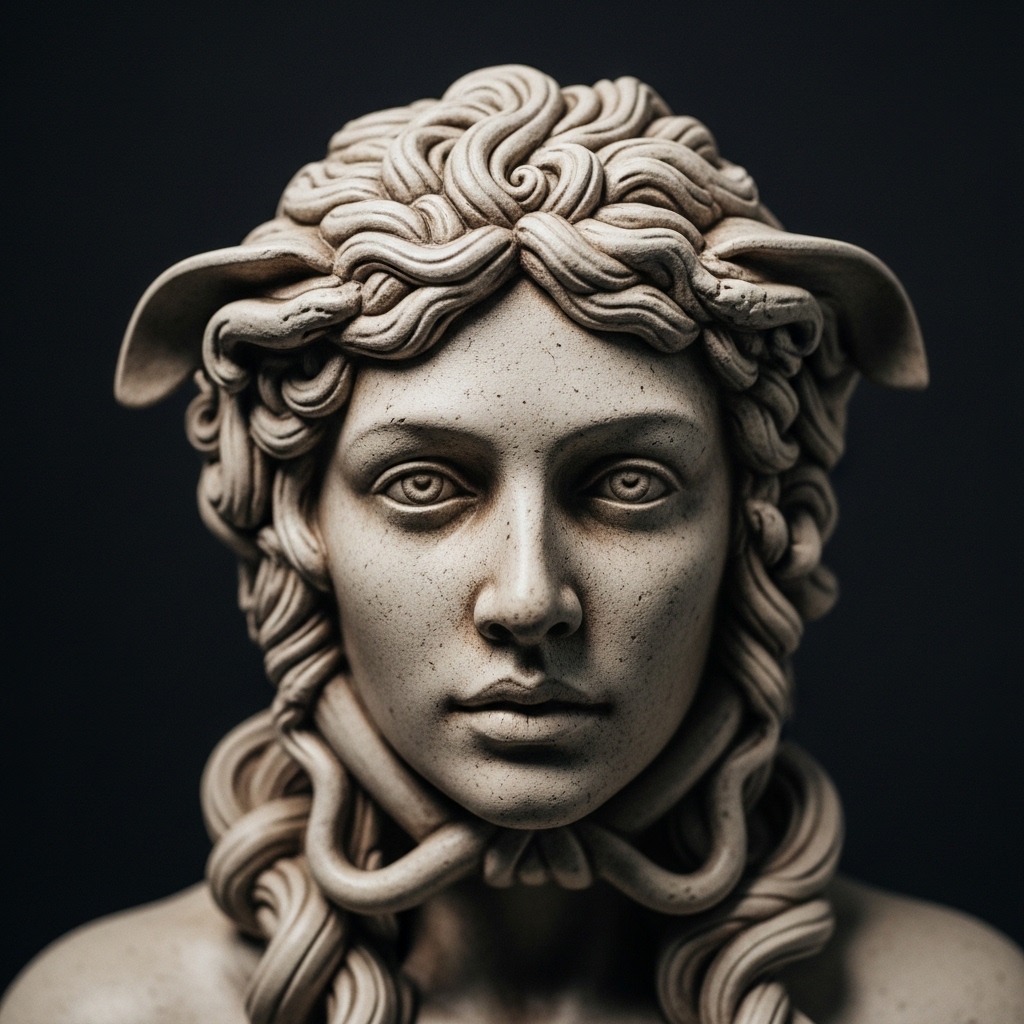
The Role of Divine Justice in Athena’s Actions
Athena was all about maintaining order. When Poseidon desecrated her temple, she felt compelled to act. But was her punishment aimed at Medusa, or was it about protecting the sanctity of her space?
- Divine Authority: Athena, as a goddess, held a strong sense of justice. Her actions reflect a desire to uphold her values.
- Punishment vs. Protection: Some argue Athena’s curse was protective. By transforming Medusa, Athena ensured no one would dare harm her again.
Jealousy or Protection? Analyzing Different Perspectives
There are two main lenses through which we can view Athena’s motivations: jealousy and protection.
- Jealousy: Some interpretations suggest that Athena was envious of Medusa’s beauty. After all, Medusa’s allure was what led to her downfall.
- Protection: Others argue that Athena’s curse was a way to shield Medusa from further victimization. By turning her into a Gorgon, she became a fearsome figure, deterring potential aggressors.
Athena’s Relationship with Poseidon: A Rivalry Explained
Understanding Athena’s rivalry with Poseidon helps clarify her motivations.
- Power Struggle: Poseidon, as a rival god, challenged Athena’s authority. The violation in her temple was a direct affront to her power.
- Impact on Medusa: Medusa, caught in this divine conflict, became an unwitting pawn. Athena’s curse, while harsh, served as a warning against future desecrations.
Decision Framework for Understanding the Curse
When interpreting Athena’s motivations, consider these angles:
1. Was it a Punishment?: Reflect on how Athena’s actions align with traditional views of justice in mythology.
Table of Contents
2. Was it Protective?: Think about how Medusa’s transformation might have shielded her from further harm.
3. Was it Jealousy?: Explore the complexities of beauty and how it played a role in Medusa’s fate.
This framework can help unravel the layers of Athena’s motivations behind cursing Medusa. Understanding these elements adds depth to the myth and its implications for both characters in this tragic story.
The Transformation of Medusa: From Maiden to Monster

Medusa’s transformation is a powerful tale of divine punishment and societal judgment. Once a beautiful maiden, her journey symbolizes how victims can be unfairly punished and misunderstood. Let’s dive into the layers of her story.
Medusa’s Beauty: A Double-Edged Sword
Medusa was not always a monster. In fact, she was known for her stunning beauty. According to myths, her hair was so enchanting that even the gods took notice. Poseidon, the sea god, was captivated and pursued her. However, her beauty became her downfall. When she was violated in Athena’s temple, it set off a chain of events that led to her curse.
- Stunning Beauty: Medusa was celebrated for her looks.
- Divine Attention: Poseidon’s desire turned tragic.
- Temple Violation: The act took place in a sacred space, enraging Athena.
This backstory highlights the harsh reality of how beauty can attract both admiration and danger.
Consequences of the Curse: Isolation and Power
Athena’s curse transformed Medusa into a Gorgon, a creature feared by all. With snakes for hair and a gaze that turned people to stone, she became a symbol of terror. Yet, this transformation also gave her a twisted form of power.
- Isolation: Medusa was shunned, forced to live away from society.
- Weaponization of Power: Her gaze could protect her, but it isolated her from any connection.
This duality illustrates how divine actions often lead to unintended consequences. Medusa’s curse did not just make her a monster; it left her alone and vulnerable.
Medusa’s Gaze: A Weapon or a Curse?
Medusa’s ability to turn men to stone is often seen as a curse. But it can also be interpreted as a means of protection. After all, she became a creature that no one dared to approach.
- Protective Power: Her gaze kept others at bay, preventing further harm.
- Cursed Existence: This power came at the cost of her humanity.
In a way, Medusa’s gaze reflects the complexity of victimhood. It raises questions about how society views those who have suffered trauma. Is Medusa a monster, or is she a symbol of strength in the face of injustice?
Medusa’s story is a reminder of the harsh realities of divine punishment and societal judgment. It encourages us to think critically about victimhood and the narratives that shape our understanding of beauty and power.
Poseidon’s Role in Medusa’s Curse: The Catalyst

Poseidon’s actions play a crucial role in understanding why Athena cursed Medusa. His relationship with both Medusa and Athena sets the stage for the tragic events that unfold.
The Assault: A Defilement of Sacred Space
Poseidon, the powerful god of the sea, set his sights on Medusa, who was a devoted priestess in Athena’s temple. Here’s what happened:
- Rejection: Medusa initially rejected Poseidon’s advances. This angered him.
- Violence: In an act of aggression, Poseidon assaulted Medusa in Athena’s sacred space. This act was not just a personal violation; it was a direct affront to Athena.
- Desecration: By violating Medusa in a temple dedicated to Athena, Poseidon disrespected the sanctity of the goddess’s domain.
This assault had deep implications. It not only harmed Medusa but also stained Athena’s temple, igniting her wrath.
Divine Power and Accountability: Why Athena Targeted Medusa
Athena’s response to this tragedy was complex. Instead of confronting Poseidon, she directed her anger towards Medusa. Here’s why:
- Victim-Blaming: In a patriarchal society, Medusa became a scapegoat for Poseidon’s actions. Athena’s curse reflected the harsh realities of victimhood.
- Transformation as Protection: By turning Medusa into a Gorgon, Athena ensured that no man would dare approach her again. This transformation was paradoxical; it shielded Medusa yet stripped her of her humanity.
- Power Dynamics: Athena’s decision highlights a troubling aspect of divine power. Instead of punishing Poseidon, the god who committed the crime, she punished Medusa, the victim.
The Myth’s Reflection on Gender Dynamics in Ancient Greece
Medusa’s story is more than just a myth; it reflects societal views on gender and victimhood:
- Female Vulnerability: Medusa’s transformation underscores the vulnerability of women in Ancient Greece. They were often blamed for the actions of powerful men.
- Divine Justice?: Athena’s curse raises questions about justice. Is punishing the victim truly just? This myth challenges the notion of divine fairness.
- Cultural Impact: The implications of Medusa’s curse echo through art and literature, influencing how society views victims of trauma even today.
| Poseidon’s Actions | Consequences |
|---|---|
| Assaulted Medusa | Cursed by Athena |
| Desecrated Athena’s temple | Loss of humanity for Medusa |
| Displayed divine impunity | Victim-blaming narrative |
This table illustrates Poseidon’s unchecked power and its dire effects on Medusa’s fate. It shows how often, in myths, the consequences of divine actions disproportionately affect those without power.
Comparative Analysis: Medusa and Other Myths of Divine Punishment
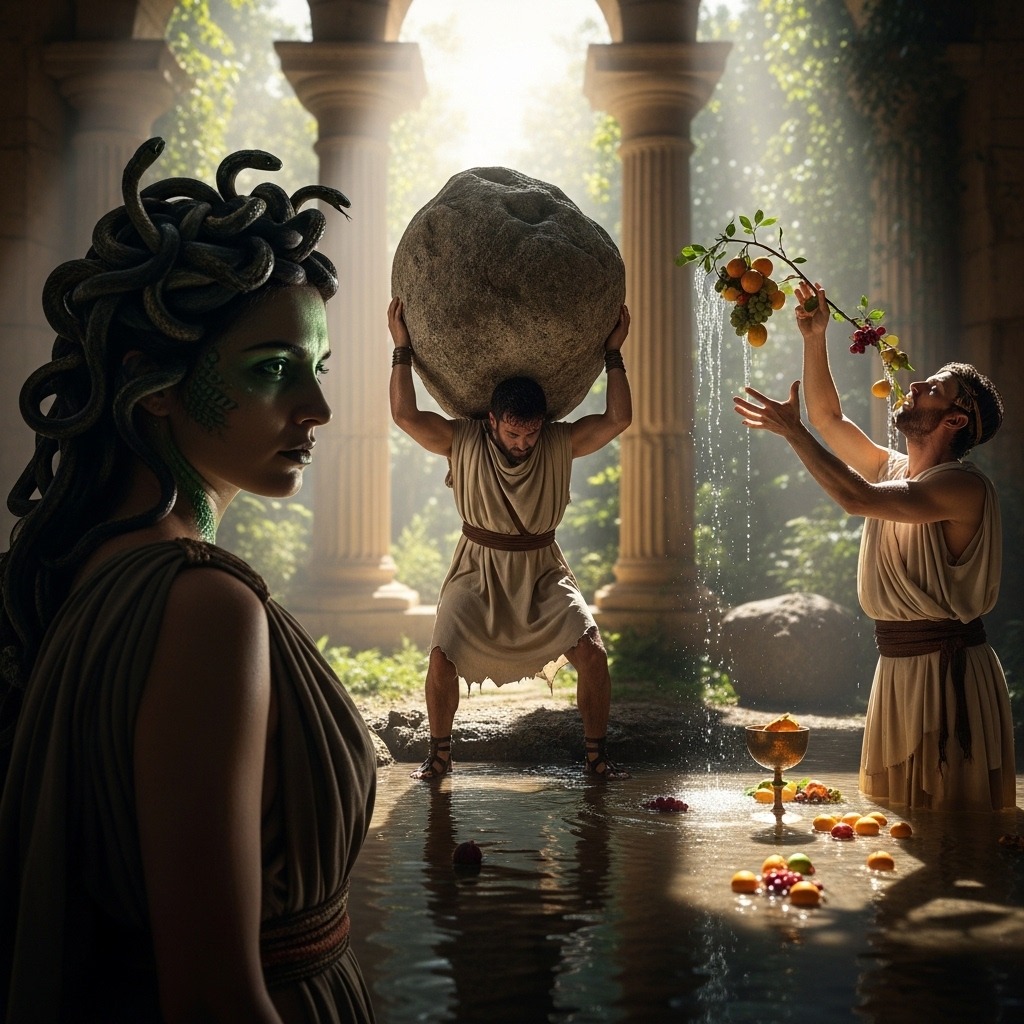
Medusa’s story is not unique in the realm of myths. Many tales depict divine punishment that reflects societal values and gender dynamics. Let’s explore how her tale aligns with or diverges from other myths.
Similarities with Other Victims of Divine Wrath
Medusa shares her fate with several mythological figures who faced unjust punishments. Here are a few notable examples:
- Arachne: Arachne was a talented weaver who dared to challenge Athena. For her hubris, Athena transformed her into a spider. Like Medusa, Arachne’s punishment represents a harsh response to perceived defiance against a goddess.
- Niobe: Niobe boasted about her children, claiming superiority over Leto, the mother of Apollo and Artemis. In retaliation, Leto’s children killed Niobe’s offspring. This story echoes Medusa’s plight, where boasting or pride leads to devastating consequences.
- Actaeon: Actaeon accidentally stumbled upon Artemis while she bathed. Enraged, she transformed him into a stag, leading his own hunting dogs to tear him apart. This reflects the theme of victimhood where the innocent suffer due to the gods’ wrath.
These myths highlight a common trend: divine beings often punish mortals harshly, regardless of the circumstances.
The Role of Women in Myths of Punishment
Medusa’s story also shines a light on female victimhood in myths. Women frequently bear the brunt of divine retribution. This not only reflects their societal status but also reinforces gender dynamics.
- Victim Blaming: Just like Medusa, other female figures often face blame for their circumstances. For example, Persephone is often viewed as a victim of Hades’ abduction, yet her role is sometimes overshadowed by narratives that blame her for the situation.
- Transformation as Punishment: Women like Medusa and Arachne endure transformations that strip away their identity and autonomy. This serves as a stark reminder of how female power is often punished in mythology.
Lessons from Medusa: A Broader Mythological Context
Medusa’s tale serves as a cautionary story about the consequences of divine actions. It raises questions about justice and victimhood.
- Reflection of Societal Values: Myths like Medusa’s reveal how societies view women, particularly in scenarios of power dynamics. The consequences faced by women often reflect a patriarchal lens that blames them for male actions.
- Cultural Impact: Medusa’s legacy resonates in modern culture, where she is often reinterpreted as a symbol of female empowerment and resilience. Her transformation from a victim to a powerful figure challenges traditional narratives.
In summary, Medusa’s story aligns with a broader mythological context that highlights themes of injustice, victimhood, and the complex roles of women in ancient tales.
The Legacy of Medusa: From Villain to Symbol of Empowerment
Medusa’s image has undergone a remarkable transformation over the ages. Once seen as a monstrous figure, she now stands as a powerful symbol of resilience and empowerment.
Medusa in Art: A Shift in Perception
Throughout history, artists have depicted Medusa in various ways. In ancient times, she was often portrayed as a terrifying creature. However, during the Renaissance, artists like Caravaggio began to showcase her humanity. They highlighted her tragic story, shifting the focus from horror to empathy.
- Ancient Greece: Medusa was a fearsome Gorgon, used in art to instill dread.
- Renaissance: Artists reimagined her, emphasizing her tragic fate and depth.
- Modern Art: Today, Medusa is often viewed as a symbol of strength and defiance.
This evolution reflects changing societal views on women and power.
Feminist Interpretations: Medusa as a Symbol of Resistance
Modern interpretations of Medusa often highlight her as a victim of circumstances beyond her control. Many feminist readings view her curse not just as punishment, but as a means of asserting autonomy.
- Victimhood: Medusa was not just cursed; she was a victim of Poseidon’s aggression in Athena’s temple.
- Empowerment: Her transformation into a Gorgon can be seen as a way to protect herself from further harm. By becoming terrifying, she ensured that no one would dare approach her again.
This perspective challenges the narrative that blames victims and instead focuses on resilience and empowerment.
The Role of Medusa in Contemporary Culture
In today’s culture, Medusa has emerged as a potent symbol of female empowerment. She appears in literature, fashion, and popular media as a figure of strength.
- Literature: Many modern stories reframe Medusa’s tale, emphasizing her as a survivor rather than a villain.
- Fashion: Designers often use her image to evoke themes of strength and rebellion.
- Pop Culture: Medusa appears in movies and TV shows, often portrayed as a complex character with depth.
These contemporary representations highlight how Medusa’s legacy continues to inspire dialogue about victimhood, power, and the complexities of gender dynamics.
Frequently Asked Questions
These quick answers cover the most common questions about this topic, including key details, practical tips, and common concerns.
Why Did Athena Curse Medusa?
Athena cursed Medusa after Poseidon violated her in Athena’s sacred temple. In response, Athena transformed Medusa into a Gorgon to punish her for the temple’s desecration and to protect herself from further harm. The curse was not directly for Medusa’s actions but was linked to the divine conflict and the temple’s defilement.
Was Medusa evil or a victim?
Medusa was primarily a victim. She was a beautiful maiden who was assaulted by Poseidon in Athena’s temple. Her transformation into a monster was a divine punishment rooted in divine and societal blame, rather than her own evil actions. Many interpret her as a symbol of victimhood and injustice.
Why did Athena turn evil?
Athena did not turn evil; her actions reflect the complex nature of divine justice in Greek mythology. Her punishment of Medusa was driven by her anger over the temple’s desecration and her rivalry with Poseidon. Some interpret her behavior as a misguided attempt to uphold sacred order, rather than malevolence.
Why did Athena hate Poseidon?
Athena and Poseidon were rivals for divine dominance and influence. Their conflict often centered around sacred spaces and power. Poseidon’s assault on Medusa in Athena’s temple was a direct challenge to her authority, fueling her anger and leading to her harsh punishment of Medusa.
Why was Medusa cursed even though she was the victim?
Medusa’s curse stemmed from her being a victim of Poseidon’s assault and the sacrilege in Athena’s temple. Instead of punishing Poseidon, Athena blamed Medusa, transforming her into a monster to serve as a warning. This reflects the myth’s themes of victim-blaming and divine injustice.
What does Medusa symbolize in modern culture?
Today, Medusa symbolizes resilience, empowerment, and the fight against victim-blaming. She has been reinterpreted as a figure of strength, challenging traditional views of her as merely a villain. Her image appears in art, literature, and fashion as a symbol of overcoming trauma.
How has the interpretation of Medusa’s curse changed over time?
Historically, Medusa was seen as a terrifying monster used to evoke fear. Modern interpretations view her as a tragic victim and a symbol of female strength. This shift reflects changing societal attitudes toward victimhood, gender, and empowerment.
What is the origin of Medusa’s curse?
Medusa’s curse originated from Poseidon’s assault in Athena’s temple, which was seen as sacrilege. Athena’s reaction was to punish Medusa, turning her into a Gorgon. The myth emphasizes themes of divine punishment and societal blame, with ancient texts like Ovid’s Metamorphoses providing detailed accounts.
How does Medusa’s story reflect themes of victimhood?
Medusa’s story highlights how victims can be unfairly punished and misunderstood. Her transformation was a divine response to her victimization, illustrating societal tendencies to blame victims. Her myth encourages reflection on justice and the treatment of trauma survivors.
What role did Poseidon play in Medusa’s transformation?
Poseidon’s assault on Medusa was the catalyst for her curse. His violation in Athena’s temple led Athena to punish Medusa, not Poseidon. Poseidon’s role underscores themes of unchecked divine power and the tragic consequences for innocent victims caught in divine conflicts.