
Nyx, the Greek goddess of night, is a primordial figure representing darkness and mystery in mythology. She is often feared even by the gods, including Zeus, due to her immense power and significance in the cosmic order.
The Origins of Nyx: Daughter of Chaos
Nyx emerged from Chaos, the primordial void that existed before anything else. This makes her one of the first beings in Greek mythology, and her story is rich with intrigue and power.

The Birth of Nyx from Chaos
Nyx is often described as the daughter of Chaos. In this vast emptiness, she sprang forth, embodying night itself. This origin story highlights her importance in the pantheon of Greek deities. Unlike many gods and goddesses with elaborate birth tales, Nyx’s emergence is straightforward yet profound.
- Primordial Status: Nyx is a primordial deity, which means she existed before the gods we commonly think of, like Zeus and Hera.
- Symbol of Darkness: As the goddess of night, she represents the dark and mysterious aspects of existence.
- Formative Role: Nyx’s existence set the stage for the creation of other beings, including her children.
Nyx’s Relationship with Erebus
Erebus, the personification of darkness, is both Nyx’s consort and brother. Their union produced significant offspring, including Aether (Light) and Hemera (Day). This connection emphasizes the duality of existence—night and day, light and dark.
- Cosmic Balance: Nyx and Erebus together represent the balance of the universe. Without night, there can be no day.
- Offspring: Their children include powerful deities like Hypnos (Sleep) and Thanatos (Death), who embody other essential aspects of life.
Siblings: Gaea and Tartarus
Nyx also has notable siblings, including Gaea (Earth) and Tartarus (the abyss). This familial connection links her to other primordial forces in mythology. Each sibling plays a vital role in the cosmic order.
- Gaea: As the Earth, she represents growth and nourishment, contrasting Nyx’s dark nature.
- Tartarus: This abyss is a place of torment and punishment, further emphasizing the themes of light versus dark and creation versus destruction.
Nyx’s story is a tapestry of relationships and symbolism, showing how intertwined the characters of Greek mythology can be. Her origins not only mark her as a powerful deity but also illustrate her significance in the grand scheme of creation myths.
Nyx’s Offspring: The Progenitor of Deities
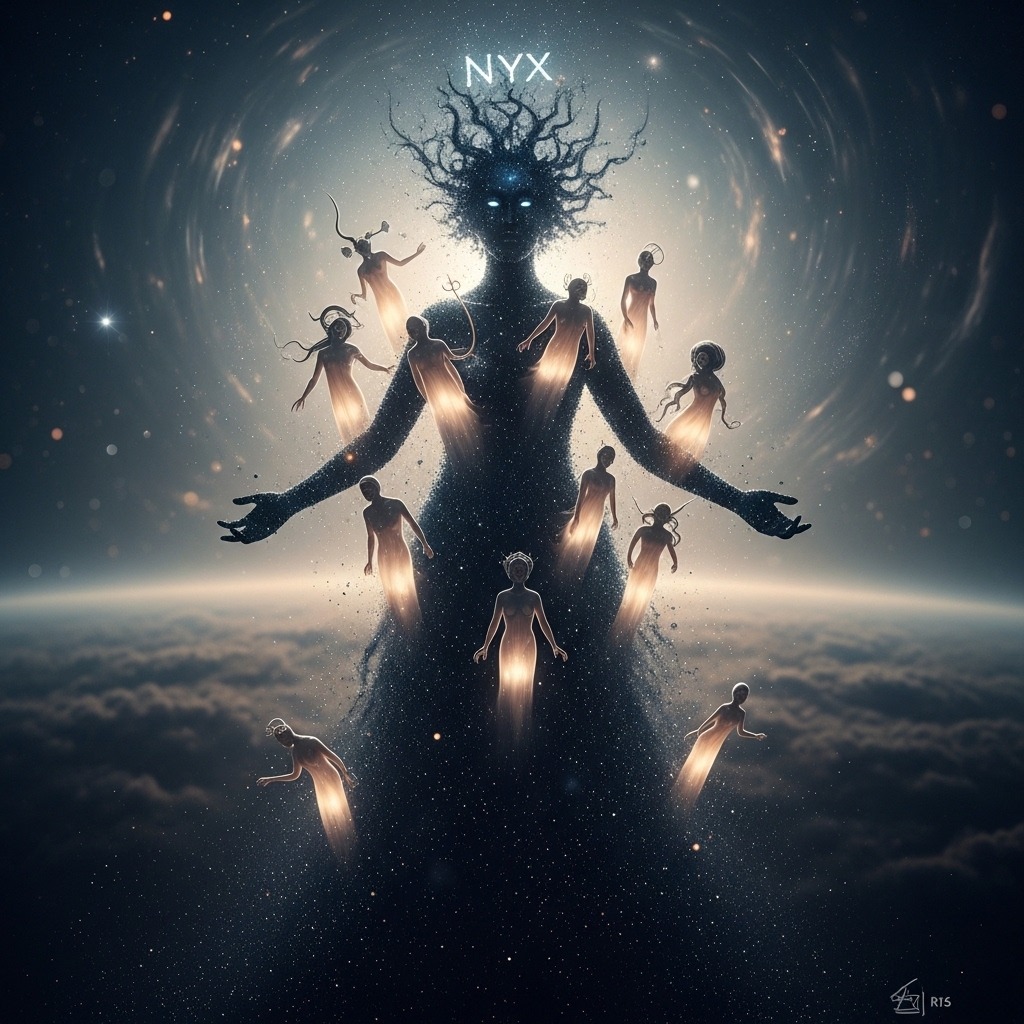
Nyx, the Greek goddess of night, has quite the impressive family tree. Her children include some of the most significant deities in Greek mythology. Each of them embodies different aspects of life, death, and the cosmos.
Table of Contents
The Children of Nyx and Their Roles
Nyx’s offspring are both intriguing and powerful. Here’s a quick look at her most notable children:
- Hypnos: God of sleep. He brings rest and dreams to mortals. His presence is essential for rejuvenation.
- Thanatos: God of death. He represents the end of life, ensuring the natural order. Unlike his brother, he’s not to be feared as a villain.
- Nemesis: Goddess of retribution. She ensures balance by delivering justice, particularly to those who succumb to hubris.
Each of these deities plays a pivotal role in the fabric of mythology. They interact with other gods and humans, shaping lives and destinies.
Significance of Hypnos and Thanatos
Hypnos and Thanatos are particularly fascinating. They represent two sides of a coin: sleep and death.
- Hypnos is often depicted as gentle, comforting mortals with peaceful slumber. He’s shown as a winged figure, symbolizing the transient nature of dreams.
- Thanatos, on the other hand, is more somber. He’s not just a harbinger of doom. His role is to guide souls to the afterlife, ensuring a smooth transition.
Their dynamic highlights the duality of existence. Sleep prepares us for life, while death is an inevitable part of it.
Comparative Analysis of Nyx’s Offspring with Other Deities
When compared to other mythological figures, Nyx’s children stand out. For instance, consider the Olympian gods like Zeus and Hera. They often represent life and vitality. In contrast, Nyx’s offspring embody the darker aspects of existence.
- Hypnos vs. Eos (Dawn): While Eos brings the light of day, Hypnos offers the solace of night.
- Thanatos vs. Hades: Thanatos deals with the process of dying, while Hades rules the underworld itself.
This comparison shows how Nyx’s legacy is woven into the broader tapestry of Greek mythology. She provides balance, reminding us that light and dark coexist.
Nyx’s children not only continue her story but also enrich the myths that surround them. Their interactions with other gods and mortals make her legacy enduring and significant in the annals of Greek lore.
Nyx in Mythology: Stories and Significance

Nyx, the Greek goddess of night, plays a fascinating role in ancient mythology. Her portrayal in texts like Hesiod’s Theogony reveals much about her origins and relationships with other deities, especially Zeus.
Nyx in Hesiod’s Theogony
In Theogony, Nyx is born from Chaos, the primordial void. She is a powerful figure, often depicted as a dark and mysterious goddess. After her union with Erebus, the god of darkness, she gives birth to several significant offspring, including:
- Aether (Brightness)
- Hemera (Day)
- Hypnos (Sleep)
- Thanatos (Death)
Nyx’s role extends beyond motherhood. She embodies the night itself, representing the balance between light and darkness. This duality is crucial in understanding her significance in Greek mythology.
The Fear of Zeus: Why Nyx Commands Respect
Even Zeus, the king of the gods, holds Nyx in high regard. In various myths, he demonstrates an almost fearful respect toward her. For instance, when Hypnos, the god of sleep, fears Zeus’s wrath, he seeks refuge with Nyx. Zeus would back down, acknowledging that angering the goddess of night could have dire consequences. This dynamic shows how deeply Nyx’s power is woven into the fabric of the cosmos.
- Key Examples of Respect:
- Hypnos escapes Zeus by seeking Nyx’s protection.
- Zeus refrains from punishing Hypnos out of deference to Nyx.
Cultural Impact and Literary References
Nyx’s influence stretches beyond ancient texts. She appears in various adaptations, reinforcing her status as a symbol of the night. Modern interpretations often paint her as a figure of mystery and power.
- Notable Appearances:
- In contemporary literature and art, Nyx often represents themes of darkness, mystery, and the unknown.
- Her character has inspired various portrayals in films, books, and graphic novels, highlighting her enduring relevance.
Nyx’s story continues to resonate, reminding us of the complexity of light and dark in our own lives.
The Dual Nature of Nyx: Benevolent or Malevolent?

Nyx, the Greek goddess of night, carries a dual nature in mythology. She is both feared and revered. This complexity makes her story all the more intriguing.
Nyx vs. Eos: The Goddess of Dawn
To understand Nyx, we should compare her to Eos, the goddess of dawn. While Nyx represents the dark and mysterious aspects of night, Eos symbolizes the bright beginnings of a new day.
- Nyx: Often associated with fear, mystery, and the unknown.
- Eos: Embodies hope, light, and new opportunities.
This contrast highlights how both goddesses play essential roles in the cycle of day and night. Nyx’s darkness can be seen as protective, while Eos’s light signifies renewal. Together, they represent life’s balance.
Misconceptions about Nyx’s Nature
Many people see Nyx as purely a figure of fear. However, she also has benevolent qualities.
- Protector: In some myths, she shields mortals from harm during the night.
- Giver of Rest: Nyx allows for rest and rejuvenation, making her a nurturing force.
This duality is crucial to understanding her character. While she can be intimidating, she also plays a vital role in the natural order.
Symbolism in Modern Culture
Nyx’s influence extends into modern art and literature. She appears as a symbol of empowerment and mystery.
- Art: Many contemporary artists depict her as a strong, commanding figure, often surrounded by stars.
- Literature: In various novels, she represents the complexities of human emotions, like fear and hope.
Her character serves as a reminder that darkness isn’t inherently bad. It can provide shelter and comfort. This fresh perspective on Nyx allows for deeper interpretations of her mythos in modern storytelling.
Worship and Cult Practices Related to Nyx
Nyx, the Greek goddess of night, had a complex relationship with worship and cult practices. While she may not have had grand temples like other deities, she still held significant cultural importance.
Historical Evidence of Worship
Evidence of Nyx’s worship exists, albeit in a more subtle form. Here are a few key points:
- Statues and Oracles: Statues representing Nyx were created, and she had an oracle on the acropolis at Megara. This oracle was significant in ancient Greek culture, showing her connection to prophecy and fate.
- Cult Associations: Nyx was often worshipped alongside other deities. For instance, in the Temple of Artemis at Ephesus, a statue of Night was present. This highlights how she was recognized, even if not as the main focus of worship.
- Ritual Offerings: Roman authors noted that animals, like black roosters and bulls, were sacrificed to Nyx. This indicates she was honored in rituals, although specific details about these practices remain scarce.
Rituals Associated with Nyx
While Nyx may not have had dedicated cults, she was included in various rituals:
- Lemuria Festival: Dedicated to appeasing the restless spirits of the dead, this Roman festival involved offerings to Nyx, referred to as “Nox” in Latin. Here, she was acknowledged as part of the cycle of life and death.
- Nighttime Rites: Many rituals were performed at night, emphasizing her domain. Offerings during these times often sought her favor for protection and insight.
Impact on Later Cultures and Religions
Nyx’s influence didn’t end with ancient Greece. Her legacy is evident in later cultures:
- Cultural Adaptations: Nyx’s persona has been adopted in various modern contexts. From literature to art, she represents themes of mystery and the unknown.
- Comparisons with Other Deities: Unlike more widely worshipped figures like Eos (the goddess of dawn), Nyx often played a background role. This contrast highlights how different aspects of the night were revered in various ways.
Nyx’s significance is clear, even if her worship wasn’t as pronounced as that of other gods. Her essence continues to resonate in modern interpretations, reminding us of the rich tapestry of mythology.
Frequently Asked Questions
These quick answers cover the most common questions about this topic, including key details, practical tips, and common concerns.
What is the story of Nyx, the goddess of night?
Nyx is a primordial goddess born from Chaos, representing the darkness of night. She is a powerful figure who emerged at the beginning of creation and is the mother of many important deities. Her story highlights her role as a symbol of mystery, darkness, and the natural cycle of day and night.
Did Nyx have any lovers?
Yes, Nyx’s primary consort was Erebus, the personification of darkness. Together, they produced several significant offspring, including Hypnos (Sleep), Thanatos (Death), and others. Their union symbolizes the deep connection between night and the various aspects of existence.
Why is Zeus afraid of Nyx?
Zeus respects Nyx because of her immense power and primordial status. In myths, even Zeus seeks her protection or avoids angering her, recognizing that her influence over night and the cosmic order is formidable. Her ability to command respect from the king of gods underscores her significance in Greek mythology.
How is Nyx depicted in art?
In ancient art, Nyx is often shown as a dark, veiled woman, sometimes with stars or a night sky motif. She may be depicted with wings or surrounded by symbols of darkness and mystery. Modern interpretations portray her as a regal, commanding figure symbolizing the night’s power.
What are some common myths involving Nyx?
Nyx appears mainly as a background figure or mother of other deities in Greek myths. Notable stories include her creation from Chaos, her union with Erebus, and her role as the mother of Hypnos and Thanatos. She is also associated with the prophecy and the natural order of night and day.
Did Nyx have any worshippers in ancient Greece?
While she did not have widespread temples like other gods, Nyx was still honored through rituals and offerings, especially at night. An oracle of Nyx existed at Megara, and she was sometimes invoked in rites related to sleep, death, and prophecy. Her influence was more spiritual and symbolic than institutional.
How did Nyx influence other cultures or later mythologies?
Nyx’s concept of night as a powerful, sometimes divine force influenced later Roman and Egyptian deities associated with darkness and night. Her symbolism of mystery and the unknown continues to inspire modern literature, art, and media, reinforcing her role as a universal symbol of the night.
When did Nyx appear in Greek literature?
Nyx is mentioned in early Greek texts like Hesiod’s Theogony, where she is described as a primordial being emerging from Chaos. Her role as a fundamental force of nature places her among the earliest figures in Greek mythology, often serving as a symbol of the cosmic balance between light and dark.