
The story of Daedalus and Icarus is a captivating tale from Greek mythology that explores themes of ambition and hubris. While often perceived as a myth, its implications invite deeper exploration into the lessons it teaches about human nature and the consequences of overreaching [1].
Table of Contents
The Story of Daedalus and Icarus: A Summary
The myth of Daedalus and Icarus illustrates profound themes of ambition, hubris, and the bond between father and son. It encapsulates the dangers of overreaching and disobedience, serving as a cautionary tale that resonates through generations.
Key Characters and Their Roles
- Daedalus: A master craftsman and inventor, Daedalus is renowned for his ingenuity. He constructed the Labyrinth for King Minos and later devised the wings that enabled their escape. His character embodies both brilliance and tragic flaw.
- Icarus: The son of Daedalus, Icarus symbolizes youthful exuberance and the peril of hubris. His tragic flight serves as a powerful reminder of the dangers of ignoring wise counsel.
- King Minos: The ruler of Crete, Minos represents authority and the consequences of unchecked power. His decision to imprison Daedalus and Icarus sets the stage for their daring escape.
The Escape Plan
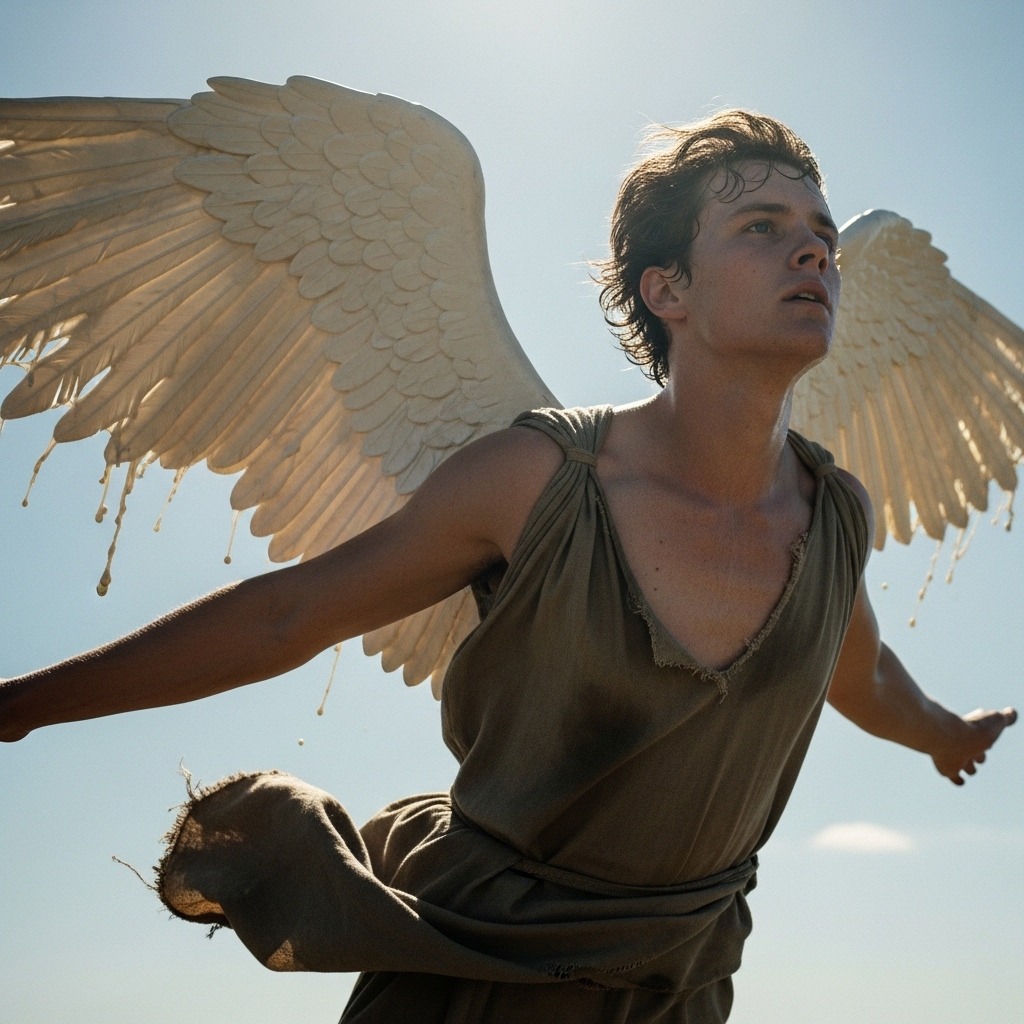
Imprisoned by King Minos, Daedalus devised a plan for escape. He crafted wings from feathers and wax, meticulously warning Icarus to avoid flying too close to the sun or the sea. The construction of the wings showcases Daedalus’s ingenuity, combining natural materials with engineering prowess. This plan reflects not only the innovation of Daedalus but also the desperate circumstances that drove him to such extremes.
The Consequences of Icarus’s Flight
As they took flight, Icarus, exhilarated by the experience, disregarded his father’s warnings. He soared higher and closer to the sun, where the heat melted the wax in his wings. The inevitable fall of Icarus signifies the tragic consequences of hubris. Instead of freedom, his ambition led to his demise, plunging into the sea and drowning. This moment encapsulates the core message of the myth: the perils of overreaching ambition and the importance of adhering to wisdom and caution. Daedalus, heartbroken, named the nearby island Icaria in memory of his son, a poignant reminder of loss and the limits of human aspiration [1][2][3].
Themes of Hubris and Ambition in the Myth

The story of Daedalus and Icarus serves as a timeless exploration of hubris and ambition. This myth encapsulates the dangers of overreaching and the dire consequences of ignoring wise counsel.
The Dangers of Overreaching
At the heart of the myth lies the concept of hubris. Hubris, defined as excessive pride or self-confidence, ultimately leads to Icarus’s tragic fall. His ambition pushes him to fly higher than his father warned, ignoring Daedalus’s guidance. This act of disobedience results in catastrophic consequences, illustrating how unchecked ambition can lead to downfall [6].
Key takeaways about hubris:
- Ambition unchecked: Icarus represents the archetypal figure whose aspirations exceed his capabilities.
- Consequences of disobedience: Daedalus’s warnings reflect the wisdom that often goes unheeded in pursuit of personal goals.
- Symbolism of flight: The act of flying becomes a metaphor for ambition, where the pursuit of greatness must be balanced with caution.
Warnings from Elders: Lessons from Daedalus
Daedalus, as a father figure, embodies the voice of reason and experience. His creation of the wings symbolizes human ingenuity, yet it also serves as a cautionary tool. He warns Icarus to maintain a moderate altitude—neither too high nor too low. This reflects a broader life lesson: the importance of listening to those who possess more experience.
Lessons from Daedalus:
- Heed wisdom: The myth underscores the value of mentorship and guidance in navigating life’s challenges.
- Balance ambition with caution: Striving for success is commendable, but it must be tempered with humility and awareness of limits.
Modern Interpretations of Hubris
In contemporary society, the themes of ambition and hubris resonate profoundly. Figures like Elon Musk and Jeff Bezos epitomize Icarus’s ambition, pushing boundaries in technology and space exploration. Yet, their journeys also serve as reminders of the potential for failure if they disregard caution.
Modern parallels:
- Corporate ambition: Many startups exemplify Icarus’s rise and fall, driven by unrestrained ambition without strategic grounding.
- Cultural reflections: Artistic representations, like Bruegel’s painting “Landscape with the Fall of Icarus,” illustrate how society has long grappled with the consequences of hubris in ambition.
By analyzing these themes, we can derive actionable insights for personal and professional growth. Understanding the balance between ambition and caution is essential for sustainable success.
Cultural Impact and Artistic Interpretations of the Myth

The story of Daedalus and Icarus has profoundly influenced art, literature, and popular culture. Its themes of ambition, hubris, and the consequences of disobedience resonate with creators across generations.
Notable Artistic Representations
Artistic interpretations of the Icarus myth reveal societal values and concerns about ambition and failure. Key representations include:
- Pieter Bruegel the Elder’s “Landscape with the Fall of Icarus”: This 16th-century painting juxtaposes the tragedy of Icarus with the indifference of the world around him, emphasizing the often-overlooked consequences of individual ambition [8].
- Herbert James Draper’s “The Lament for Icarus”: This romantic depiction captures the tragic beauty of Icarus’s fall, illustrating the duality of aspiration and its perils [7].
- Henri Matisse’s lithographs in “Jazz”: Matisse offers an abstract interpretation, using vibrant colors to evoke the emotional intensity of the myth, suggesting that ambition can be both exhilarating and fraught with danger [7].
References in Literature
The Icarus myth has inspired a plethora of literary works, reflecting its enduring relevance. Notable references include:
- Ovid’s “Metamorphoses”: This epic poem intricately weaves the tale of Daedalus and Icarus, setting the stage for later interpretations by emphasizing human desire and the consequences of hubris [9].
- W. H. Auden’s “Musée des Beaux Arts”: This poem explores the theme of human indifference to individual suffering, echoing Bruegel’s painting and reinforcing the cautionary nature of the myth [8].
- Modern Literature: Contemporary works continue to draw from the myth, such as Andrew Boryga’s “Victim”, where the protagonist embodies Icarus’s tragic flaw, showcasing the myth’s adaptability to modern narratives [9].
Modern Adaptations of the Myth
Today, the Icarus myth is reimagined across various media, highlighting its versatility. Examples include:
- Film: The 2022 animated film “Icarus” presents a childhood friendship with the Minotaur, offering a fresh perspective on ambition and its challenges.
- Music: Songs like David Bowie’s “Ashes to Ashes” reinterpret Icarus’s fall as a metaphor for addiction, linking the myth to contemporary struggles with ambition and downfall [9].
Through these adaptations, the myth remains a lens through which to examine ambition’s psychological implications. The narrative serves as a cautionary tale, emphasizing the need for balance between aspiration and prudence.
Comparative Analysis: Icarus and Other Myths of Hubris

The tale of Icarus serves as a compelling exploration of ambition and disobedience, resonating across various cultures. Similar myths underscore the theme of hubris, illustrating the timeless lesson of balance between aspiration and caution.
Similar Myths Across Cultures
In addition to the Icarus narrative, several other myths depict the pitfalls of excessive ambition:
- Phaethon: In Greek mythology, Phaethon, the son of Helios, attempts to drive his father’s sun chariot. Ignoring his father’s warnings, he loses control, causing chaos and ultimately his demise. Both Phaethon and Icarus embody the consequences of overreaching ambition and disregard for limits.
- Narcissus: This Greek myth tells the story of a young man who becomes enamored with his own reflection. His obsession leads to his downfall, highlighting the dangers of self-absorption and extreme vanity, akin to Icarus’s hubris.
- The Tower of Babel: In the Biblical account, humanity’s ambition to build a tower reaching heaven results in divine intervention. This myth parallels Icarus’s flight, stressing that unchecked ambition can lead to catastrophic outcomes.
Lessons from Other Hubris Narratives
These myths collectively convey critical lessons about ambition:
- Caution Against Overreach: Each story warns against exceeding one’s capabilities or ignoring sage advice. Icarus’s flight and Phaethon’s chariot ride both illustrate the downfall that follows ignoring boundaries set by experience.
- The Balance of Ambition: These narratives suggest that ambition must be tempered with wisdom. Icarus’s tragic end serves as a cautionary tale against flying too high, while simultaneously reminding us of the dangers of flying too low.
- The Psychological Implications: The Icarus Complex, identified in contemporary psychology, reflects the psychological struggles of individuals grappling with ambition and the fear of failure. This resonates with characters like Phaethon, whose tragic ambition mirrors real-life situations of individuals overwhelmed by their aspirations [10].
The Universality of the Hubris Theme
Across cultures, the theme of hubris emerges as a universal cautionary principle. It reflects a shared understanding of human nature and ambition:
- Cultural Reflections: Myths from various cultures, such as the Aztec tale of Tezcatlipoca (the god of night and sorcery) and the Hindu story of Ravana (the demon king who sought to conquer the gods), echo the same warnings about ambition and its consequences.
- Modern Implications: The relevance of the hubris theme extends to contemporary figures in business and politics, where overreaching ambition often leads to downfall. Such characters exemplify the Icarus narrative in modern society, reminding us of the need for humility and self-awareness.
Understanding these parallels not only enriches our grasp of the Icarus myth but also provides insights into the broader human experience with ambition and its potential pitfalls.
Conclusion: Myth or Reality?
The story of Daedalus and Icarus transcends mere myth; it serves as a profound commentary on ambition, hubris, and the human condition. Its lessons resonate through history and remain relevant today.
The Core Narrative of Hubris
The myth illustrates the consequences of excessive ambition. Daedalus, a master craftsman, constructs wings for himself and his son, Icarus, to escape the labyrinth. However, Icarus’s reckless disregard for his father’s warnings leads to his tragic fall. This narrative exemplifies the dangers of overreaching and the importance of heeding wisdom from experience.
Cultural Significance and Interpretations
Throughout history, the Icarus myth has inspired countless interpretations across various art forms. From Renaissance paintings to modern literature, Icarus embodies the tragic hero whose ambition eclipses caution. His story serves as a cautionary tale, reminding us of the delicate balance between aspiration and recklessness.
- Artistic Representations: Artists like Pieter Bruegel the Elder have depicted Icarus’s fall, highlighting society’s indifference to individual suffering and ambition.
- Literary References: Modern poets and authors draw parallels between Icarus and contemporary figures, showcasing the ongoing relevance of his story in discussions about ambition and failure.
Psychological Implications
The Icarus complex, a term derived from this myth, explores the psychological dynamics of ambition and risk. It highlights the duality of striving for greatness while navigating the perils of hubris. By examining figures who embody this complex—such as entrepreneurs or leaders—one can glean insights into ambition’s intricate nature.
- Modern Examples: Consider business leaders who, driven by ambition, overlook critical risks. Their stories often echo Icarus’s downfall, reinforcing the myth’s enduring relevance.
The Daedalus and Icarus narrative compels us to reflect on our ambitions, urging us to balance our desires with prudent judgment. It is a timeless reminder that while aspiration drives us forward, it is humility and caution that keep us grounded.
Frequently Asked Questions
These quick answers cover the most common questions about this topic, including key details, practical tips, and common concerns.
Daedalus and Icarus Story – Was it a Myth or Reality?
The story of Daedalus and Icarus is a myth from Greek mythology. It has been passed down through generations as a cautionary tale about ambition and hubris. While some elements may be inspired by historical or cultural beliefs, there is no concrete evidence that it is based on real events. It primarily serves as an allegory for human nature and the dangers of overreaching [1].
Is Icarus and Daedalus a real story?
No, the story of Icarus and Daedalus is not considered a factual event. It is a myth that originated in ancient Greek culture and has been retold through art, literature, and oral tradition. Its purpose is to teach moral lessons rather than document historical facts [1].
What kind of myth are Daedalus and Icarus?
Daedalus and Icarus is a myth centered on themes of hubris, ambition, and disobedience. It is a cautionary tale that warns against overconfidence and the importance of humility. The myth also explores the consequences of ignoring wisdom and warnings, making it a classic example of Greek mythological storytelling [4].
Is the story of Daedalus fact or fiction?
The story is a myth, not a factual account. It was created to convey moral lessons and reflect cultural values. Although some scholars speculate about possible historical or symbolic origins, there is no archaeological or historical evidence confirming the event’s reality [1].
What does the myth of Daedalus and Icarus explain?
The myth explains the dangers of hubris and overambition. It illustrates how excessive pride and disobedience can lead to downfall. Additionally, it explores themes of human ingenuity, the importance of listening to wise counsel, and the limits of human capability [4]. The story also serves as a metaphor for balancing ambition with caution, relevant across cultures and eras.
How has the myth influenced modern literature?
The myth of Icarus has profoundly influenced modern literature by inspiring themes of ambition, failure, and tragedy. Writers like W. H. Auden and artists such as Pieter Bruegel have reinterpreted the story to explore human flaws and societal issues. Its enduring symbolism makes it a popular reference in contemporary works on psychology, ambition, and risk [8].
What are the different versions of the Icarus myth?
Different versions of the myth vary in details, but the core story remains consistent: Icarus flies too high, ignoring his father’s warnings, and falls to his death. Some versions emphasize the tragedy and hubris, while others focus on Daedalus’s grief. Artistic and literary adaptations often add new interpretations, emphasizing themes like human aspiration or societal indifference [8].
How does the myth relate to contemporary themes of ambition?
The myth remains relevant today as a metaphor for unchecked ambition and overconfidence. It warns against ignoring warnings and overestimating one’s abilities. Modern figures in technology, business, and politics often draw parallels to Icarus, reminding us of the importance of humility and prudence in pursuit of success [10].
What is the moral lesson of the Daedalus and Icarus story?
The main moral lesson is to balance ambition with caution. Ignoring wise advice and overestimating oneself can lead to downfall. The story encourages humility, listening to experienced guidance, and recognizing human limits to avoid tragic consequences [4].
Are there any real historical figures similar to Daedalus?
There are no known historical figures directly comparable to Daedalus, who is a mythological inventor and craftsman. However, some scholars see Daedalus as a symbol of human ingenuity and innovation. The myth reflects the cultural admiration for craftsmanship while warning of the dangers of overambition [2].
References
1. The Myth of Icarus – 4th Wall Dramaturgy – BYU
2. King Minos in Greek Mythology
3. STELLAR 3 and STELLAR 4: Lessons from the fall of Icarus
4. Hubris and Sciences – PMC – NIH
5. ICARUS Education – AI Powered E-Learning Courses
6. Civil Disobedience – Stanford Encyclopedia of Philosophy
7. Category: Icarus and Daedalus – ogcmaonline – BYU
8. The Resurgence of The Fall of Icarus as a Modern Myth
9. Daedalus and Icarus Research Papers
10. Guest blog: Hubris and the Myth of Icarus and Daedalus
11. Cross-cultural consciousness and modern myths
12. The Definition of Myth – Classical Continuum