
The Greek gods family tree is a complex web of relationships that defines ancient mythology. This guide breaks down the intricate connections among the gods, exploring who is who in the pantheon and delineating their roles in mythological narratives [1].
Understanding the Greek Gods Family Tree
The Greek gods’ family tree is a fascinating and intricate structure that illustrates the relationships among deities across various generations. This overview highlights the major groups within the pantheon and their significance in mythology.
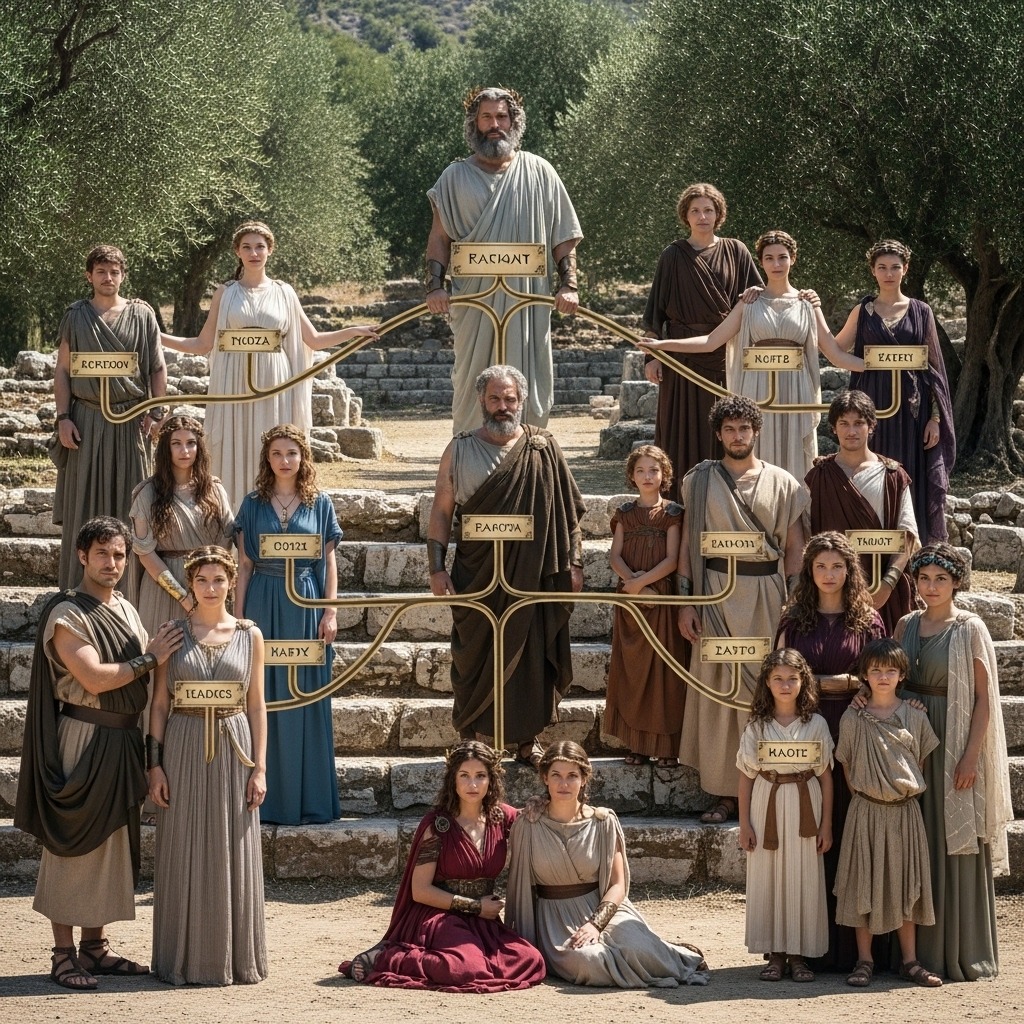
The Major Categories of Greek Deities
Greek deities are primarily categorized into three major groups:
- Primordial Gods: These are the original deities who emerged at the dawn of creation. Key figures include:
- Gaia (Earth)
- Uranus (Sky)
- Titans: The descendants of the primordial gods, Titans are often seen as the predecessors to the Olympians. Notable Titans include:
- Cronus (Father of Zeus)
- Rhea (Mother of the Olympians)
- Olympians: The principal gods worshipped by the Greeks, they reside on Mount Olympus. Major Olympians include:
- Zeus (King of the Gods)
- Hera (Queen of the Gods)
- Poseidon (God of the Sea)
- Hades (God of the Underworld) [3]
Key Figures in the Family Tree
Understanding the relationships among these deities is crucial. Here are some significant connections:
- Gaia and Uranus: Gaia, the Earth, birthed Uranus, the sky, creating a foundational union from which many gods descended.
- Cronus and Rhea: This Titan couple produced the Olympians, including Zeus, Hestia, and Hera. Cronus famously swallowed his children to prevent a prophecy, only for Zeus to lead a rebellion against him.
- Zeus and His Siblings: After defeating Cronus, Zeus freed his siblings, who became the core of the Olympian pantheon. This act solidified their power structure.
The Importance of Lineage in Mythology
Lineage is more than mere genealogy in Greek mythology; it shapes character motivations and mythological narratives. For example:
- The Trojan War: The conflict was fueled by the complex familial ties among the gods and mortals, showcasing how lineage affects divine intervention.
- Persephone’s Abduction: The daughter of Demeter and Zeus, Persephone’s story hinges on her relationship with Hades, demonstrating the intertwining of family dynamics with mythology.
Visual Flowchart of Divine Connections
A visual representation of the family tree can aid understanding. Here’s a simplified flowchart:
“`
Table of Contents
Gaia ──→ Uranus
└─→ Titans (Cronus, Rhea)
└─→ Olympians (Zeus, Hera, etc.)
“`
This structure illustrates how each generation builds upon the last, creating a rich tapestry of relationships that define Greek mythology.
The Primordial Gods: The Roots of Greek Mythology
The Primordial gods form the foundational layer of Greek mythology. They represent the essential forces of existence and are crucial to understanding the family tree of the Greek pantheon.
Chaos: The Beginning of All
Chaos is the first entity in Greek mythology, a primordial void from which everything emerged. Often described as both a deity and a state of existence, Chaos embodies the concept of nothingness and disorder. This void gave rise to the first beings, including:
- Nyx (Night)
- Erebus (Darkness)
Chaos is not merely an absence; it is a vital force that precedes creation, emphasizing the significance of beginnings in the Greek mythos. The offspring of Chaos, such as Nyx and Erebus, illustrate the duality of existence, where light and darkness are interconnected.
Gaia: Mother of Earth
Gaia, or Gaea, is another critical Primordial god. She is the personification of the Earth and the mother of all life. Emerging from Chaos, Gaia birthed Uranus (the sky), establishing the first cosmic union. Their relationship produced the Titans, who are central figures in Greek mythology. Notable children include:
- Cronus: Leader of the Titans
- Rhea: Mother of the Olympians
Gaia’s role extends beyond mere creation; she represents fertility, nurturing, and the interconnectedness of life. Her legacy persists through the Titans and the Olympian gods, highlighting her influence on subsequent generations of deities [5].
Other Key Primordials and Their Roles
While Chaos and Gaia are prominent, several other lesser-known Primordial gods play vital roles in shaping the cosmos:
- Erebus: Represents deep darkness. He is often associated with the Underworld and is a spouse of Nyx.
- Aether: Personifies the upper air and light. Born from Erebus and Nyx, Aether symbolizes the bright upper regions of the atmosphere.
- Hemera: The embodiment of day, she is also a child of Erebus and Nyx, representing the balance of night and day.
- Tartarus: A primordial deity, Tartarus represents the abyss and serves as a primordial version of the Underworld, where the Titans were imprisoned.
Understanding these roles enriches our comprehension of the Greek gods’ family dynamics. For example, the relationships among these Primordial deities set the stage for the conflicts and alliances that characterize later mythological narratives, such as the Titanomachy, where the Olympians battled the Titans for dominance.
Case Study: Myths Illustrating Primordial Influence
Consider the myth of Uranus and Gaia. Their union produced the Titans, but Uranus’ fear of their potential led him to imprison them within Gaia. This event catalyzed the rebellion led by Cronus, demonstrating how the principles of creation and conflict are rooted in the relationships established by the Primordial gods. Such narratives illustrate how foundational myths reflect the complex family trees of Greek deities and their enduring impact on culture.
By delving into the roles and relationships of the Primordial gods, we gain insight into the intricate tapestry of Greek mythology. Each entity contributes to the legacy of the Greek pantheon, defining the very essence of existence and the narrative arcs that define their descendants.
The Titans: The First Divine Dynasty
The Titans are a pivotal element in the Greek gods’ family tree. They represent the first divine dynasty, setting the stage for the rise of the Olympians. Understanding their lineage and relationships is essential to grasp the complexities of Greek mythology.
Key Titans and Their Attributes
The Titans, offspring of Gaia and Uranus, include several noteworthy figures:
- Cronus: The leader of the Titans, famous for overthrowing his father Uranus. He is the father of several Olympians, including Zeus and Hades.
- Rhea: Sister and wife of Cronus, revered as the mother of the Olympians. She played a crucial role in saving Zeus from Cronus’s wrath.
- Oceanus: The Titan of the ocean, symbolizing the vastness of water. His children include the Oceanids, nymphs of the sea.
- Hyperion: The Titan of light, associated with the sun and celestial bodies. He fathered Helios (the Sun), Selene (the Moon), and Eos (the Dawn).
- Iapetus: Associated with mortality and craftsmanship, he fathered Prometheus, who gifted fire to humanity.
These Titans embody elemental forces and fundamental aspects of existence. Their interactions define the narrative arc of Greek mythology.
The Role of Cronus and Rhea
Cronus and Rhea’s relationship is central to the Titan legacy. Cronus, fearing a prophecy that foretold his downfall at the hands of his children, swallowed each of them at birth. Rhea, desperate to save her youngest son Zeus, hid him in Crete and tricked Cronus into swallowing a stone instead.
This act of defiance created a pivotal moment in mythology. Zeus ultimately led a rebellion against Cronus, freeing his siblings and establishing the Olympian order. This transition marked the end of the Titan reign and the dawn of a new era.
How the Titans Influenced the Olympians
The Titans’ downfall significantly shaped the rise of the Olympians. As the original deities, they set the stage for complex family dynamics and conflicts among the gods. The Olympians, led by Zeus, inherited both attributes and animosities from their Titan predecessors.
- Legacy of Power: The Olympians, while stronger, carried the Titan legacy in their actions and relationships.
- Cultural Significance: Myths surrounding the Titans illustrate themes of power, rebellion, and the cyclical nature of authority.
Timeline of Significant Events
1. Uranus Overthrown by Cronus: Cronus castrates Uranus, marking the Titans’ rise.
2. Birth of Olympians: Cronus swallows his children, only to be defied by Rhea.
3. Titanomachy: The war between the Titans and Olympians culminates in the defeat of Cronus and his allies.
Understanding these events illuminates the intricate family dynamics and the enduring impact of the Titans on Greek mythology. The relationships among these figures illustrate not only their lineage but also the moral and thematic lessons woven into the fabric of ancient Greek culture.
The Olympians: Rulers of Mount Olympus
The Olympian gods form the core of ancient Greek mythology, representing power, traits, and human experiences. Their family ties are intricate, reflecting both divine authority and human-like relationships.
The Twelve Olympians: Who They Are
The Twelve Olympians are the principal deities of Greek mythology. Each holds a specific domain and embodies distinct attributes. Here’s a breakdown:
| God/Goddess | Domain | Key Relationships |
|---|---|---|
| Zeus | Sky and Thunder | Brother to Hades and Poseidon; husband to Hera. |
| Hera | Marriage and Family | Wife of Zeus; mother of Ares and Hephaestus. |
| Poseidon | Sea and Earthquakes | Brother of Zeus and Hades; father of Cyclops. |
| Hades | Underworld | Brother of Zeus and Poseidon; married to Persephone. |
| Athena | Wisdom and War | Daughter of Zeus; born from his forehead. |
| Apollo | Sun and Prophecy | Son of Zeus; twin brother of Artemis. |
| Artemis | Moon and Hunt | Daughter of Zeus; twin sister of Apollo. |
| Ares | War | Son of Zeus and Hera; represents chaos in battle. |
| Aphrodite | Love and Beauty | Born from sea foam; associated with multiple gods. |
| Hephaestus | Fire and Craftsmanship | Son of Hera; husband of Aphrodite. |
| Demeter | Agriculture | Mother of Persephone; sister to Zeus. |
| Dionysus | Wine and Festivity | Son of Zeus; a late addition to the Olympians. |
Zeus: King of the Gods
Zeus reigns supreme as the king of the gods. His authority extends over the sky and is associated with thunder and lightning. His numerous offspring include many Olympians and heroes. Zeus often intervenes in mortal affairs, reflecting his dual role as a protector and punisher.
Key Relationships:
- Hera: His sister and wife, representing familial tension and loyalty.
- Athena: A daughter known for wisdom and strategic warfare, showcasing a unique birth narrative where she emerged from Zeus’s head, symbolizing intellect.
Hades: The Underworld and Its Connections
Hades governs the Underworld, a realm distinct from Mount Olympus. Although often overshadowed by his brothers, Zeus and Poseidon, Hades plays a critical role in the balance of life and death. His marriage to Persephone links him to the cycles of nature.
Key Relationships:
- Persephone: His wife, whose seasonal return to the surface world symbolizes rebirth.
- Zeus and Poseidon: Brothers with whom he shares dominion over the cosmos, reflecting the division of power among the three.
Illustrative Myths of Family Dynamics
Several myths illustrate the relationships among the Olympians. For example, the story of Hercules highlights Zeus’s role as a father, while the tale of Persephone explores the complexities of Hades’s marital bond. Such narratives reveal how divine relationships mirror human experiences—love, betrayal, and familial loyalty.
This complex web of connections among the Olympians not only defines their identities but also serves as a foundation for many myths that permeate ancient Greek culture.
The Offspring of the Olympians: A Web of Relationships
The offspring of the Olympian gods play pivotal roles in Greek mythology. Their stories enrich the tapestry of divine relationships, illustrating the complexities within the family tree of the gods.
Famous Children of Zeus
Zeus, the king of the gods, fathered many notable figures. His children often embody their father’s traits, both heroic and flawed. Here are a few significant offspring:
- Athena: Born from Zeus’s head, she is the goddess of wisdom and warfare. Her birth symbolizes strategic thinking and intelligence, integral to Greek culture[8].
- Apollo: The god of the sun, music, and prophecy, Apollo is a quintessential figure. His duality represents both the light of reason and the chaos of passion, often reflected in his myths[10].
- Hercules: A demigod renowned for his strength and heroic feats, Hercules represents the struggle between human frailty and divine power. His labors signify overcoming insurmountable challenges, showcasing Zeus’s influence on his lineage.
Demigods and Their Impact
Demigods, born from the union of gods and mortals, significantly impact Greek mythology. Their stories often highlight the consequences of divine relationships. Notably:
- Perseus: The son of Zeus and Danaë, Perseus is famous for slaying Medusa. His quest reflects the heroic ideals expected of divine offspring.
- Theseus: A son of Poseidon, Theseus embodies the hero’s journey. His adventures, including the defeat of the Minotaur, illustrate the blend of divine heritage and human experience.
The Role of Other Olympian Offspring
Other Olympians also contribute to the mythological narrative through their children. These offspring often intertwine with mortal affairs, further enriching the mythology. For example:
- Hermes: As the messenger god, Hermes fathered several notable figures, including Pan. His role as a guide between realms signifies the interconnectedness of gods and mortals.
- Demeter: Her daughter, Persephone, plays a crucial role in the cycle of seasons. Persephone’s abduction by Hades illustrates the complexities of familial ties and their impact on the world.
These examples underscore the intricate web of relationships among the Greek gods. Each offspring carries the legacy of their divine parents, shaping the mythology and cultural significance of ancient Greece.
The Interrelationships: Marriages, Affairs, and Conflicts
The Greek gods are known for their intricate relationships marked by marriages, affairs, and conflicts. These dynamics not only shape their personal stories but also influence the broader tapestry of Greek mythology.
Marriages and Alliances
Central to the Greek pantheon are the marriages between gods, particularly the union of Zeus and Hera. Their marriage symbolizes authority and familial power. Yet, it is fraught with tension due to Zeus’s numerous affairs. These relationships often lead to significant mythological events. For instance:
- Zeus and Hera: Their marriage produces three children: Ares, Hebe, and Hephaestus. This union represents both cooperation and conflict, embodying the complexities of divine rule.
- Hades and Persephone: Hades, the god of the Underworld, abducts Persephone, leading to her dual existence between the mortal realm and the Underworld. This marriage highlights themes of consent and the cyclical nature of life and death [11].
- Aphrodite and Ares: Their affair generates notable offspring, including Eros, the god of love. This union underscores the intersection of love and war in mythology [12].
Infamous Affairs and Their Consequences
Zeus’s numerous affairs are infamous and often lead to dramatic consequences. Each liaison produces notable offspring, complicating the family tree further. Key examples include:
- Leto: Zeus’s affair with Leto results in the birth of the twins Artemis and Apollo. Their roles as hunter and healer, respectively, add depth to their divine lineage.
- Maia: Zeus’s relationship with Maia produces Hermes, the messenger god, whose cunning and agility become vital in various myths.
These affairs not only reflect Zeus’s character but also serve to expand the pantheon, creating new relationships, rivalries, and alliances.
Divine Conflicts and Their Mythological Importance
Conflicts among the gods often arise from personal relationships, reflecting human-like dynamics on a cosmic scale. Key conflicts include:
- Zeus vs. Cronus: Zeus defeats his father Cronus, establishing his reign as king of the gods. This conflict illustrates the theme of generational struggle and the importance of authority.
- Ares and Athena: The war god Ares often clashes with Athena, the goddess of wisdom, representing the juxtaposition of brute force and strategic intellect in warfare.
Such conflicts not only drive mythological narratives but also serve as allegories for human experiences, reflecting the trials and tribulations of familial relationships.
| God/Goddess | Relationship | Offspring | Conflict/Significance |
|---|---|---|---|
| Zeus | Married to Hera | Ares, Hebe, Hephaestus | Authority and familial power |
| Hades | Married to Persephone | None | Themes of life and death |
| Aphrodite | Affair with Ares | Eros | Intersection of love and war |
The interrelationships among the Greek gods create a rich narrative landscape. They illustrate the complexities of power, love, and conflict, making the family tree of Greek mythology a fascinating subject of study.
Cultural Significance: Why the Family Tree Matters
The family tree of Greek gods holds immense cultural significance, shaping not only mythology but also social structures in ancient Greece. Understanding these relationships reveals much about the values and beliefs of that era.
Lineage and Social Structures in Ancient Greece
The genealogy of the Greek gods mirrors the societal norms of ancient Greece. Each god’s lineage often correlates with their roles in myth and society. For instance, Zeus, as the king of the Olympians, embodies authority and leadership. This hierarchy reflects the political structures of the time, where lineage determined power.
- Key Relationships:
- Gaia and Uranus: The origin of the Titans, Gaia is the mother of Uranus, symbolizing the earth’s primacy.
- Cronus and the Olympians: Cronus, the father of Zeus, illustrates the cycle of power transfer, mirroring familial succession in Greek city-states.
Influence on Art and Literature
The complex relationships among the gods have inspired countless works of art and literature. Myths surrounding familial conflicts, such as the rivalry between Zeus and Cronus, serve as allegories for human experiences. Artists and writers have drawn from these stories, embedding them into the cultural fabric.
- Examples in Art:
- Prominent Myths: The tale of Persephone’s abduction by Hades emphasizes themes of love and loss.
- Literary Adaptations: Works like “The Iliad” and “The Odyssey” reflect the gods’ family dynamics and their impact on mortal lives.
Modern Interpretations and Adaptations
Today, the Greek gods’ family tree continues to resonate. Modern adaptations in film and literature often explore these relationships, reinterpreting ancient myths for contemporary audiences. For example, the portrayal of Zeus in popular media often emphasizes his role as both a powerful ruler and a flawed father.
- Cultural Reflections:
- Heroic Narratives: Characters like Hercules highlight the struggle against divine lineage, reinforcing the idea of individual agency.
- Reimagined Myths: Modern retellings often focus on the emotional aspects of these relationships, making ancient stories relatable.
Understanding the Greek gods’ family tree not only enhances our appreciation of ancient myths but also reveals how these narratives shaped societal structures and beliefs that echo through time.
Conclusion: A Recap of the Greek Gods Family Tree
Understanding the Greek gods’ family tree illuminates the intricate relationships and dynamics that shaped ancient mythology. These connections not only define the characters’ roles but also reflect the cultural values of ancient Greece.
Key Relationships Among the Gods
- Primordial Deities: Gaia (Earth) and Uranus (Sky) are the foundational entities. Their union produced the Titans, marking the beginning of divine lineage.
- Titans to Olympians: Cronus, a Titan, fathered the Olympians, including Zeus, Hades, and Poseidon. This transition from Titans to Olympians symbolizes a shift in power dynamics in mythology.
- Marriage and Offspring: Zeus married his sister Hera, forming a central family unit among the Olympians. Their children—Ares, Hebe, and Hephaestus—illustrate the familial bonds and conflicts that drive numerous myths.
Cultural Significance of Family Dynamics
The family structure of the Greek gods reflects broader societal norms. The relationships often illustrate themes of power, betrayal, and loyalty, mirroring human experiences. For instance, the tale of Persephone’s abduction by Hades highlights issues of consent and the cyclical nature of life and death, emphasizing the gods’ influence on human affairs.
Visualizing the Family Tree
To enhance comprehension, a visual infographic encapsulating the Greek gods’ family tree can be invaluable. This representation clarifies relationships and hierarchies, making it easier for readers to grasp the complex interconnections among the gods.
By dissecting these relationships, we gain insights into ancient beliefs and their lasting impact on contemporary culture. Understanding the Greek gods’ family tree is essential for anyone interested in the nuances of mythology and its relevance today.
Frequently Asked Questions
These quick answers cover the most common questions about this topic, including key details, practical tips, and common concerns.
Greek Gods Family Tree: Who is Who?
The Greek gods’ family tree is a complex network of relationships among primordial gods, Titans, and Olympians. It begins with primordial deities like Gaia and Uranus, who produce the Titans. The Titans, led by Cronus, are the predecessors to the Olympian gods, including Zeus, Hera, and Poseidon. These relationships shape many myths and divine interactions.
Who are the 12 Greek gods family tree?
The 12 Olympian gods are Zeus, Hera, Poseidon, Hades, Athena, Apollo, Artemis, Ares, Aphrodite, Hephaestus, Demeter, and Dionysus. They are descended from Titans like Cronus and Rhea or born directly from primordial gods. Their familial ties include marriages, offspring, and rivalries that influence myth stories.
Who is Apollo’s favorite kid?
Apollo is known to have had several children, but one of his most notable offspring is Asclepius, the god of medicine. While myths do not specify a “favorite,” Apollo’s relationship with his children often highlights his role as a protector and mentor, especially in arts and healing.
Who were the 12 children of Zeus?
Zeus fathered many children, but his most famous Olympian offspring include Athena, Apollo, Artemis, Ares, Hephaestus, and Hermes. He also had children with mortal women, such as Perseus and Heracles (Hercules), who became legendary heroes.
How are the 12 Olympian gods related?
Most Olympians are siblings, born from Zeus and either Hera or other divine parents. For example, Athena is Zeus’s daughter, born from his head, while Apollo and Artemis are twins, born to Zeus and Leto. Their familial ties often involve marriages and alliances that influence myth narratives.
What role did the Titans play in Greek mythology?
The Titans were the first divine generation, born from Gaia and Uranus. They ruled before the Olympians and fought against them in the Titanomachy. Their defeat led to the rise of Zeus and the Olympian gods, marking a major shift in divine power.
What are the characteristics of the Primordial gods?
Primordial gods represent fundamental cosmic forces. Gaia symbolizes Earth, Uranus the Sky, Nyx Night, and Chaos the void. They embody the origins of existence and set the stage for subsequent divine generations. Their relationships often involve creation, conflict, and balance.
What is the significance of the Greek gods’ family tree?
The family tree illustrates the origins, alliances, and rivalries that shape myth stories. It reflects cultural values like authority, kinship, and morality. Understanding these relationships helps explain the motives behind gods’ actions and their influence on human life.
Who are the main characters in Greek mythology?
Main characters include Zeus, Hera, Poseidon, Hades, Athena, Apollo, Artemis, Ares, Aphrodite, Hephaestus, Demeter, and Dionysus. They represent natural forces, human traits, and societal ideals, forming the core of Greek myth stories and religious practices.
How do the relationships among Greek gods affect their stories?
Divine relationships—marriages, rivalries, and offspring—drive myth narratives. Conflicts often stem from familial disputes, such as the Titanomachy or Zeus’s infidelities. These relationships explain divine conflicts, hero quests, and moral lessons woven into Greek mythology.
References
1. Zeus | Greco-Roman Religions
3. I am Hades: King of the Underworld, Lord and Collector …
6. GOVX: Military & Government Discounts on 1000+ Brands
7. Explore the difference between Greek and Roman mythology
9. Eileithyia: The Goddess of Labour – PMC – NIH
10. Artemis, a fierce and fickle goddess
11. The Story of Hades and Persephone: Rape and Romance
12. Aphrodite and the Gods of Love: Eros and Hermaphroditos …
14. Worship of Greek Gods in Public and Private Life
16. Greek Mythology