
Athena, the Greek goddess of wisdom and warfare, is celebrated in numerous myths that reveal her character and significance. This article explores 8 captivating myths and stories that define Athena’s legacy in Greek mythology, showcasing her relationships with other gods and heroes.
1. The Birth of Athena: A Unique Arrival
Athena’s birth is one of the most extraordinary tales in Greek mythology. Born from Zeus’s head, she entered the world fully grown and armed, which speaks volumes about her character and role as a goddess.

The Prophecy Surrounding Her Birth
Zeus had a reason to be cautious. A prophecy warned him that Metis, the goddess of wisdom and Athena’s mother, would bear a child more powerful than him. To prevent this, he took drastic action. Zeus swallowed Metis while she was pregnant.
- This decision reflected his fear of losing power.
- It also set the stage for Athena’s unique emergence.
Zeus’s Drastic Actions and Their Implications
The moment came when Zeus experienced unbearable headaches. He called for Hephaestus, the god of blacksmiths, to solve his problem. With a swift strike of an axe, Hephaestus split open Zeus’s head. Out came Athena, fully armored and ready for battle.
- This dramatic birth symbolizes her duality: a blend of wisdom from her mother and strength from her father.
- It also shows Zeus’s vulnerability, even as the king of gods.
Symbolism of Athena’s Emergence
Athena’s birth is rich with symbolism. Emerging from Zeus’s head represents intellectual prowess and strategic warfare. Unlike other gods born in a more traditional manner, her entrance signifies that wisdom and power can coexist.
- Athena’s armor represents her readiness for battle and her protective nature.
- Her battle cry upon emergence illustrates her fierce spirit and readiness to defend her values.
Athena’s unique arrival not only defines her character but also sets her apart as a goddess of wisdom and warfare. This tale encapsulates the themes of power, fear, and the complexities of divine relationships in Greek mythology.
2. Athena and Arachne: The Weaving Contest
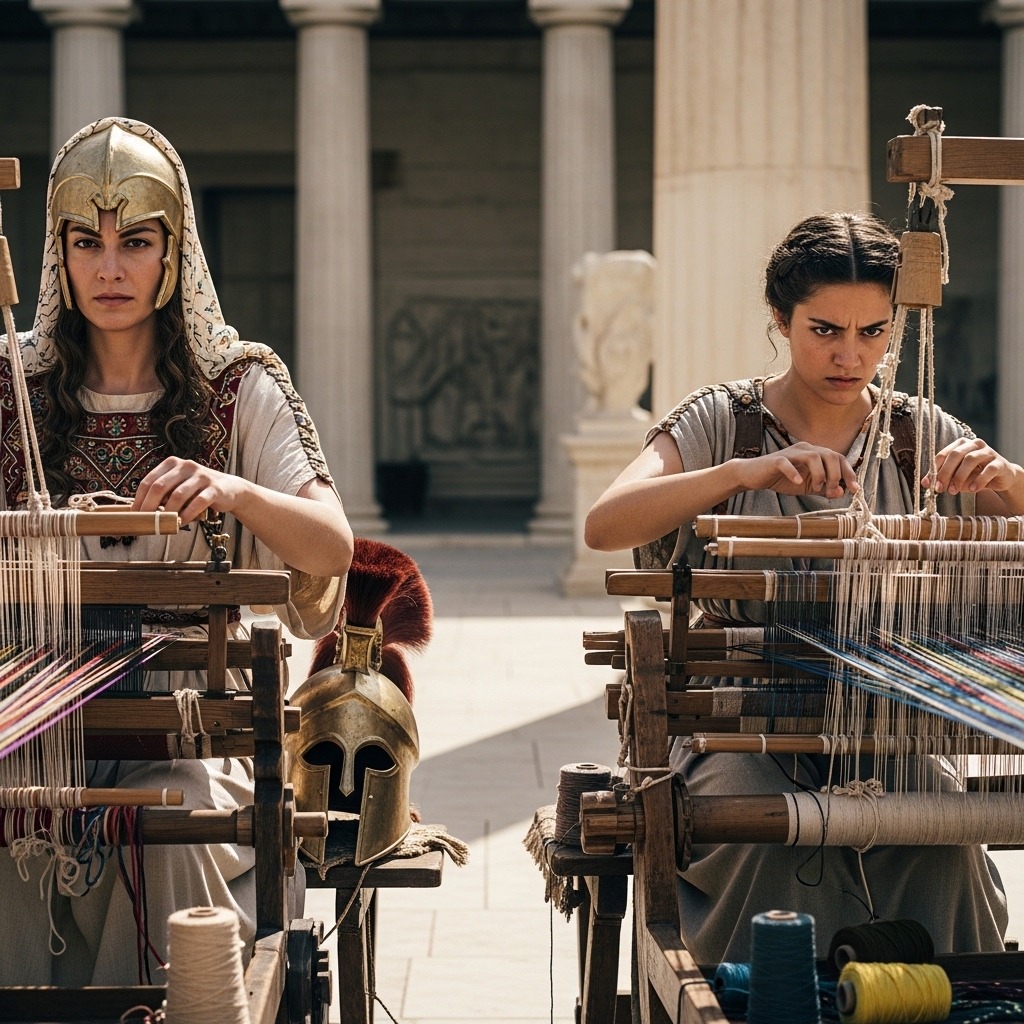
The story of Arachne and Athena is a classic tale of pride and punishment. It shows us the fine line between skill and hubris, and how the goddess of wisdom handled a challenge to her authority.
Table of Contents
The challenge and Arachne’s skill
Arachne was a talented weaver. She boasted that she was better than Athena herself. This caught the goddess’s attention. Athena decided to confront Arachne, offering her a chance to retract her claim. But Arachne stood firm, challenging Athena to a weaving contest.
- Arachne’s work: Arachne crafted beautiful tapestries that depicted the gods in all their flawed glory. She showed their romantic escapades and misdeeds, making them seem alive.
- Athena’s work: In contrast, Athena created a tapestry that illustrated her own victories and the consequences of challenging the gods. It was a beautiful piece, but it also served as a warning.
Athena’s reaction and transformation of Arachne
The contest was intense. Both weavers produced stunning pieces. However, Athena was furious at Arachne’s subject matter and her arrogance.
- The outcome: When Athena saw Arachne’s work, she felt both envy and rage. In a fit of anger, she destroyed Arachne’s tapestry and struck her down.
- The transformation: Instead of killing Arachne, Athena transformed her into a spider. This was a punishment but also a sign of mercy, allowing Arachne to weave forever.
Lessons learned from their contest
The tale carries deep moral lessons. It teaches us about the dangers of hubris and the importance of humility.
- Hubris: Arachne’s confidence led her to challenge a goddess, which resulted in dire consequences.
- Humility: Athena’s reaction shows that while she is powerful, she also values wisdom and respect among mortals.
This myth reminds us that pride can blind us to our limits. It showcases Athena’s dual nature as both a mentor and a punisher, embodying wisdom and the consequences of overstepping boundaries.
3. Athena’s Support for Perseus: A Divine Ally
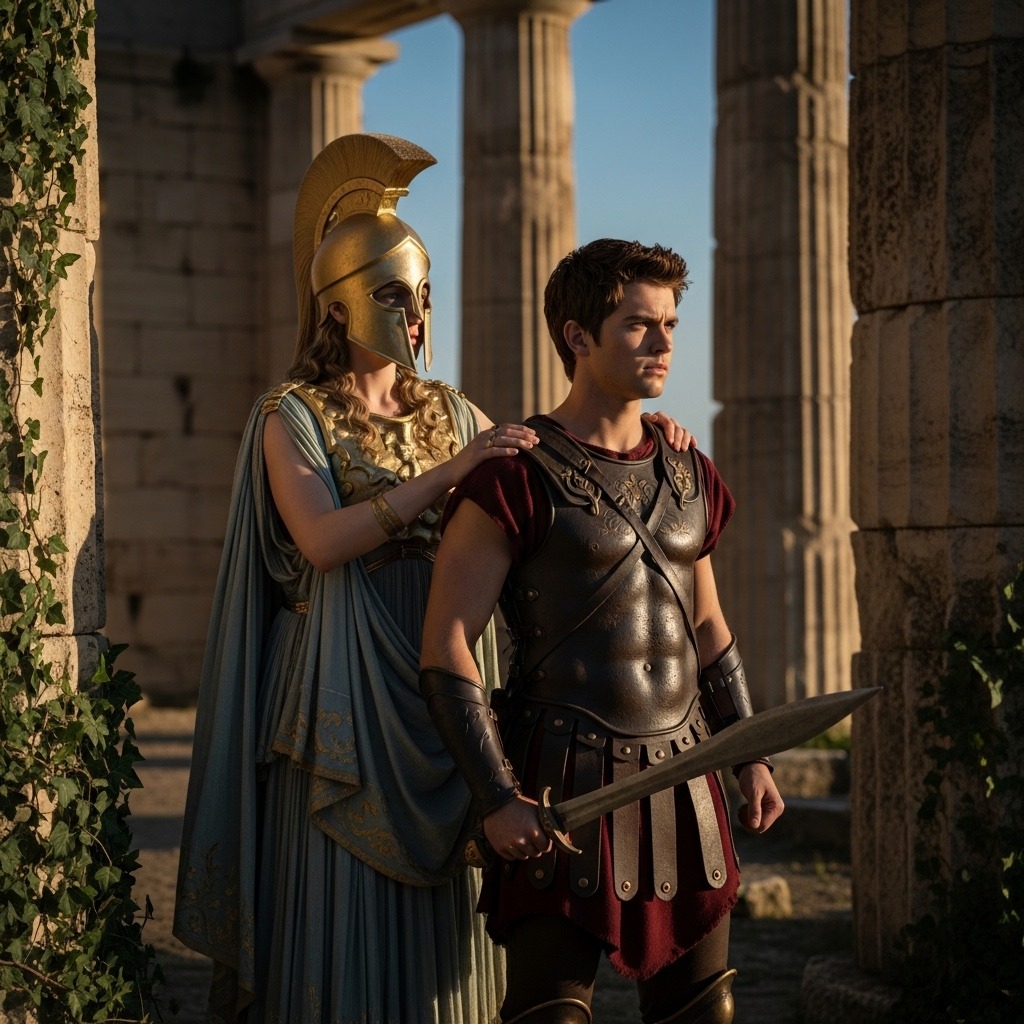
Athena played a crucial role in the myth of Perseus, especially in his quest to slay Medusa. As a protector of heroes, she provided guidance and tools essential for his success.
Athena’s Guidance to Perseus
Athena’s support began long before Perseus faced Medusa. She was instrumental in planning his approach. Here’s how she helped:
- Strategic Advice: Athena advised Perseus on how to confront Medusa. She encouraged him to use a reflective shield to avoid direct eye contact, preventing him from being turned to stone.
- Preparation: She guided him to seek out the Graeae, three sisters who shared one eye. With their help, Perseus acquired the necessary tools for his quest.
The Significance of the Shield
Athena’s shield was not just a piece of armor; it was a symbol of her wisdom and a vital asset in battle.
- Reflective Power: The polished surface helped Perseus see Medusa without looking directly at her. This clever tactic showcased Athena’s ability to merge strategy with physical prowess.
- Aegis and Gorgoneion: The shield also featured the Gorgoneion, a representation of Medusa’s head, which could petrify enemies. This emblem emphasized Athena’s strength and protective nature.
Impact of Athena’s Support on Perseus’s Success
With Athena’s guidance, Perseus achieved what many thought impossible. Her influence was paramount for several reasons:
- Enhanced Confidence: Knowing he had divine support boosted Perseus’s morale. He felt prepared to face challenges ahead.
- Hero’s Journey: Athena’s mentorship exemplifies her role in the hero’s journey. She doesn’t just intervene; she teaches valuable lessons about courage and wisdom.
In contrast, other goddesses like Hera or Aphrodite often played different roles in hero myths, sometimes favoring beauty or love over strategic wisdom. Athena’s unique approach highlights her duality as both a warrior and a wise goddess. This makes her contributions to myths like Perseus’s stand out.
4. The Contest for Athens: Wisdom over Strength
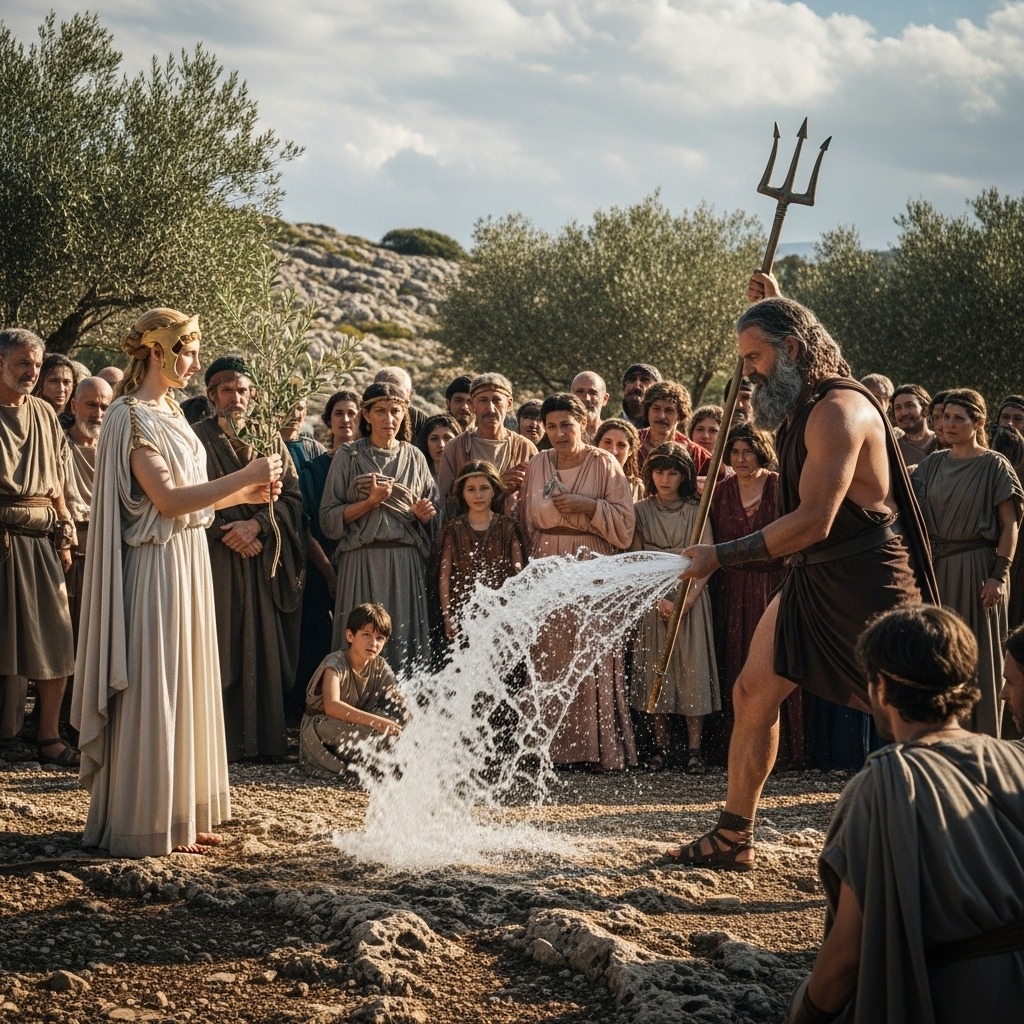
Athena and Poseidon battled for the title of patron of Athens. Their competition was about more than just a title; it showcased the values that shaped the city’s identity.
Poseidon’s gift vs. Athena’s olive tree
Poseidon struck the ground with his trident and created a saltwater spring. It was impressive but not practical. On the other hand, Athena planted an olive tree. This tree offered food, oil, and wood. The citizens of Athens valued Athena’s gift more. It symbolized nourishment and prosperity, essential for their survival and growth.
Consequences of the contest for Athens
The outcome of this contest had lasting effects. Athena won, and the city was named after her. This decision reflected the Athenian respect for wisdom and resources over mere power. Athens thrived under her patronage, becoming a center of learning and culture. This choice influenced how the Athenians viewed themselves—intelligent, strategic, and resourceful.
Civic values reflected in their offerings
The gifts from Athena and Poseidon represented key civic values. Athena’s olive tree symbolized peace and prosperity, while Poseidon’s spring highlighted brute strength. The contest was more than a rivalry; it was a reflection of what the Athenians prioritized in their society. They chose to honor wisdom and the benefits it could bring rather than the chaotic nature of power.
In essence, the contest set the tone for Athenian identity. It emphasized the importance of wisdom and resources in building a successful civilization.
5. Athena’s Role in the Trojan War: Strategic Warfare
Athena played a pivotal role in the Trojan War, guiding and supporting Greek heroes with her wisdom and strategy. Her influence shaped the outcome of many key battles, showcasing her unique approach to warfare.
Athena’s Guidance to Odysseus
Odysseus, known for his cunning, often turned to Athena for support. She provided him with crucial advice that helped him navigate challenges during the war. Here are some highlights of her guidance:
- Tactical Inspiration: Athena inspired the famous Trojan Horse strategy. This clever ruse led to the fall of Troy.
- Divine Protection: Throughout his journey, she shielded Odysseus from harm, ensuring he could fulfill his destiny.
- Wisdom in Decision-Making: She advised him on how to deal with both allies and enemies, emphasizing intellect over brute force.
Her Role in Major Battles
Athena’s presence on the battlefield was more than just symbolic. She actively influenced the tides of battle in several ways:
- Support of Heroes: Athena backed key figures like Diomedes and Achilles, enhancing their combat skills and morale.
- Divine Intervention: During critical moments, she intervened to turn the battle in favor of the Greeks. Her strategic mind often outmatched the sheer force of others.
- Combat Excellence: She embodied the warrior ideal, merging skill with intellect, which set her apart from Ares, the god of war.
Lessons of Strategy and Intellect in Warfare
Athena’s involvement in the Trojan War teaches valuable lessons about strategy and intellect:
- Cunning Over Force: Her tactics highlighted that wisdom could often win wars more effectively than sheer strength.
- Preparation and Planning: Athena’s approach encouraged Greek heroes to think ahead and plan their moves carefully.
- Balance of Power: She demonstrated that true strength lies in knowing when to fight and when to use diplomacy.
Athena’s role in the Trojan War underscores her significance as a goddess who valued strategy, intellect, and wisdom over mere might. Her influence extended beyond the battlefield, shaping the very essence of heroism in Greek mythology.
6. Lesser-Known Myths of Athena: Expanding the Narrative
Athena’s stories go beyond her famous tales. She interacts with various characters, revealing her complex nature. Let’s dive into some lesser-known myths that showcase her multifaceted character.
Athena and Erichthonius: The Foster Mother
One intriguing myth involves Erichthonius, a unique child of Gaia. Athena became his protector. After Hephaestus attempted to assault her, she took the child and raised him.
- Significance: This story highlights Athena’s nurturing side. She wasn’t just a warrior; she played a maternal role in shaping future leaders of Athens.
- Connection to Athens: Erichthonius later became a king of Athens, showing her influence on the city’s foundation.
The Story of the Trojan Horse
While the Trojan War is often associated with many heroes, Athena played a crucial role in the infamous Trojan Horse strategy.
- Insight: She inspired Odysseus to devise this clever plan. The horse represented cunning over brute force, a recurring theme in Athena’s myths.
- Moral: This tale emphasizes the idea that intelligence can triumph over might—a lesson that resonates throughout her stories.
Athena’s Relationships with Other Goddesses
Athena’s interactions with other goddesses reveal much about her character. For instance, her rivalry with Poseidon is notable.
- Contest for Athens: Athena and Poseidon vied for the patronage of Athens. While Poseidon offered a saltwater spring, Athena provided the olive tree, symbolizing peace and prosperity. The city chose her gift, solidifying her importance.
- Comparative Analysis: Unlike other goddesses who often embody love or beauty, Athena represents wisdom and strategy, showcasing her unique place in the pantheon.
Additional Lesser-Known Myths
- Athena and the Gorgons: Athena assisted Perseus by giving him a reflective shield. This helped him defeat Medusa, highlighting her role as a guide for heroes.
- Athena’s Influence in the Gigantomachy: She played a pivotal role in helping the Olympian gods defeat the giants, showcasing her warrior side.
These stories not only expand Athena’s narrative but also illustrate her as a complex figure who balances wisdom, strategy, and nurturing.
7. Athena’s Cultural Influence: From Ancient to Modern
Athena’s stories and character have left a lasting mark on our culture, from literature to education. Let’s dive into how this ancient goddess continues to inspire us today.
Athena in Modern Literature and Art
Athena pops up in various modern works, showcasing her enduring influence. Authors often draw on her wisdom and strength. Here are some examples:
- Books: In novels like “Circe” by Madeline Miller, Athena is depicted as a guiding force, influencing characters’ decisions.
- Art: Artists often portray her in contemporary pieces, celebrating her duality as both warrior and wise goddess.
Her Symbolism in Education and Empowerment
Athena embodies wisdom and strategy, making her a symbol of education and empowerment. Schools and institutions often draw inspiration from her.
- Educational Institutions: Many schools use her image or name to represent knowledge and learning.
- Empowerment Movements: Athena’s character inspires feminist movements, emphasizing strength and intelligence.
Athena’s Legacy in Contemporary Society
Athena’s legacy extends beyond literature and education. Her stories resonate in modern society, reminding us of the importance of wisdom and courage.
- Cultural References: Athena’s name is used in various contexts, from organizations promoting women’s rights to leadership programs.
- Role Models: Many view her as a model for strong, independent women today, blending intellect with strength.
Athena’s myths continue to evolve, reflecting her relevance in our contemporary narratives. Her influence is felt in various aspects of life, from storytelling to personal empowerment.
8. Comparative Analysis: Athena and Other Greek Goddesses
Athena stands out in Greek mythology for her unique blend of wisdom and warfare. Let’s see how she compares to other prominent goddesses like Artemis and Demeter.
Athena vs. Artemis: The Warrior vs. the Huntress
- Roles: Athena is the goddess of wisdom and war. She represents strategy, intellect, and courage. Artemis, on the other hand, is the goddess of the hunt and wilderness. She embodies independence and the protection of wildlife.
- Strengths: Athena’s strength lies in her strategic mind. She aids heroes like Odysseus and Perseus. Artemis showcases her strength through her hunting skills and fierce protection of her domain.
- Symbolism: Athena is often depicted with an owl, symbolizing wisdom. Artemis is associated with the moon and a deer, highlighting her connection to nature.
Athena vs. Demeter: Wisdom vs. Nurturing
- Domains: Athena governs wisdom and warfare, while Demeter is the goddess of agriculture and fertility. Demeter’s nurturing aspect contrasts with Athena’s warrior spirit.
- Interactions with Humans: Athena helps heroes in their quests, providing guidance and support. Demeter’s role is more about nurturing the earth and ensuring the growth of crops. Her story with Persephone highlights her maternal instincts and the cycle of life.
- Cultural Impact: Athena’s influence is seen in areas of education and strategy. Demeter represents agriculture and the changing seasons, showing how human life is tied to the earth.
Common Themes Among Greek Goddesses
- Strength: All three goddesses—Athena, Artemis, and Demeter—exhibit different forms of strength. Athena’s is mental and strategic, Artemis’s is physical and protective, and Demeter’s is nurturing and life-giving.
- Independence: Each goddess demonstrates independence. Athena and Artemis reject traditional roles, while Demeter showcases independence through her connection to the land and her daughter.
- Symbolic Animals: Each goddess has an animal that represents her essence. Athena’s owl signifies wisdom, Artemis’s deer represents the wild, and Demeter’s pig reflects fertility and abundance.
Athena’s unique combination of wisdom and combat prowess sets her apart. Her relationships with other goddesses highlight different aspects of femininity and strength in Greek mythology.
Frequently Asked Questions
These quick answers cover the most common questions about this topic, including key details, practical tips, and common concerns.
What are some myths of Athena?
Athena appears in numerous myths, including her birth from Zeus’s head, her role in the contest with Poseidon for Athens, and her support of heroes like Perseus and Odysseus. She is also involved in the Gigantomachy, helping the Olympian gods defeat the giants. Many stories highlight her wisdom, strategic mind, and martial prowess.
What is Athena’s most famous story?
One of her most famous stories is her birth from Zeus’s head, fully grown and armored, after he swallowed Metis. Another well-known myth is her contest with Poseidon for the patronage of Athens, where she offered the olive tree. Her aid to heroes like Perseus and Odysseus also stand out.
Are there any LGBT Greek gods?
Yes, some Greek gods and mythological figures are associated with LGBT themes. For example, Apollo and Artemis are often linked with same-sex love and relationships. Athena herself is considered a virgin goddess, representing independence and chastity, and is sometimes interpreted as a symbol of female empowerment.
Was Zeus pregnant with Athena?
No, Zeus was not pregnant with Athena. Instead, Athena was born from Zeus’s head after he swallowed Metis, her mother, to prevent a prophecy that she would produce a child more powerful than him. Her emergence was a divine birth, not a pregnancy.
How did Athena help heroes in Greek mythology?
Athena frequently assists heroes by offering guidance, strategic advice, and divine tools. She helped Perseus by providing the reflective shield to defeat Medusa, supported Odysseus with wisdom during his journey, and aided Bellerophon in taming Pegasus. Her support emphasizes her role as a protector of heroes and wisdom.
Why did Athena win the contest for Athens?
Athena won the contest against Poseidon because her gift—the olive tree—symbolized wisdom, peace, and prosperity. The Athenians valued her offering more than Poseidon’s saltwater spring, which was less practical. Her victory established her as the city’s patron goddess and reflected their civic values.
What is the moral of the myth of Arachne?
The myth teaches humility and warns against hubris—excessive pride. Arachne’s challenge to Athena and her arrogance led to her transformation into a spider. The story emphasizes respecting the gods and recognizing human limits.
How does Athena’s character compare to other Greek goddesses?
Athena is unique for her combination of wisdom, strategic warfare, and virginity. Unlike Artemis, who is primarily associated with hunting and independence, or Demeter, who embodies fertility and nurturing, Athena embodies intellect and martial skill. She stands out as a goddess of both war and wisdom, often guiding heroes and shaping civic identity.