
Many believe the $50 bill is unlucky due to its association with gambling losses and notorious figures like Bugsy Siegel.
The $50 bill is shrouded in superstition, particularly in gambling circles, where it’s thought to bring bad luck. This belief stems from historical associations and psychological patterns, showcasing how cultural narratives can shape perceptions of money.
The Cultural and Historical Origins of the $50 Bill Superstition
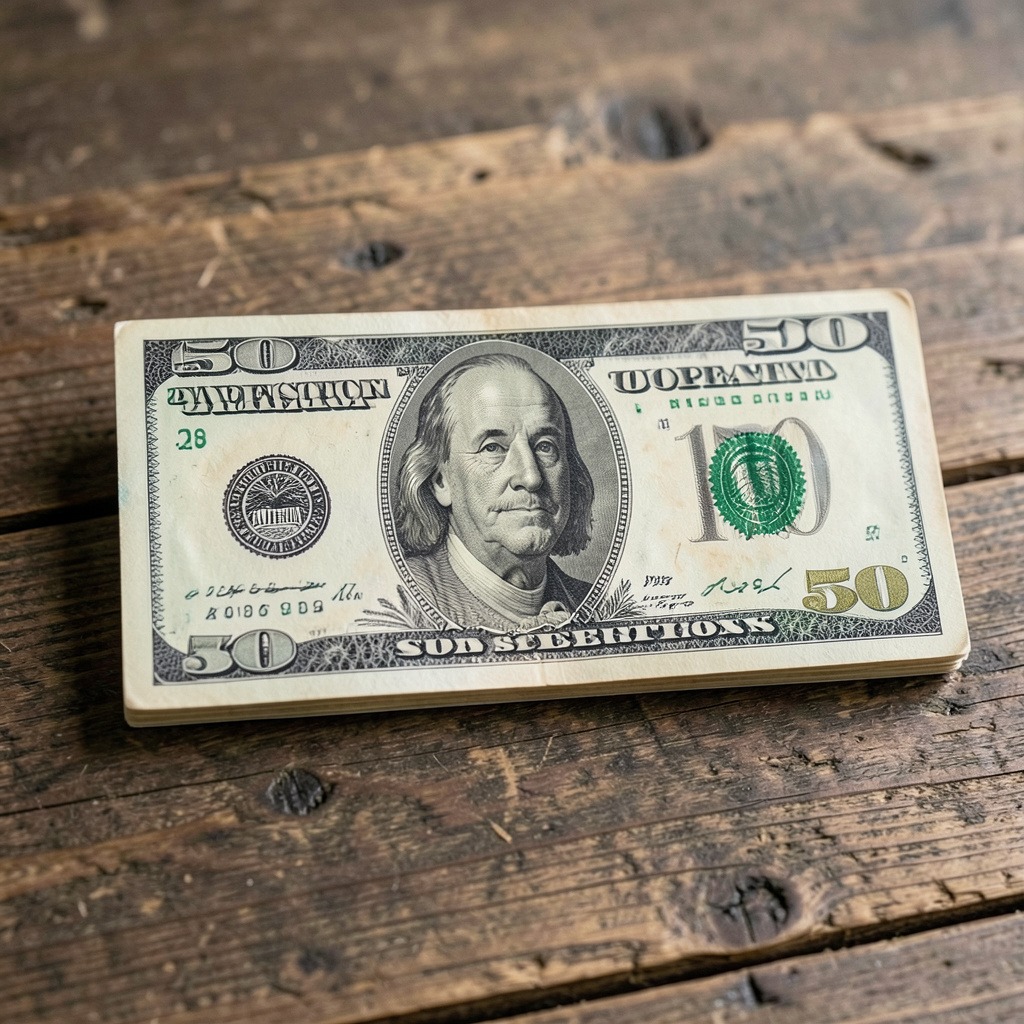
The $50 bill’s superstition is deeply rooted in American culture, shaped by its historical design and the figure of Ulysses S. Grant. Understanding this context reveals how perceptions of money can be influenced by cultural narratives.
Historical Background of the $50 Bill
The $50 bill was first introduced in the late 19th century. Its design, featuring President Ulysses S. Grant, reflects significant historical events. Grant served as a Union general during the Civil War and later became the 18th President of the United States. His presidency was marked by controversies, including corruption scandals, which have contributed to the negative associations with the bill.
- Design Elements: The bill features intricate engravings and the portrait of Grant, a choice that was initially meant to honor his contributions. However, his historical baggage has turned this honor into a source of superstition.
- Cultural Evolution: Over the years, the belief that the $50 bill brings bad luck has gained traction, especially in gambling circles. This superstition aligns with broader cultural anxieties about money and fortune.
Ulysses S. Grant’s Influence on Superstitions
Ulysses S. Grant’s complex legacy plays a pivotal role in the superstition surrounding the $50 bill. His portrayal on the currency has led to associations of misfortune among gamblers and superstitious individuals.
- Perception of Failure: Many view Grant’s presidency as a mix of triumph and failure. This duality has fostered the belief that the $50 bill, bearing his image, is inherently unlucky.
- Notable Anecdotes: Gamblers often recount stories of losing streaks after using $50 bills, reinforcing the stigma. For example, a gambler might avoid the bill entirely after a significant loss, citing it as a primary factor in their misfortune.
Cultural Narratives Around Money
The superstition surrounding the $50 bill reflects broader cultural narratives about money and luck. In many cultures, specific denominations are believed to carry different meanings and outcomes.
- Psychological Factors: Confirmation bias plays a role; individuals who believe in the curse may only remember the losses associated with $50 bills, ignoring their wins.
- Comparison with Other Denominations: Other denominations, such as the $100 bill, do not carry similar superstitions. This contrast highlights how specific cultural narratives can shape financial behaviors.
In summary, the $50 bill’s design and its association with Ulysses S. Grant have significantly influenced its superstition. Understanding these cultural narratives can help individuals navigate their own beliefs about money and luck, particularly in gambling contexts.
Psychological Factors Behind the $50 Bill Superstition
The belief that $50 bills bring bad luck is deeply rooted in psychological biases and emotional responses. Understanding these factors can illuminate why many gamblers choose to avoid this denomination.
Understanding Confirmation Bias
Confirmation bias significantly influences the perception of the $50 bill’s supposed curse. Individuals who believe in the superstition tend to focus solely on negative experiences associated with $50 bills. They remember the losses and ignore instances where the bill coincided with wins. This selective memory reinforces their belief in the bill’s bad luck.
- Example: A gambler who loses several hands while using a $50 bill may attribute the loss to the bill itself. Conversely, they might overlook a previous win made with the same bill.
Emotional Responses to Losses
Emotional reactions play a crucial role in reinforcing superstitions. Losses, especially in gambling, evoke strong feelings of regret and frustration. When a gambler experiences a significant loss after using a $50 bill, they may associate that loss with the bill. This emotional connection can lead to a long-lasting aversion.
- Case Study: A player at a casino experiences a losing streak while betting with $50 bills. After multiple losses, they decide never to use the bill again. This decision is driven by the emotional upheaval of losing, not by any factual evidence of the bill’s luck.
Superstition in Gambling Culture
Superstitions are prevalent in gambling culture, often dictating behaviors and decisions. The association of the $50 bill with bad luck is a cultural narrative that many gamblers adopt. It creates a psychological barrier that can impact financial decisions.
- Practical Issue: Gamblers might avoid using $50 bills even when they are the most convenient choice, driven by the fear of bad luck. This avoidance can lead to practical inconveniences, such as needing to break larger bills or carry more coins.
Understanding these psychological factors helps clarify why the $50 bill superstition persists. Gamblers often navigate their emotional responses and biases in making decisions, affecting their experiences and outcomes at the gambling table.
Practical Issues with Using $50 Bills
The superstition surrounding the $50 bill often leads to practical inconveniences, especially for gamblers and everyday consumers. These issues can manifest in various settings, creating obstacles in financial transactions.
Challenges in Everyday Transactions
Many stores prefer not to accept $50 bills due to their association with bad luck and counterfeiting concerns. This hesitance can lead to several challenges:
- Limited Acceptance: Not all retailers are willing to take $50 bills, especially smaller shops or local businesses.
- Change Difficulties: Even when accepted, cashiers may struggle to provide change, forcing customers to make purchases close to $50.
- Social Stigma: Using a $50 bill can draw unwanted attention, causing some consumers to feel uncomfortable.
Acceptance Issues in Casinos
Casinos are often hotspots for the $50 bill superstition. Gamblers may experience:
- Refusal of Bills: Some casinos may outright refuse to accept $50 bills, favoring smaller denominations. This can frustrate players who wish to wager larger amounts.
- Discretion Needed: Gamblers often feel the need to hide or discreetly handle $50 bills to avoid negative perceptions, which can detract from the overall experience.
Rarity and Suspicion Surrounding $50 Bills
The $50 bill’s rarity can contribute to suspicion. Many people are less familiar with this denomination, leading to:
- Increased Scrutiny: Cashiers and staff may inspect $50 bills more rigorously for authenticity, causing delays in transactions.
- Psychological Barriers: The belief that $50 bills bring bad luck can lead to hesitation in their use, even when they are the most convenient option.
Tips for Dealing with $50 Bills
To navigate the challenges associated with $50 bills, consider the following tips:
- Always Carry Smaller Denominations: Having a mix of bills ensures you can make purchases without hassle.
- Limit Use in Smaller Stores: Opt for $50 bills in larger retail settings or casinos where they are more likely accepted.
- Be Prepared with Change: If using a $50 bill, aim for purchases around that amount to avoid change issues.
- Stay Discreet: Handle bills carefully to minimize attention and avoid drawing suspicion.
By understanding these practical issues, gamblers and consumers can make informed decisions about when and how to use $50 bills, mitigating the impact of superstition on their transactions.
Comparisons with Other Denominations and Their Superstitions
The superstition surrounding the $50 bill finds parallels in beliefs associated with other currency denominations. Understanding these comparisons provides insight into cultural attitudes toward money and luck.
Superstitions Surrounding $20 and $100 Bills
The $20 and $100 bills also carry their own superstitions, albeit distinct from the $50 bill. Here’s a quick overview:
| Denomination | Superstition | Cultural Significance |
|---|---|---|
| $20 | Often considered unlucky; associated with loss | Linked to the notion of “losing face” in some cultures. |
| $50 | Believed to bring bad luck, especially in gambling | Tied to Ulysses S. Grant’s controversial presidency. |
| $100 | Viewed as a symbol of success, but can attract envy | Represents wealth; seen as both a blessing and a curse. |
Cultural Beliefs Across Different Denominations
Each denomination has its cultural narratives. The $20 bill often symbolizes misfortune, while the $100 bill is viewed as aspirational. The $50 bill uniquely embodies a blend of historical context and gambling lore, making it a focal point for superstitions.
- $20 Bill: Believed to bring bad luck. Gamblers avoid it due to the perception it may lead to losses.
- $100 Bill: Considered lucky in some contexts. However, its association with wealth can also invoke jealousy and suspicion.
Unique Characteristics of the $50 Bill
The $50 bill stands out due to its historical ties to Ulysses S. Grant and the perception of corruption during his presidency. This connection has led to the belief that carrying or using a $50 bill can bring bad luck, particularly at gambling establishments.
When faced with the decision of using a $50 bill, gamblers might consider these factors:
- Risk of Bad Luck: Some may avoid using it at gambling tables to sidestep the associated superstition.
- Psychological Impact: Beliefs can influence performance. A gambler convinced of the bill’s bad luck may perform poorly simply due to expectation.
- Decision Framework:
- Assess personal beliefs about luck.
- Consider the gambling environment and its cultural perceptions.
- Decide whether potential superstitions outweigh the practical benefits of using the bill.
This comparative perspective highlights how cultural beliefs shape the perception of currency, particularly in contexts like gambling where luck plays a significant role.
Alternatives to Using $50 Bills in Transactions
For gamblers and consumers wary of the $50 bill superstition, several alternatives exist. These options can help mitigate the psychological impact associated with larger denominations while facilitating transactions.
Other Denominations to Consider
When avoiding $50 bills, consider using the following denominations:
- $1 Bill: Widely accepted and less likely to carry any superstition.
- $10 Bill: A practical choice for smaller purchases, with no negative associations.
- $20 Bill: Common in transactions and carries less stigma than larger bills.
- $100 Bill: Although larger, some may prefer it for its association with higher value and less frequent use.
Choosing these alternatives can help alleviate any anxiety linked to the $50 bill.
Using Digital Payments
Digital payments offer a modern solution for those wanting to bypass cash altogether. Options include:
- Mobile Wallets: Services like Apple Pay or Google Wallet allow for secure transactions without cash.
- Credit/Debit Cards: Using cards can eliminate the need for physical cash and reduce concerns about superstitions.
- Cryptocurrency: Digital currencies can be an innovative alternative, though their acceptance varies.
Digital methods not only offer convenience but also help gamblers focus on the game rather than the cash in their pockets.
Strategies for Avoiding $50 Bills
To minimize the use of $50 bills, consider these strategies:
- Withdraw Smaller Denominations: When visiting an ATM, select options for smaller bills.
- Plan Transactions: Use smaller denominations for everyday purchases and reserve larger bills for specific situations.
- Ask Vendors: If you receive a $50 bill, consider asking vendors if they can provide change or if they accept smaller bills.
By employing these strategies, consumers can navigate their financial transactions more comfortably while adhering to personal beliefs about luck and superstition.
Frequently Asked Questions
These quick answers cover the most common questions about this topic, including key details, practical tips, and common concerns.
Why don’t casinos like $50 bills?
Casinos often avoid accepting $50 bills due to their association with bad luck in gambling culture. This superstition leads many gamblers to believe that using a $50 bill can result in losses. Additionally, some casinos are concerned about counterfeiting, as $50 bills are less common and may attract scrutiny.
What is hidden on a $50 bill?
The $50 bill features several security elements, including a security thread, microprinting, and a watermark of Ulysses S. Grant. These features help prevent counterfeiting and ensure the bill’s authenticity. Additionally, the bill includes a portrait of Grant, which is surrounded by intricate designs and patterns.
Why do some places not accept $50 bills?
Many retailers and smaller businesses may refuse to accept $50 bills due to concerns about counterfeiting and the negative stigma associated with the bill. They may also find it challenging to provide change for such a large denomination, leading to a preference for smaller bills that are more commonly used.
Are 50s bad luck in Vegas?
Yes, many people believe that $50 bills bring bad luck in Las Vegas. This superstition is prevalent among gamblers, who often share anecdotes of losing streaks after using this denomination. The association with notorious figures like Bugsy Siegel has further entrenched this belief in the gambling community.
Why are $50 bills viewed so negatively by poker players?
Poker players often view $50 bills negatively due to the psychological impact of superstition. Many players believe that using a $50 bill can lead to bad luck, which can affect their performance at the table. This belief is reinforced by confirmation bias, where players remember losses linked to $50 bills while overlooking wins.
What are some alternatives to using $50 bills in transactions?
To avoid the stigma of using $50 bills, consider using smaller denominations like $1, $10, or $20 bills. Digital payment methods, such as mobile wallets or credit cards, are also great alternatives. These options not only simplify transactions but also help mitigate any superstitions tied to physical cash.
When should you use $50 bills?
If you are comfortable with the superstition surrounding $50 bills, consider using them for larger purchases where they are accepted. However, it might be wise to avoid using them in gambling settings or smaller retail environments where their acceptance is uncertain. Planning your transactions can help you decide when to use this denomination effectively.