
The piano is primarily classified as a string instrument with percussion elements.
This article examines why the piano is categorized as a string instrument, exploring its construction, sound production, and how it differs from purely percussion instruments, helping clarify common misconceptions.
What Is the Piano’s Sound Production Mechanism?
The piano produces sound through a combination of string vibration and resonance, which involves both string and percussion components. Understanding how these elements work together clarifies the instrument’s classification and the nature of its sound.
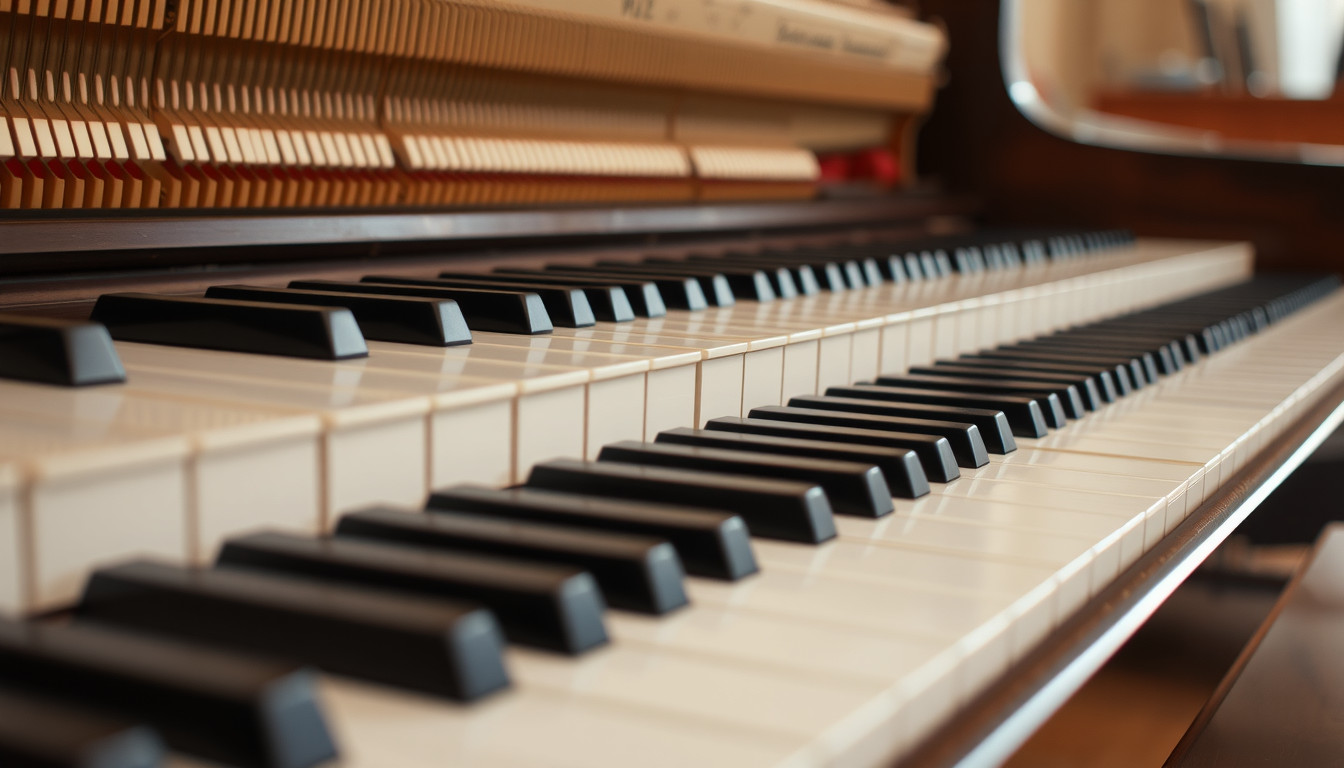
1. How Vibrating Strings Generate Sound
Inside the piano, each key is connected to a hammer that strikes one or more strings when pressed. The strings are tightly stretched across a frame and are made of steel to produce precisely tuned vibrations. When struck, these strings vibrate at specific frequencies corresponding to musical notes.
The vibration of a string creates a starting point for sound. The frequency of vibration determines the pitch that the listener hears—longer, thicker strings produce lower notes, while shorter, thinner strings generate higher notes. These vibrations are initially microscopic but become audible once amplified by the instrument’s soundboard.
2. Role of Hammers Hitting the Strings
The keys of the piano activate hammers covered with felt that strike the strings with force. The velocity and force of the hammer’s hit influence the volume and tone of the resulting sound. After striking the strings, the hammers swiftly fall away, allowing the strings to oscillate freely.
This method ensures that each note’s loudness correlates with how hard the key is pressed—a feature known as dynamics. The controlled strike by the hammer turns the continuous vibration of the strings into a musical note that can be sustained, varied, or damped according to the player’s technique.
3. Sound Amplification and the Role of the Soundboard
While the vibrating strings generate sound waves, these waves are initially very faint. The entire structure of the piano includes a large wooden soundboard that acts as a natural amplifier. The vibrations of the strings transfer energy to the soundboard through a series of bridges, causing the soundboard to vibrate at the same frequencies.
This amplification makes the notes loud enough to be heard clearly in a variety of settings. The size and material of the soundboard—typically spruce—are crucial for quality sound projection and tonal richness. The vibrations are dispersed across the instrument’s wooden body, enriching the sound with warmth and depth.
4. Comparison of Sound Production Attributes
| Attribute | String Instrument | Percussion Instrument |
|---|---|---|
| Method of producing sound | Strings vibrate when plucked, bowed, or struck | Surface or object is struck to produce vibration |
| Vibration source | Strings under tension | Perforated or solid surface |
| Sound amplification | Resonance within hollow bodies (e.g., soundboard) | Sound is primarily from the surface surface movement |
| Typical sound quality | Sustained, tonal, and expressive | Brief, sharp, or rhythmic |
The device of strings being struck, vibrating, and resonating in a wooden chamber places the piano squarely within the string instrument family, despite its percussion elements like hammers. This interaction explains why many categorize the piano as a string instrument with percussion influences.
Is the Piano Classified as a String Instrument?
The classification of the piano hinges on its sound production mechanism and its historical and musicological context. While many people think of the piano as a keyboard instrument, its fundamental characteristics align it more closely with string instruments within the broader family of musical instruments. Understanding this classification requires examining both the instrument’s construction and the way it produces sound.
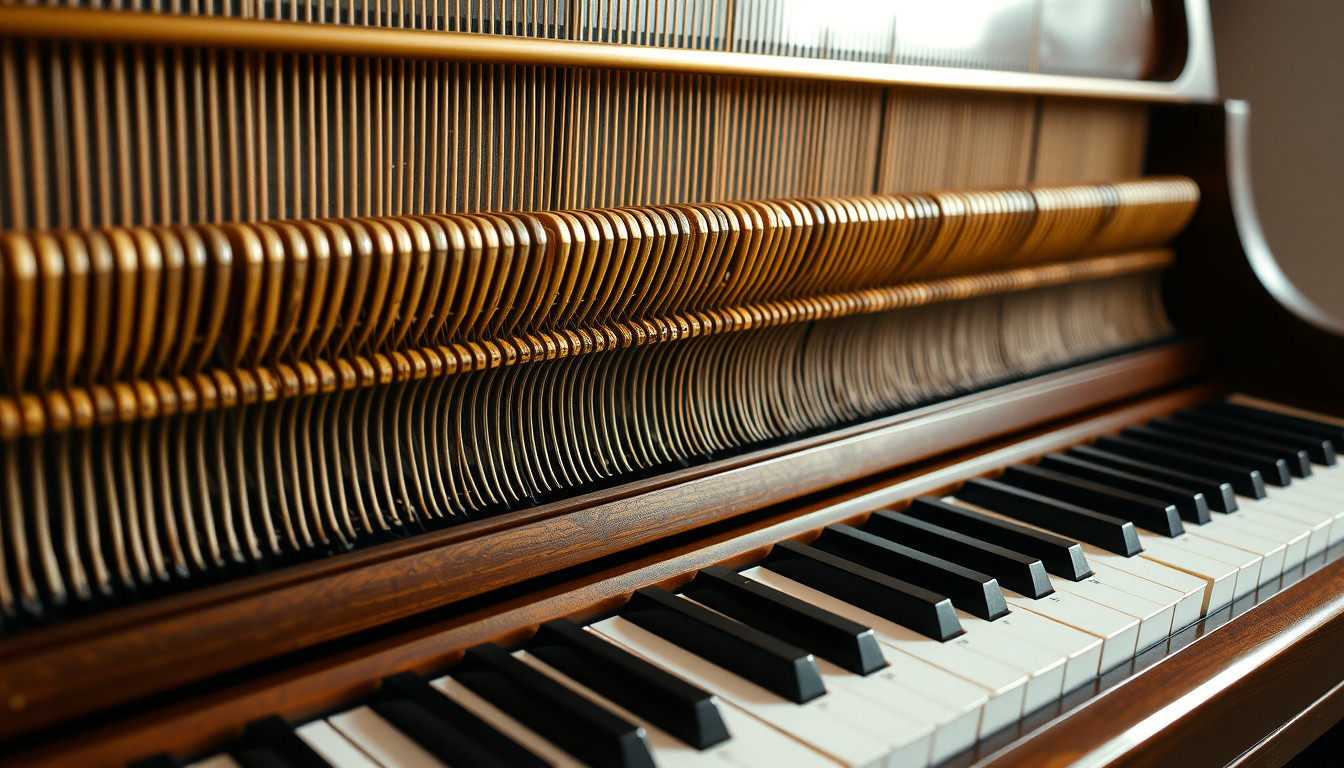
1. Is the Piano Classified as a String Instrument?
Musicologists generally classify the piano as a chordophone, which is the official term for string instruments. Chordophones are characterized by their use of vibrating strings to generate sound. In the case of the piano, an array of tightly stretched strings are struck by hammers when keys are pressed, creating vibrations that produce sound. This foundational aspect places the piano squarely within the family of string instruments, despite its unique combination of string and percussion elements.
2. Sound Production Mechanism
The piano’s sound begins when a player presses a key, which triggers a hammer to strike the corresponding string or set of strings. The vibration of these strings is then transmitted through a bridge to the soundboard, amplifying the sound. This method of sound production is similar to other stringed instruments like the violin or harp, which rely solely on vibrating strings. Although the piano also involves hammers, this attribute does not negate its classification as a string instrument; it simply highlights its hybrid nature. Historically, there has been debate about whether the piano should also be considered a percussion instrument because of the striking mechanism. However, from a strict musical and scientific perspective, the vibrating strings are the primary source of the sound, firmly establishing it as a string instrument.
The dual nature of the piano’s construction sometimes leads to confusion, but the core element remains: the vibrating strings. Whether the instrument is viewed as a chordophone or a percussion hybrid, the sound-producing mechanism defines its classification. Recognizing the piano as a string instrument helps clarify its role in both orchestral and solo contexts, emphasizing its kinship with other stringed instruments rather than percussion or wind categories.
Physical Components and Their Roles in Sounding the Piano
The piano’s ability to produce sound hinges on several carefully engineered components that work in unison to convert mechanical actions into musical tones. Its design incorporates a combination of strings, hammers, keys, and pedals, each with a specific role in shaping the resulting sound. Understanding these parts clarifies why the piano is classified as a string instrument despite its percussion-like action and why it can produce a broad range of tonal colors.
1. Strings and Their Tuning
- The piano contains numerous steel strings stretched tightly within the instrument’s frame. Each string is tuned to a specific pitch, with longer, thicker strings producing lower notes and shorter, thinner strings yielding higher notes. When a string vibrates, it generates a sound wave, which is the fundamental basis of the piano’s tone. The tuning of these strings determines the instrument’s overall pitch accuracy and intonation, and precise adjustments are made to maintain pitch stability over time.
2. Hammers and Action Mechanism
- Mechanical hammers, typically made of felt-covered wood, are positioned to strike the strings when a key is pressed. The action mechanism, a complex system of levers and springs, transmits the motion of pressing the keys to the hammers, propelling them to hit the strings with controlled force. This action allows for expressive playing, including quick repetitions and dynamic variations, as the force of the hammer strike influences volume and tone quality.
3. Keys and Control
- The keyboard consists of a series of keys that act as the player’s interface with the instrument. When a key is pressed, it activates the mechanical action that causes the corresponding hammer to strike the associated string(s). The keys also control the sustain and damping of the vibrations through the use of pedals and dampers, enabling the musician to sustain notes or silence them, shaping the articulation and expression of the music.
Additionally, the pedal system—particularly the sustain pedal—modifies sound by either allowing vibrations to continue or damping them, further enhancing expressive possibilities. Together, these components establish the foundation of sound production in the piano, classifying it as a string instrument because the vibration of the stretched strings is the primary source of sound, even though the hammer and key mechanisms facilitate and control that vibration.
Historical and Theoretical Perspectives on the Piano’s Classification
The classification of the piano has evolved through extensive debate within musicology, reflecting both technological developments and differing perspectives on how to categorize instruments based on sound production and construction. Over time, this has led to shifts from early conceptual frameworks to more nuanced modern understandings.
1. Early classification systems
Initially, the piano was viewed primarily as a keyboard instrument, with its category assigned based on how the performer interacts with the keyboard rather than the nature of its sound source. In the 18th and 19th centuries, categorization was often based on instrument morphology, placing the piano alongside harpsichords and organs within the keyboard family. This approach focused on tactile and structural similarities, emphasizing the instrument’s interface rather than how its sound was produced.
2. Modern musicological view
Contemporary musicology employs a more refined perspective, recognizing that the piano produces sound principally through vibrating strings. When a key is pressed, a hammer strikes a set of strings, causing them to vibrate and generate sound waves. This process aligns the piano more closely with string instruments, which rely on vibrating physical elements such as strings or membranes to produce音. Consequently, many consider the piano a string instrument because the primary source of its sound involves string vibration.
However, the classification isn’t solely based on the vibration mechanism. Its design includes an action system resembling percussion instruments because of the hammers striking strings. This duality has contributed to ongoing debates among scholars about whether to categorize the piano strictly as a string instrument or as a percussion instrument.
3. Perception of percussion qualities
Some musicians and theorists perceive the piano as having percussion-like qualities due to its attack phase—the moment when the hammer strikes the string—which produces a percussive sound characteristic. The hammers, made of felt, are often likened to drumsticks or mallets, imparting a percussive element during the initial sound production. Furthermore, the use of pedals to sustain notes can make the sound linger, blurring the lines between a purely stringed and a percussion instrument.
These perceptions influence how the instrument is taught, played, and classified. While traditional classifications emphasize the string mechanism, the tactile and dynamic attack adds a percussion dimension that complicates a straightforward categorization.
In summary, the historical classification of the piano has undergone significant transformation, incorporating both structural and functional aspects. The modern understanding emphasizes its primary mechanism—the vibration of strings—placing it within the family of string instruments, but the perceptual qualities and the physical action of its hammers contribute to ongoing debates about its true category within the musical instrument taxonomy.
Frequently Asked Questions
1. How does the piano produce sound?
The strings vibrate when struck by hammers activated by pressing keys, with vibrations transmitted to a soundboard for amplification.
2. Why is the piano considered a string instrument?
Because its primary sound source is the vibration of tightly stretched strings, making it a member of the string instrument family.
3. Can the piano be classified as a percussion instrument?
While it uses striking hammers, the main sound is generated by vibrating strings, so it is classified as a string instrument, not a percussion one.
4. How do the mechanical parts influence sound quality?
Components like the hammers, strings, and soundboard determine tone, volume, and sustain, directly shaping the instrument’s sound.
5. What are common misconceptions about the piano’s classification?
Many think of it solely as a percussion instrument due to hitting hammers, but its sound is primarily produced through vibrating strings.
6. Have critics debated whether the piano is a string or percussion instrument?
Yes, some debate exists because of its striking mechanism, but scientifically, the vibratory strings define it as a string instrument.
7. Does the classification affect how the piano is played?
Not significantly; playing techniques rely on musical style, though the classification influences interpretive approaches and pedagogy in some contexts.
Sources and Further Reading
- Is the Piano a Percussion or a Stringed Instrument? – Britannica
- Is the Piano a String or Percussion Instrument? | piano.org
- What Kind of Instrument is a Piano? – String or Percussion
- Is The Piano A String Instrument | Insights Of Musical Instruments
- Is Piano A String Or Percussion Instrument? (The Real Answer)