
Amaterasu, the Japanese Sun Goddess, is a central figure in Shinto mythology and is revered as the goddess of light and order. She is believed to be the ancestress of the Japanese imperial family, embodying significant cultural and spiritual traditions in Japan.
Understanding Amaterasu: The Sun Goddess of Japan

Amaterasu, the goddess of the sun, holds immense significance in Shinto mythology. She embodies light, order, and life, and is revered as the progenitor of the Japanese imperial family. Her cultural impact continues to resonate in modern Japanese society.
Etymology of Amaterasu
The name Amaterasu (天照) translates to “Shining in Heaven.” It combines two elements: “ama,” meaning sky or heaven, and “terasu,” which means to shine or illuminate. This etymology reflects her role as a source of light and life. The honorific “ōmikami” further emphasizes her status, meaning “great august deity.”
Key points about her name include:
- Descriptive Nature: Unlike many deities, Amaterasu’s name directly describes her attributes.
- Alternative Names: She is also referred to as Ōhirume, meaning “great woman of the sun,” underscoring her feminine aspects and connection to daylight.
Amaterasu’s Role in Shinto
In Shinto, Amaterasu is more than just a sun goddess; she represents the harmony and stability of the universe. Her myths illustrate her relationships with other deities, particularly her siblings Tsukuyomi (the moon god) and Susanoo (the storm god). These relationships highlight themes of balance and conflict in nature.
Amaterasu’s worship primarily occurs at the Ise Grand Shrine, one of Japan’s most sacred sites. Here, she is honored during various festivals, such as the Jingu Shinto rituals, emphasizing her connection to agricultural cycles and the sustenance of life.
Table of Contents
Her influence extends beyond ancient practices; Amaterasu serves as a symbol of national identity in Japan. The belief that the Japanese imperial lineage descends from her reinforces her importance in both mythology and modern culture.
Overall, Amaterasu embodies the essence of light, order, and divinity, making her a central figure in Japan’s spiritual landscape.
The Myths Surrounding Amaterasu
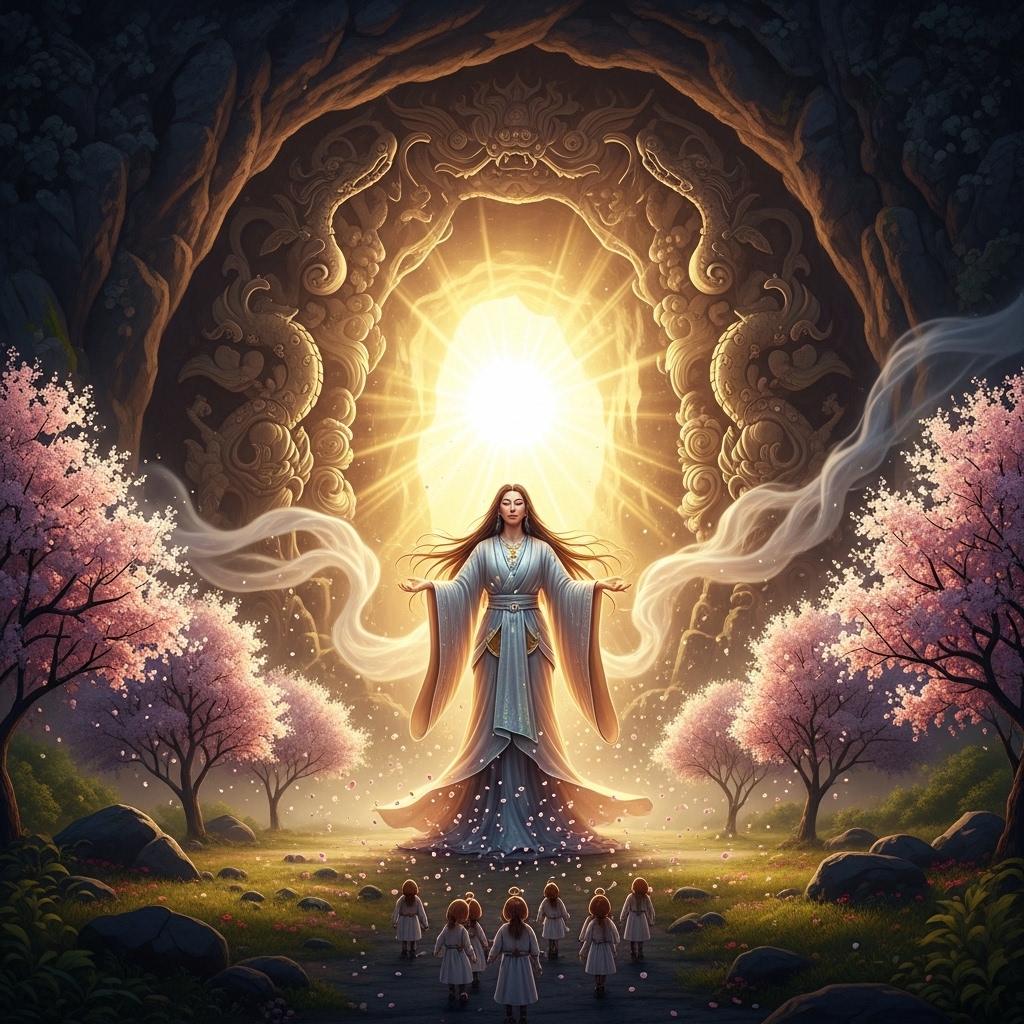
Amaterasu’s myths reflect her significance in Shinto tradition and her complex relationships with other deities. Two primary stories illustrate her divine role: the creation myth and the cave myth.
The Creation Myth
In the beginning, Amaterasu emerged from the primordial chaos. She is the daughter of Izanagi and Izanami, the divine creators. According to the Kojiki and Nihon Shoki, when Izanagi returned from the underworld, he purified himself in a river. From this act of purification, Amaterasu was born as the goddess of the sun, radiating light and life.
- Key Elements of the Creation Myth:
- Divine Origins: Amaterasu is a direct descendant of the first gods.
- Symbol of Light: Represents hope, growth, and order in the world.
- Cultural Significance: Establishes her as a foundational figure in Japanese mythology.
Amaterasu’s emergence highlights the Shinto belief in the interconnectedness of life and the natural world, establishing her as a central figure in Japan’s spiritual narrative.
The Cave of Darkness
One of Amaterasu’s most famous myths involves her retreat into a cave, known as Ama-no-Iwato. This story emphasizes her relationships with her siblings, especially Susanoo, the storm god. After Susanoo’s destructive actions, which included the desecration of her weaving hall, Amaterasu became so distraught that she withdrew into the cave, plunging the world into darkness.
- Key Aspects of the Cave Myth:
- Conflict with Susanoo: Highlights the tumultuous relationship between siblings.
- Restoration of Light: The gods’ efforts to lure her out symbolize the restoration of balance and harmony in nature.
- Cultural Rituals: The myth’s themes influence various festivals that celebrate the return of light and order.
In this myth, Amaterasu’s eventual emergence from the cave is marked by her captivation with her own reflection in a mirror, symbolizing self-awareness and the power of perception. This moment not only restores light but also reinforces her role as a divine matriarch, influencing future generations, including her grandson, Ninigi-no-Mikoto.
Lesser-Known Myths
Beyond these primary stories, several lesser-known myths illustrate Amaterasu’s complex relationships with other deities.
- The Tale of Tsukuyomi: Amaterasu’s sibling Tsukuyomi, the moon god, killed a food goddess, leading to her permanent separation from him. This act underscores her strong moral compass and refusal to condone violence.
- The Gift to Ninigi: Amaterasu bestowed three sacred treasures— the mirror (wisdom), the sword (strength), and the magatama jewel (benevolence)—to her grandson. This act established the divine legitimacy of Japan’s emperors.
These myths offer deeper insights into her character and the values embedded in Shinto culture, illustrating the complexities of familial relationships among the deities.
Amaterasu and Her Siblings: A Cosmic Dynamic
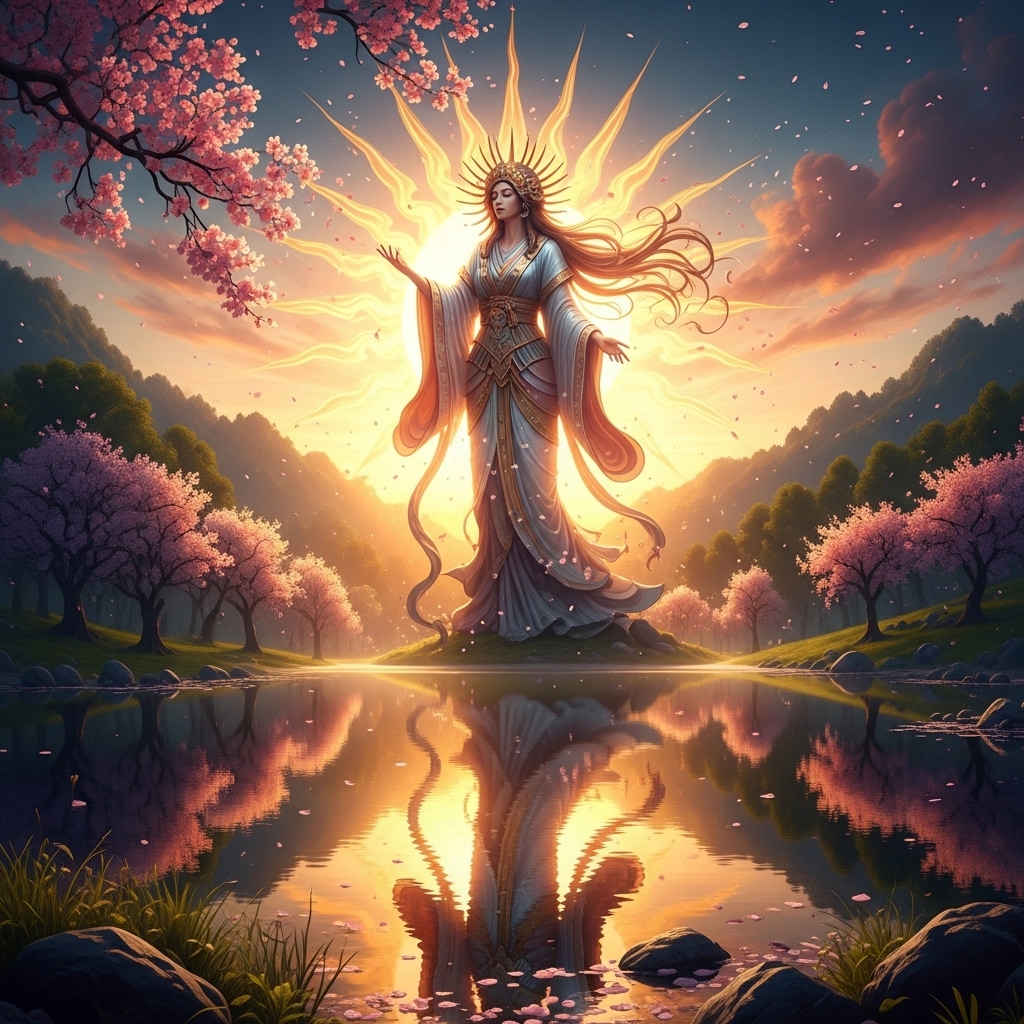
Amaterasu, the Japanese Sun Goddess, shares a complex relationship with her siblings, Tsukuyomi and Susanoo. These dynamics are integral to understanding their roles in Shinto mythology and the cultural values they embody.
Tsukuyomi: The Moon God
Tsukuyomi, the moon god, represents night and is often seen as Amaterasu’s counterpart. Their relationship is defined by both kinship and conflict. Tsukuyomi’s actions starkly contrast with Amaterasu’s values.
- Moral Divergence: Tsukuyomi killed the food goddess Uke Mochi out of disgust. This violent act led to his estrangement from Amaterasu, highlighting her commitment to harmony and peace.
- Symbolic Separation: The rift between day and night symbolizes the balance of opposing forces in nature. Amaterasu’s light and Tsukuyomi’s darkness coexist but do not unite, reflecting the duality present in Shinto beliefs.
Susanoo: The Storm God
Susanoo, the storm god, embodies chaos and unpredictability. His relationship with Amaterasu is tumultuous, marked by rivalry and reconciliation.
- Sibling Rivalry: Susanoo’s mischief initially causes distress for Amaterasu. His actions, including destroying her rice fields and defiling her palace, force her into hiding, plunging the world into darkness. This myth emphasizes the need for order in contrast to chaos.
- Restoration of Balance: Eventually, Susanoo seeks redemption. He proves his worth by slaying the eight-headed serpent Yamata no Orochi, restoring balance and earning Amaterasu’s forgiveness. This act illustrates the theme of redemption and the potential for change.
Comparative Insights
The relationships among Amaterasu, Tsukuyomi, and Susanoo encapsulate broader themes in Shinto mythology:
- Conflict vs. Harmony: While Tsukuyomi embodies conflict through his violent actions, Amaterasu seeks harmony. Their separation symbolizes the necessity of balance in existence.
- Chaos vs. Order: Susanoo represents chaos, often disrupting the peace Amaterasu strives to maintain. His eventual redemption serves as a reminder that even those who stray can find their way back.
This cosmic dynamic reinforces the values central to Shinto: the importance of harmony, the consequences of conflict, and the potential for redemption. Understanding these relationships deepens our appreciation of Amaterasu’s role as a guiding light in Japanese mythology.
The Cultural Significance of Amaterasu
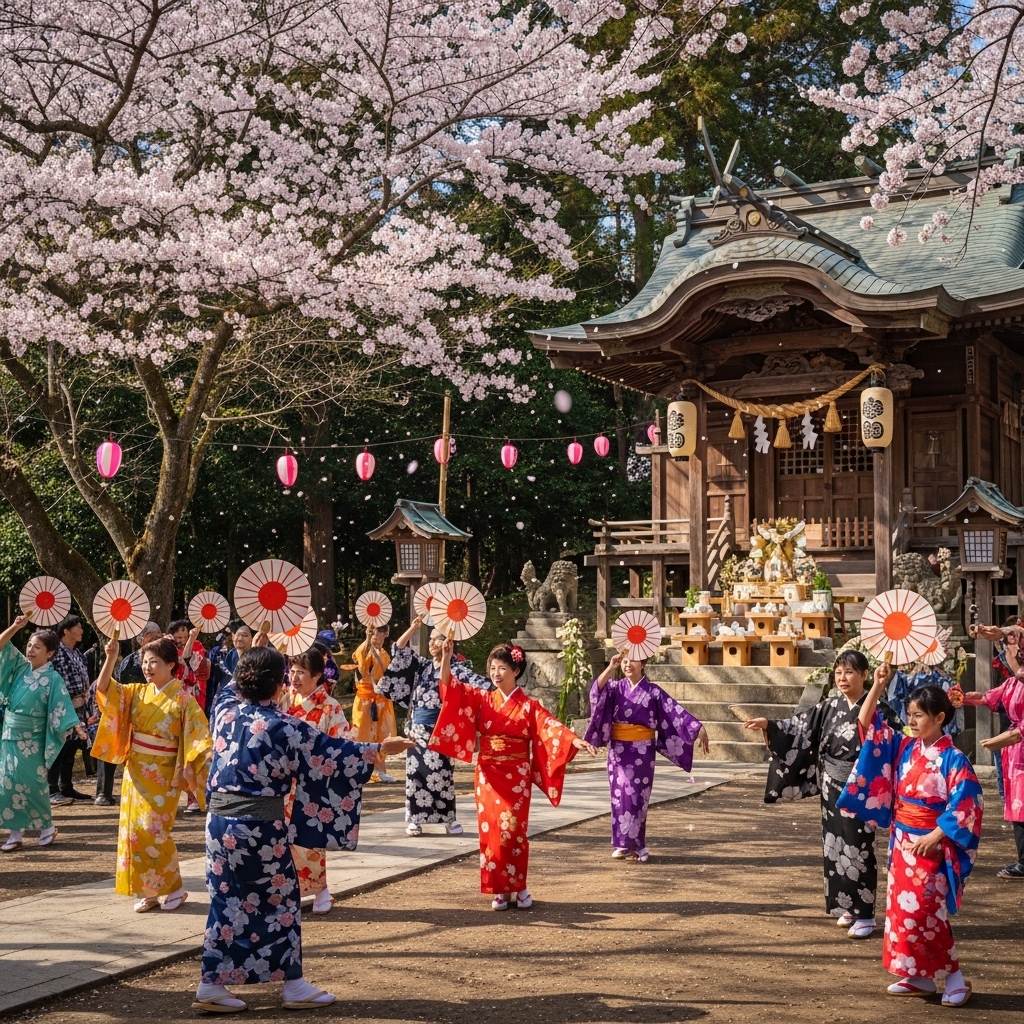
Amaterasu, the Japanese Sun Goddess, holds a profound place in Japanese culture. Her influence extends from ancient mythology to contemporary society, deeply intertwining with the imperial family and manifesting in various forms of art and literature.
Amaterasu and the Imperial Family
Amaterasu is not merely a deity; she is regarded as the divine ancestor of the Japanese imperial family. This connection underscores the legitimacy and sanctity of the imperial lineage.
- Cultural Authority: The emperors of Japan claim descent from her grandson, Ninigi, solidifying their divine right to rule. This belief has historically justified the social hierarchy within Japanese society.
- Ise Grand Shrine: The Ise Grand Shrine, dedicated to Amaterasu, serves as the primary site for imperial worship. The shrine houses the Imperial Regalia and is a focal point for various cultural rituals, emphasizing her importance in national identity.
Representation in Modern Culture
Amaterasu’s influence permeates modern Japanese art and literature, illustrating her continuing relevance.
- Art: Contemporary artists often depict Amaterasu in various forms, highlighting her attributes of light and life. Her imagery can be seen in paintings, sculptures, and even popular media, symbolizing hope and renewal.
- Literature: Writers draw upon her mythology to explore themes of conflict and harmony. Works often reference her stories to convey moral lessons or reflect on societal values.
Examples of Modern Interpretations:
- Anime and Manga: Amaterasu appears in series like “Okami,” where she is represented as a wolf goddess, showcasing her connection to nature and the divine.
- Festivals: Annual festivals celebrating Amaterasu reinforce her cultural significance, attracting thousands of participants who honor her legacy through dance, music, and traditional rituals.
Amaterasu remains a vital figure in both historical and contemporary contexts, embodying the spirit of Japan. Her dual role as a divine ancestor and a cultural icon highlights her enduring impact on Japanese identity.
Worship Practices and Festivals Dedicated to Amaterasu
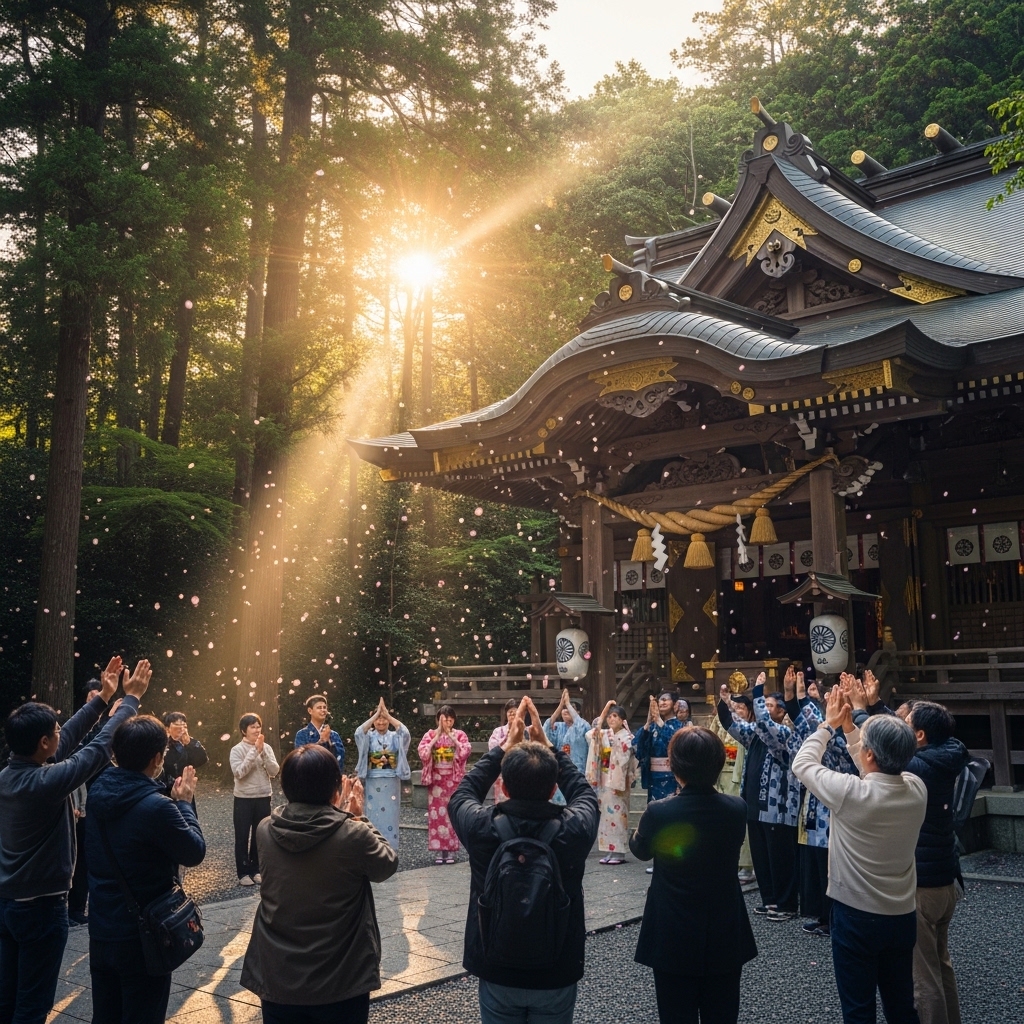
Amaterasu, the Japanese Sun Goddess, holds a significant position in Shinto worship. Central to her veneration is the Ise Grand Shrine, which serves as the primary site for rituals and festivals dedicated to her.
The Ise Grand Shrine
The Ise Grand Shrine (Ise Jingū) is a sacred site in Mie Prefecture, Japan. It is dedicated exclusively to Amaterasu and is considered Japan’s most important shrine.
- Historical Significance: Established over 2,000 years ago, the shrine is a focal point for pilgrimage and worship, especially during the Edo Period (1600–1868).
- Architectural Renewal: Every 20 years, the shrine undergoes a ceremonial rebuilding known as Shikinen Sengu. This practice symbolizes renewal and continuity in worship. New structures are constructed adjacent to the old ones, which are then dismantled.
- Sacred Objects: The shrine houses the Yata no Kagami, a sacred mirror representing Amaterasu’s divine essence.
Modern Worship Practices
Today, worship of Amaterasu continues with various practices that blend tradition with contemporary spirituality.
- Festivals: Major festivals include Tsubaki Grand Shrine’s Daijo-sai, celebrating the rice harvest. Participants offer prayers, traditional dances, and music to honor Amaterasu’s role in agriculture and fertility.
- Rituals: Ritual offerings often include rice, sake, and seasonal fruits. These offerings symbolize gratitude for sunlight and sustenance.
- Cultural Events: Events like the Ise Jingu Reitaisai attract thousands, showcasing traditional arts and reinforcing communal ties to Amaterasu.
Specific Rituals and Festivals
The following list outlines notable festivals and their historical relevance:
- Ise Jingu Reitaisai: An annual festival that includes ceremonial dances and music, reflecting devotion to Amaterasu.
- Daijo-sai: Celebrated by the Imperial Family, this festival marks the rice harvest and emphasizes Amaterasu’s connection to fertility and prosperity.
- Kagura: Traditional Shinto music and dance performed at shrines, often depicting myths related to Amaterasu, reinforcing her cultural significance.
These practices and festivals not only highlight Amaterasu’s role in Shinto but also connect modern worshippers to their ancestral traditions.
Addressing Common Misconceptions about Amaterasu
Misunderstandings about Amaterasu often stem from oversimplified interpretations of her role in Shinto. Clarifying these misconceptions is essential for a deeper understanding of her significance in Japanese culture and spirituality.
Misunderstanding Amaterasu’s Nature
One common misconception is that Amaterasu is solely a goddess of the sun. While she embodies light and warmth, her role extends beyond mere illumination. Amaterasu represents order, harmony, and the divine lineage of the Japanese imperial family. This broader perspective highlights her influence on the cultural and spiritual fabric of Japan.
- Diverse Attributes: Amaterasu is associated with fertility, agriculture, and imperial authority. She is not just a celestial figure but a crucial part of Japan’s identity.
- Mythological Context: Her myths reveal complex relationships with other deities, such as her conflict with Susanoo and her bond with Tsukuyomi. These stories illustrate her multifaceted nature.
The Role of Women in Shinto
Another misconception concerns gender roles within Shinto, particularly regarding Amaterasu’s status. Some interpretations suggest that Amaterasu represents traditional, passive femininity. In reality, she embodies strength and authority.
- Divine Matriarch: Amaterasu is the progenitor of the imperial line, showcasing the power of female deities in Shinto. This challenges the notion of women being secondary figures in mythology.
- Modern Interpretations: Contemporary discussions about Amaterasu emphasize her role as a symbol of empowerment and resilience. Artists and scholars increasingly highlight her significance in modern Japanese literature and art.
Understanding these misconceptions enhances appreciation for Amaterasu and her enduring legacy in Japanese culture. It also fosters a more nuanced view of Shinto, revealing its complexities and relevance today.
Conclusion: Amaterasu’s Enduring Legacy
Amaterasu, the Japanese Sun Goddess, remains a foundational figure in Shinto and Japanese culture. Her embodiment of light and order continues to resonate deeply in contemporary society.
Symbol of Light and Life
Amaterasu symbolizes not only the sun but also the essence of life and vitality. Her role is central in various myths, where she brings light to a world that often grapples with chaos and darkness. This duality reflects the balance inherent in Shinto beliefs.
Cultural Relevance Today
Amaterasu’s influence stretches beyond ancient texts. She inspires modern art, literature, and spiritual practices. Festivals dedicated to her, such as the Ise Grand Shrine rituals, demonstrate her ongoing significance. These events celebrate her as a source of inspiration and guidance.
Key Attributes of Amaterasu
- Divinity: Amaterasu is revered as a great goddess, embodying the divine feminine.
- Imperial Connection: She is the progenitor of the Japanese imperial family, linking her directly to national identity.
- Modern Symbolism: In contemporary culture, she represents empowerment, clarity, and renewal.
Through these dimensions, Amaterasu stands as a powerful symbol that continues to shape Japanese identity and spirituality. Her legacy is not just historical; it is alive and evolving within the fabric of modern Japan.
Frequently Asked Questions
These quick answers cover the most common questions about this topic, including key details, practical tips, and common concerns.
What did the sun goddess Amaterasu do?
Amaterasu is best known for her myth of retreating into a cave, which caused darkness in the world. Her emergence from the cave restored light and order. She also bestowed sacred treasures to her descendants, establishing the divine authority of the Japanese imperial family.
Who is Amaterasu in love with?
In Shinto mythology, Amaterasu is not depicted as being in romantic love with any deity. Her stories focus on her role as a goddess of light, her relationships with her siblings, and her divine duties. Her importance lies in her position as a progenitor and symbol of harmony.
Does Amaterasu have a child?
Yes, Amaterasu is considered the mother of Ninigi-no-Mikoto, who was sent to Earth to establish the imperial line. Ninigi received the three sacred treasures from Amaterasu, legitimizing the divine authority of Japan’s emperors.
Do Japanese still worship Amaterasu?
Yes, she is still worshipped today, primarily at the Ise Grand Shrine, which is dedicated to her. Many festivals, rituals, and ceremonies honor her role in agriculture, sunlight, and imperial legitimacy. She remains a central figure in Shinto practice and Japanese cultural identity.
How did Amaterasu come to be worshipped?
Amaterasu’s worship began in ancient Japan, rooted in myths recorded in texts like the Kojiki and Nihon Shoki. Her divine status was reinforced by imperial lineage claims and her association with the Ise Grand Shrine. Over centuries, her worship became integral to national rituals and festivals.
Why is Amaterasu significant in Shinto?
Amaterasu symbolizes light, order, and life, embodying core values of harmony and purity. Her myths underpin the divine authority of the imperial family, and her worship sustains cultural traditions. She is considered the most important deity in Shinto, representing the spiritual heart of Japan.
When is Amaterasu celebrated?
Key festivals include the annual Reitaisai at Ise Shrine, typically held in October, and other rituals throughout the year. The Daijo-sai, a major festival honoring her connection to rice and harvest, is celebrated by the Imperial Family and Shinto practitioners.
What are some common misconceptions about Amaterasu?
A common misconception is that she is only a sun goddess of daylight. In reality, she embodies broader themes like order, fertility, and divine authority. Another mistake is viewing her as a passive figure; she is a powerful deity central to Japan’s mythological and cultural identity.