
The Greek Gods and Titans are two distinct groups in mythology, each with unique characteristics. Understanding their differences is essential for grasping the narrative of Greek mythology, particularly their origins, powers, and conflicts [1].
Origins of the Greek Gods and Titans
The origins of the Greek Gods and Titans are steeped in a rich tapestry of mythology. Their genealogical roots trace back to the primordial deities, setting the stage for the complex interplay between these powerful beings.
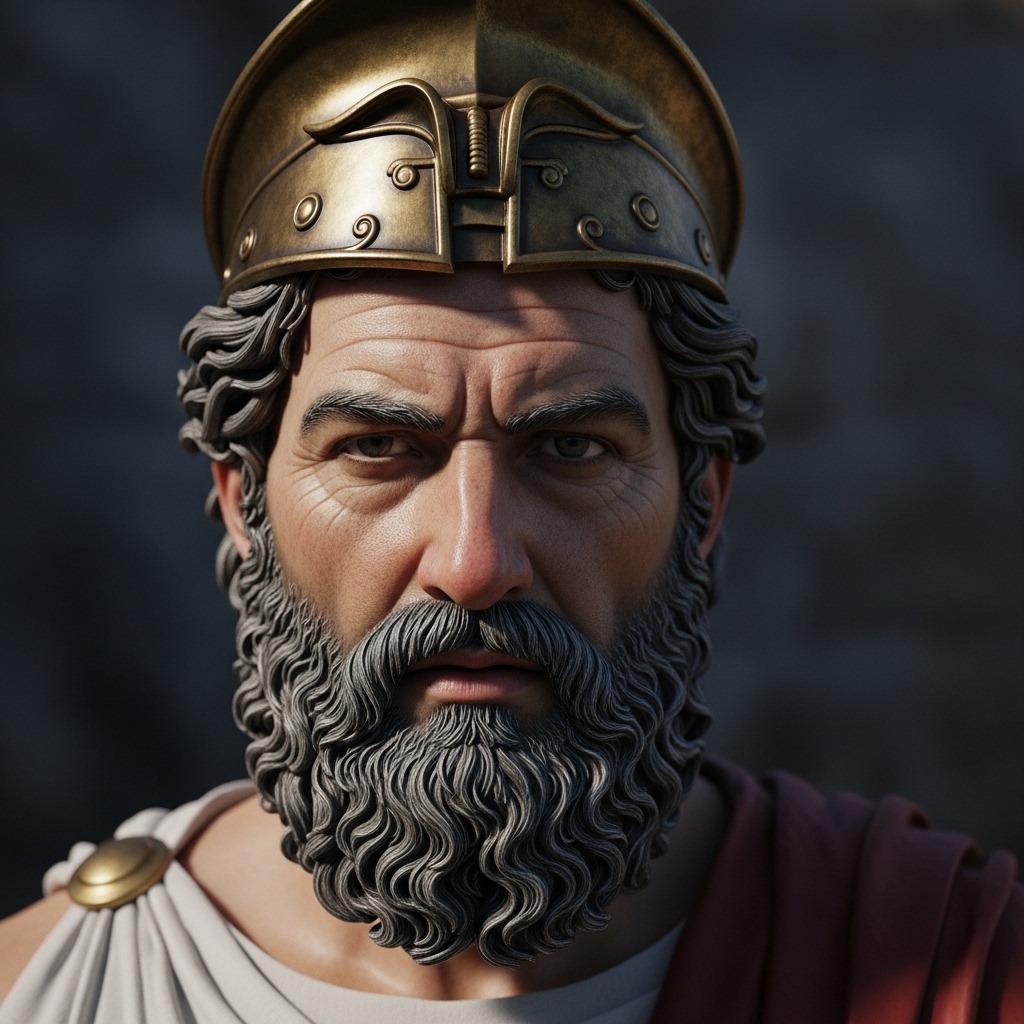
The Primordial Deities: The Foundation of Mythology
The primordial deities are the earliest gods in Greek mythology. They formed the foundation of the universe and were crucial in creating subsequent generations of gods.
- Uranus: The sky, father of the Titans.
- Gaia: The earth, mother of the Titans.
- Tartarus: The abyss, a deep prison for defeated gods.
- Nyx: The night, representing darkness and mystery.
Uranus and Gaia birthed the Titans, a generation of powerful deities who ruled during the Golden Age. This era was characterized by abundance and harmony. The Titans included notable figures such as Cronus, Rhea, Oceanus, and Hyperion. Their lineage is crucial for understanding the transition to the Olympian gods.
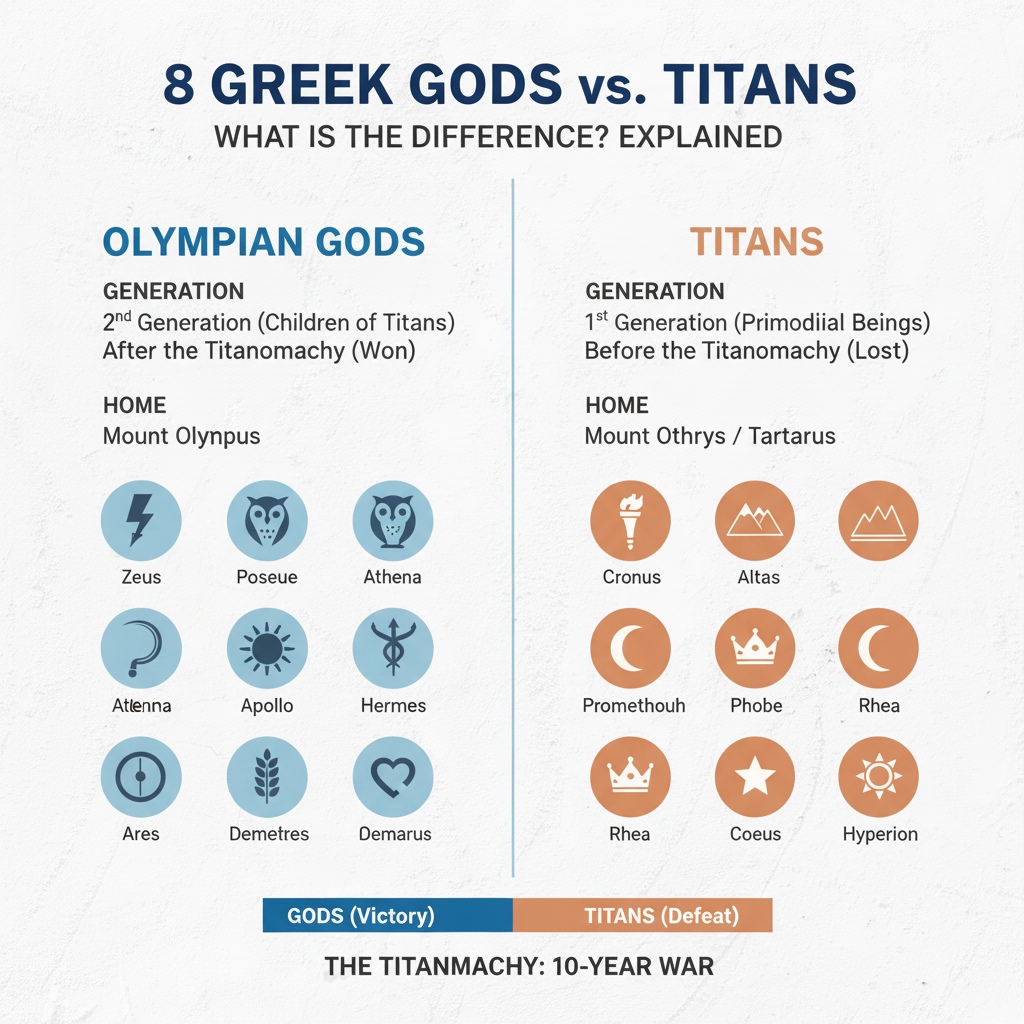
Generational Differences: Titans vs. Olympians
The Titans were overthrown by the Olympians, a younger generation led by Zeus. This conflict, known as the Titanomachy, defines the hierarchy of Greek mythology.
- Titans: The original deities, often depicted as embodiments of natural forces (e.g., Oceanus as the ocean).
- Olympians: The new ruling pantheon, with Zeus, Hera, Poseidon, and others, representing more complex human emotions and societal roles.
The Titanomachy was not just a battle for power; it symbolized the shift from old to new, from chaos to order. This battle resulted in the Titans being banished to Tartarus, establishing the Olympians as the dominant force in Greek mythology.
Genealogical Relationships
To visualize these relationships, consider a family tree:
Table of Contents
- Primordial Deities: Uranus + Gaia
- Titans: Cronus, Rhea, Oceanus, Hyperion, etc.
- Olympians: Zeus (son of Cronus), Hera, Poseidon, etc.
This structure underscores the Titans’ role as predecessors to the Olympians, setting the stage for conflicts that define much of Greek mythology. Understanding these origins clarifies the distinction between the Titans and the Greek Gods—one is a legacy of ancient power, while the other embodies new ideals and authority.
Powers and Characteristics of Titans and Greek Gods
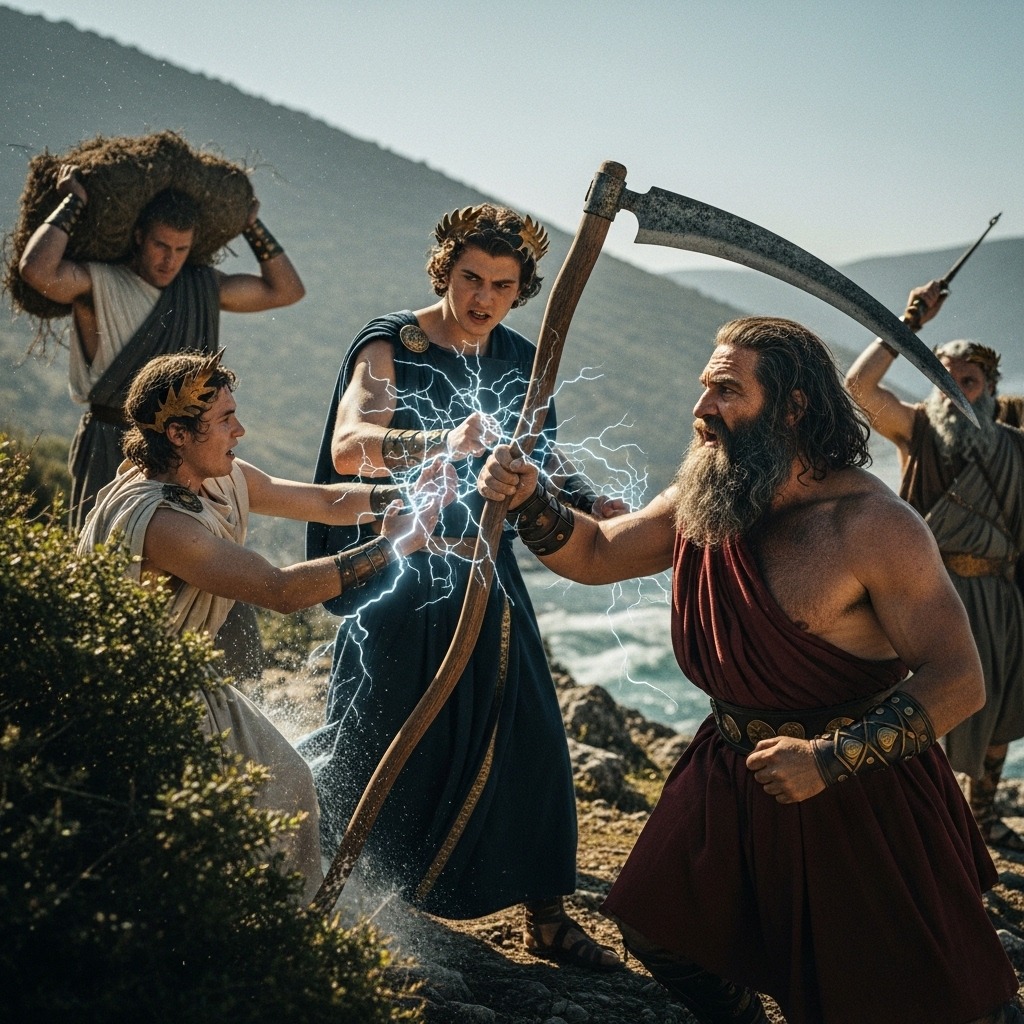
The Titans and Greek Gods embody distinct powers and characteristics that define their roles in mythology. Understanding these differences illuminates their dynamic relationships and the overarching narrative of Greek mythology.
The Natural Forces of the Titans
Titans represent primordial forces, often embodying vast and elemental powers. They are intrinsically linked to the earth and cosmos, showcasing attributes such as:
- Immense Strength: Titans like Cronus possess extraordinary physical power, symbolizing raw, untamed nature. Their size and might often exceed that of the gods.
- Control over Time and Space: For instance, Cronus, the Titan of time, governed the flow of ages, while Uranus represented the sky.
- Primordial Elements: Titans are often associated with foundational elements of existence, such as Oceanus for the ocean and Hyperion for the sun [5].
| Titan | Power/Attribute |
|---|---|
| Cronus | Time and harvest |
| Uranus | Sky and heavens |
| Oceanus | Ocean and water |
| Hyperion | Light and observation |
The Human Traits of the Olympian Gods
In contrast, the Olympian Gods exhibit powers that reflect human traits and societal values. They personify specific concepts and emotions, making them relatable to mortals. Key characteristics include:
- Specific Domains: Gods like Zeus control the sky and thunder, while Athena embodies wisdom and warfare [4]. This specialization allows them to govern human affairs closely.
- Moral Complexity: Unlike the Titans, Olympians display human-like flaws and virtues, engaging in love, jealousy, and betrayal. Their stories often revolve around personal relationships and conflicts.
- Influence on Human Life: The Olympians directly impact human destinies, offering guidance, protection, or retribution.
| Olympian God | Power/Attribute |
|---|---|
| Zeus | King of gods, sky, and thunder |
| Athena | Wisdom, warfare, and strategy |
| Aphrodite | Love and beauty |
| Hades | Underworld and the afterlife |
Comparative Analysis of Powers
The powers of Titans and Greek Gods not only reflect their origins but also their significance within the mythological framework. Here’s a comparative overview of their attributes:
| Feature | Titans | Greek Gods |
|---|---|---|
| Origin | Primordial beings, earth-born | Descendants of Titans |
| Powers | Natural forces, elemental control | Human traits, moral attributes |
| Symbolism | Strength, chaos, and time | Order, civilization, and culture |
| Role in Myths | Antagonists to Olympians | Heroes and rulers of humanity |
The Titanomachy, the epic battle between Titans and Greek Gods, marked a significant shift in power dynamics. It symbolized the transition from chaos to order, establishing the Olympians as the new ruling pantheon and cementing their influence over both divine and mortal realms.
The Titanomachy: The Clash Between Titans and Olympians
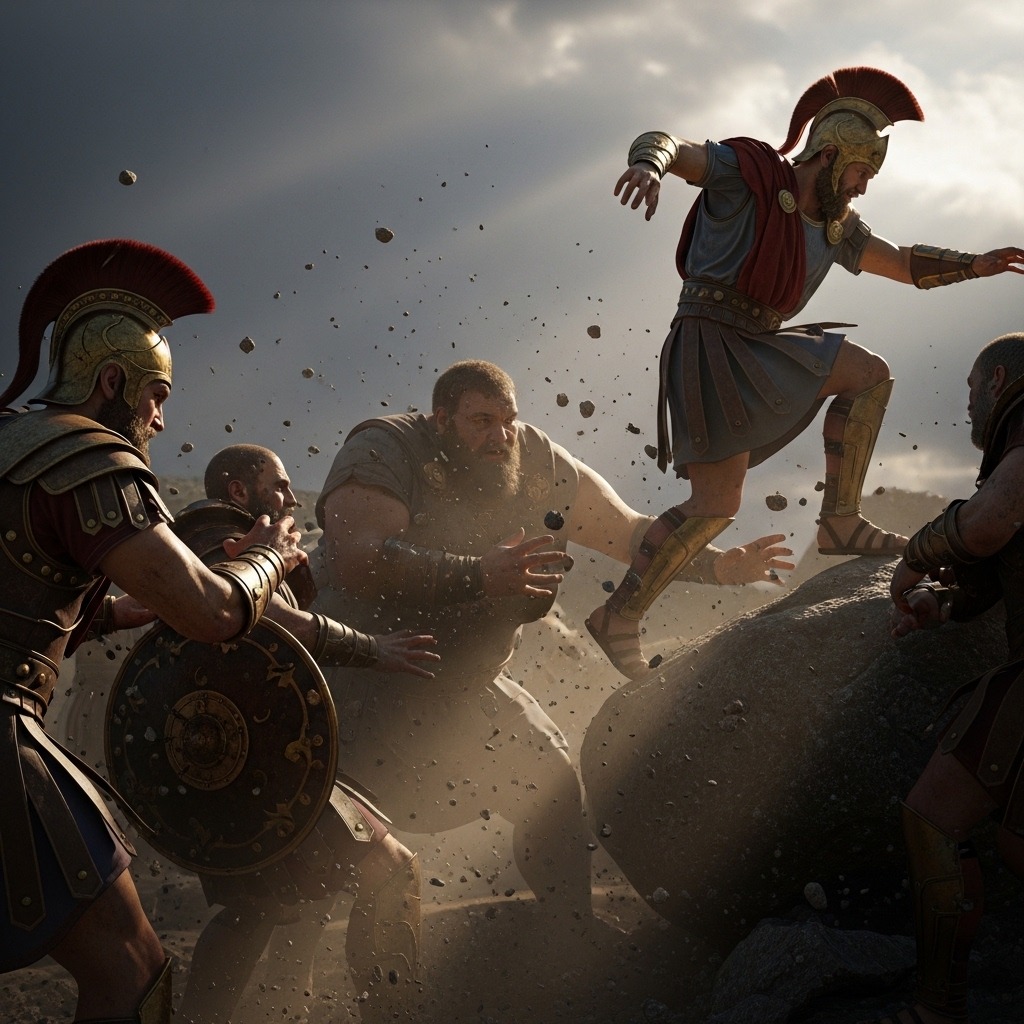
The Titanomachy was a monumental conflict that reshaped the hierarchy of the Greek pantheon. This epic battle was characterized by intense struggles for supremacy, ultimately leading to the downfall of the Titans and the ascension of the Olympian gods.
Prelude to the War: Causes of the Titanomachy
The seeds of the Titanomachy were sown long before the first battle. Two primary factors ignited the conflict:
- Cronus’s Fear of Prophecy: Cronus, the leader of the Titans, had overthrown his father, Uranus, to seize power. However, a dire prophecy foretold that one of his own children would overthrow him. To prevent this, Cronus swallowed each of his offspring at birth, including Hestia, Demeter, Hera, Hades, and Poseidon. This act of paranoia set the stage for rebellion as his wife, Rhea, managed to save Zeus by hiding him in Crete [7].
- The Rise of Zeus: As Zeus grew, he learned of his siblings’ fates and devised a plan to rescue them. He ultimately succeeded in forcing Cronus to regurgitate his swallowed siblings, uniting the Olympians against the Titans [6].
Major Battles and Turning Points
The Titanomachy spanned ten tumultuous years and featured several key battles and strategies:
- The First Assault: The Olympians launched their initial attack from Mount Olympus. They faced fierce resistance, as the Titans were well-entrenched and commanded formidable powers. The Hecatonchires, monstrous giants with a hundred hands, and the Cyclopes, skilled artisans, initially supported the Titans in this conflict [6].
- Zeus’s Alliance: Zeus turned the tide by forming alliances with the Hecatonchires and Cyclopes. He freed them from Tartarus, where they had been imprisoned by Cronus, and in return, they aided him with their formidable strength and craftsmanship. The Cyclopes provided Zeus with the thunderbolt, his signature weapon [8].
- The Final Confrontation: The decisive battle took place on the plains of Phthia. Here, Zeus and his allies faced Cronus and the Titans in a brutal showdown. Utilizing the thunderbolt, Zeus struck down many Titans, while the Hecatonchires unleashed their might, hurling boulders at the enemy [6].
- Aftermath and Imprisonment: The Titans were ultimately defeated and imprisoned in Tartarus, a deep abyss used as a dungeon of torment. This marked the end of the Titan reign and established the Olympians as the new rulers of the cosmos, signaling a profound shift in power dynamics within Greek mythology [7].
The Titanomachy exemplified the conflict between chaos and order. It not only highlighted the strengths and weaknesses of both Titans and Olympians but also laid the groundwork for future mythological narratives and the cultural legacy of ancient Greece.
The Aftermath of the Titanomachy
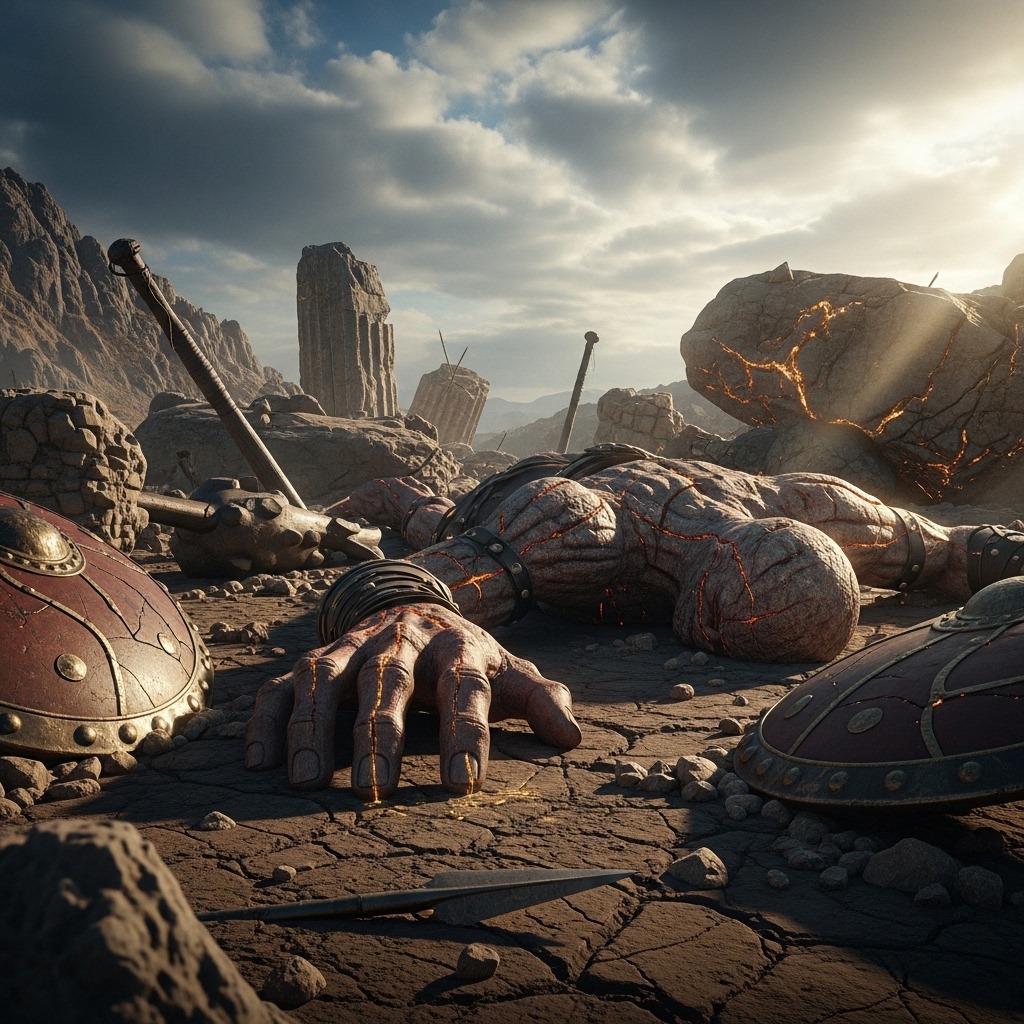
The Titanomachy marked a decisive turning point in Greek mythology. The aftermath of this monumental conflict reshaped the pantheon and redefined the cosmic order.
The Fate of the Titans: Punishment and Legacy
Following their defeat, the Titans faced dire consequences. Zeus, wielding his formidable lightning bolts, cast many Titans into Tartarus, a dark abyss serving as their prison. This punishment was not merely punitive; it symbolized the triumph of order over chaos. The Titans, once mighty deities, were reduced to prisoners of the Olympians, their legacy transformed into cautionary tales. Not all Titans were imprisoned, however. Some, like Oceanus and Helios, retained their freedom but were relegated to lesser roles in the new order of gods. Their stories serve as a reminder of the Titans’ former glory and the fragility of power [9][11].
Establishment of the Olympian Order
With the Titans vanquished, the Olympians solidified their dominance. Zeus emerged as the chief deity, leading a new generation of gods that included Hera, Poseidon, and Hades. This transition established the Olympian order, characterized by a structured hierarchy and distinct domains of power. The Olympians, despite their victories, were not without flaws. They inherited traits from their predecessors, including jealousy and infighting, which would shape their narratives and interactions. Notably, the conflict between Titans and Olympians exemplifies the cyclical nature of power in mythology: each generation of gods wrestles with its own challenges and internal conflicts [10][11].
Key Differences: Titans vs. Olympians
| Aspect | Titans | Olympians |
|---|---|---|
| Status | Predecessors of Gods | Rulers of the Cosmos |
| Powers | Greater connection to chaos | Order and control |
| Punishment | Imprisonment in Tartarus | Dominance and authority |
| Legacy | Cautionary tales | Complex narratives |
The Titanomachy, therefore, was not just a battle; it was a transformative event that redefined the very fabric of Greek mythology, establishing a new paradigm of divine hierarchy and narrative complexity.
Cultural Impact and Legacy of Titans and Greek Gods
The legacies of the Titans and Greek Gods extend far beyond ancient texts. Their influence permeates art, literature, and modern culture, shaping our understanding of mythology and morality.
Titans and Gods in Art and Literature
From the grand frescoes of ancient Greece to modern literary works, the imagery of Titans and Greek Gods has captivated artists and writers alike. The Titans often symbolize primal forces of nature, while the Olympians represent human traits and societal values.
- Artistic Depictions: The Titanomachy, or the battle between Titans and Olympians, has been a popular subject in art. For example, Peter Paul Rubens’ works frequently incorporate mythological themes, showcasing the epic struggle of these divine beings. Such representations remind viewers of the underlying chaos that Titans embody, contrasted with the order the Olympians impose [12].
- Literary References: In literature, the Titans serve as cautionary figures. They remind us of the consequences of hubris and the inevitability of change. Works by Hesiod and Homer recount their stories, framing the Titans as figures who succumbed to their own ambitions, thus setting the stage for the rise of the Olympians [4].
Modern Interpretations and Adaptations
Contemporary culture continues to draw inspiration from these ancient myths. The Titans and Greek Gods appear in various media, from blockbuster films to bestselling novels.
- Film and Television: Movies like “Clash of the Titans” and series such as “Percy Jackson” introduce these figures to new audiences, often reinterpreting their narratives for modern sensibilities. These adaptations highlight the enduring relevance of their themes—conflict, power struggles, and the human condition.
- Literary Influence: Many modern authors incorporate Greek mythology into their narratives, weaving Titans and Gods into contemporary stories. For instance, Rick Riordan’s “Percy Jackson” series blends traditional myths with modern adventure, showcasing how these ancient entities resonate with today’s youth.
By examining these cultural references, we see that the Titans and Greek Gods not only shaped ancient civilization but continue to influence modern thought and creativity. Their stories serve as a bridge between the past and the present, reminding us of the timeless human struggles they represent.
Misconceptions About Titans and Greek Gods
The distinctions between Titans and Greek Gods often confuse those exploring Greek mythology. Misunderstandings abound regarding their roles, powers, and significance. Let’s clarify these misconceptions.
Common Misunderstandings
1. Titans are the same as Greek Gods: Titans are not merely another group of gods; they are the predecessors to the Olympians, representing a different generation of divine beings. The Titans, led by Cronus, were overthrown by the Olympian Gods, led by Zeus, marking a significant shift in power.
2. All Titans are evil: This stereotype oversimplifies their roles. Titans like Prometheus, who defied Zeus to bring fire to humanity, are often portrayed as champions of mankind in contrast to the more civilized Olympians.
3. The Titanomachy was a mere power struggle: The Titanomachy, the epic battle between the Titans and Olympians, embodies deeper themes of chaos versus order, primal forces versus civilization. This conflict reflects the transition from chaotic, untamed nature to a structured society governed by divine laws.
4. Greek Gods are always more powerful: While the Olympians hold dominion over the cosmos, many Titans possess immense powers that challenge the Olympians’ authority. For example, Oceanus represents the ocean’s vastness, a force of nature that even the gods respect.
Checklist of Common Misconceptions
| Misconception | Clarification |
|---|---|
| Titans and Greek Gods are identical. | Titans are the earlier generation; Greek Gods are their successors. |
| All Titans are malevolent figures. | Some Titans, like Prometheus, act benevolently towards humanity. |
| The Titanomachy is just a simple conflict. | It symbolizes the struggle between chaos and order, primal and civilized. |
| Olympians are inherently more powerful. | Titans possess significant powers; their roles are distinct and nuanced. |
Understanding these facets is crucial for appreciating the complex interplay between Titans and Greek Gods in mythology.
Lesser-Known Titans: Expanding the Mythological Landscape
While the Titans like Cronus and Oceanus dominate the narrative, lesser-known Titans play crucial roles in Greek mythology. Their stories enrich the mythological tapestry and highlight the complexity of divine relationships.
The Contributions of Lesser-Known Titans
1. Prometheus: Known for stealing fire from the gods, Prometheus symbolizes enlightenment and defiance. His act of rebellion against Zeus underscores the theme of sacrifice for humanity’s benefit.
2. Epimetheus: Often overshadowed by his brother Prometheus, Epimetheus is the Titan of afterthought. He is noted for accepting Pandora, the first woman, leading to unintended consequences for humanity.
3. Atlas: Famous for holding up the sky, Atlas represents endurance and strength. His punishment by Zeus signifies the consequences of rebellion against divine authority.
4. Helios: The personification of the sun, Helios drives the sun chariot across the sky. His role emphasizes the connection of Titans to natural elements.
5. Eos: The Titaness of dawn, Eos brings light and hope. Her daily rise signifies renewal and the cyclical nature of time.
How They Compare to Major Titans
Lesser-known Titans differ from their more prominent counterparts in several ways:
| Titan | Role | Key Attribute | Significance |
|---|---|---|---|
| Cronus | Leader of Titans | Time and Harvest | Overthrown by Zeus |
| Oceanus | Titan of the Ocean | Boundlessness | Represents the vastness of nature |
| Prometheus | Giver of Fire | Intelligence and Defiance | Highlights human advancement |
| Atlas | Bearer of the Heavens | Strength | Symbolizes punishment and resilience |
| Helios | Sun God | Light | Connects to the cyclical nature |
Understanding these lesser-known figures adds depth to the narrative of Greek mythology. Each Titan, regardless of fame, contributes to the overarching themes of conflict, power dynamics, and the relationship between gods and humanity. Their unique stories illustrate the nuanced differences between Titans and Greek Gods, showcasing the complexity of divine mythology.
Conclusion: Summarizing the Differences Between Greek Gods and Titans
Understanding the distinction between Greek Gods and Titans is crucial for comprehending Greek mythology. These two groups represent different epochs and attributes within the mythological framework.
Defining Greek Gods and Titans
- Greek Gods: These beings, including Zeus and Hera, embody civilization, human emotions, and societal values. They are often seen as the ruling pantheon of Greek mythology.
- Titans: Represented by figures like Cronus and Oceanus, Titans are primordial beings associated with the raw forces of nature. They precede the Olympians and symbolize chaos and the untamed aspects of the world.
Key Differences in Attributes and Powers
| Attribute | Greek Gods | Titans |
|---|---|---|
| Origin | Born from the union of Cronus and Rhea | Offspring of Uranus and Gaia |
| Powers | Control elements of human life, emotions, and civilization | Represent fundamental forces of nature |
| Status | Immortal rulers of Olympus | Banished to Tartarus after the Titanomachy |
| Cultural Role | Reflect hopes, fears, and aspirations of humans | Represent chaos and the primal aspects of existence |
The Titanomachy: A Defining Conflict
The Titanomachy is a pivotal event where the Olympians, led by Zeus, overthrow the Titans. This conflict marks the transition from the chaotic rule of the Titans to the structured reign of the Greek Gods. The Titans’ defeat exemplifies the struggle for supremacy and order in the cosmos, reshaping the divine hierarchy.
Understanding these differences illuminates the distinct roles each group plays in Greek mythology. While Titans signify the force of nature and chaos, Greek Gods encapsulate the ideals of civilization and governance.
Frequently Asked Questions
These quick answers cover the most common questions about this topic, including key details, practical tips, and common concerns.
Greek Gods vs Titans: What is the Difference?
Greek Gods are the Olympian deities who rule over various aspects of life and nature, such as Zeus (sky) and Athena (wisdom). Titans are their primordial predecessors, embodying raw natural forces like Cronus (time) and Oceanus (oceans). The main difference lies in their origins, roles, and powers: Titans represent chaos and elemental forces, while Greek Gods symbolize civilization, morality, and order.
What is the difference between Titans and gods in Greek mythology?
Titans are the generation before the Olympian gods, born from Uranus and Gaia. They are often associated with primal elements and natural forces. Greek Gods, especially Olympians, are descendants of Titans who gained control after defeating the Titans in the Titanomachy. They govern human affairs and embody societal virtues, making them more relatable.
Are Titans stronger than Greek gods?
In mythology, Titans generally possess immense strength and elemental powers, often rivaling or surpassing the Olympians. However, after the Titanomachy, the Olympian gods gained dominance, wielding divine weapons like Zeus’s thunderbolt. While Titans are physically powerful, the Olympians’ control over specific domains and divine weapons made them the ruling pantheon.
Is Poseidon a Titan or god?
Poseidon is an Olympian god, specifically the god of the sea. He is a son of Cronus (a Titan) and Rhea, making him a descendant of Titans but part of the Olympian pantheon. Poseidon’s stories focus on his domain over the oceans and his influence on gods and mortals.
What does the Bible say about Titans?
The Bible does not mention Titans. Greek mythology is separate from biblical texts and religious traditions. The concept of Titans is specific to Greek myth and does not appear in Judeo-Christian scriptures.
Why did the Titans oppose the Greek Gods?
The Titans opposed the Olympian gods because of a struggle for power and dominance. Cronus, the leader of the Titans, feared a prophecy that his son would overthrow him. This fear led to the Titanomachy, a fierce battle for control of the cosmos, symbolizing chaos versus order.
When did the Titanomachy occur?
The Titanomachy is mythologically placed after the creation of the world and the rise of the primordial deities. According to Hesiod’s “Theogony,” it occurred during the early ages of Greek myth, before the rule of the Olympian gods. Exact timing is mythological, not historical.
How did the Titans lose to the Greek Gods?
The Olympian gods, led by Zeus, gained support from the Hecatonchires and Cyclopes, who were freed from Tartarus. They used divine weapons like Zeus’s thunderbolt and strategic warfare to defeat the Titans. After a prolonged battle, the Titans were cast into Tartarus, ending their reign.
Are there any Titans that are still worshipped today?
No Titans are actively worshipped in modern times. The Olympian gods, such as Zeus and Athena, continue to be part of cultural and religious traditions. However, some modern spiritual or neopagan groups may honor Titans symbolically or as mythological archetypes.
What lessons can we learn from the conflict between Titans and Gods?
The mythological conflict teaches about the dangers of hubris, the importance of order, and the inevitability of change. It illustrates that chaos and primal forces are part of the universe but can be transformed into structure and civilization through effort and leadership.
References
1. Genealogical Tree Of Greek Gods
3. The multiple roles of titin in muscle contraction and force …
5. The Composition and Chemistry of Titan’s Atmosphere – PMC
6. Hesiod, Theogony The “Titanomachy”
7. How were the Titans defeated by Zeus and the Olympians?
8. Explore the difference between Greek and Roman mythology
9. Worst Punishments in Greek Mythology
10. U.S. Olympics: Promoting Success While Protecting Athletes
12. Why did Rubens add a parrot to Titian’s The Fall of Man … – PMC
13. The effects of cultural engagement on health and well-being
14. The 12 Titans in Greek Mythology: Birth Story, Family Tree …
16. Greek_Culture
17. Orr Forum: Greek Gods and the Modern Search for Eternal …
18. Primordials | God of War Wiki – Fandom