
Poseidon, the Greek god of the sea, fathered numerous children who played significant roles in mythology. This article explores 22 of Poseidon’s children, detailing their origins, notable myths, and impact on Greek lore [1].
1. Triton: The Herald of the Sea
Triton, a powerful merman and the son of Poseidon and Amphitrite, serves as the herald of the sea. His character embodies the duality of the ocean—capable of both calm and tempestuous behavior. He is crucial in understanding Poseidon’s lineage.
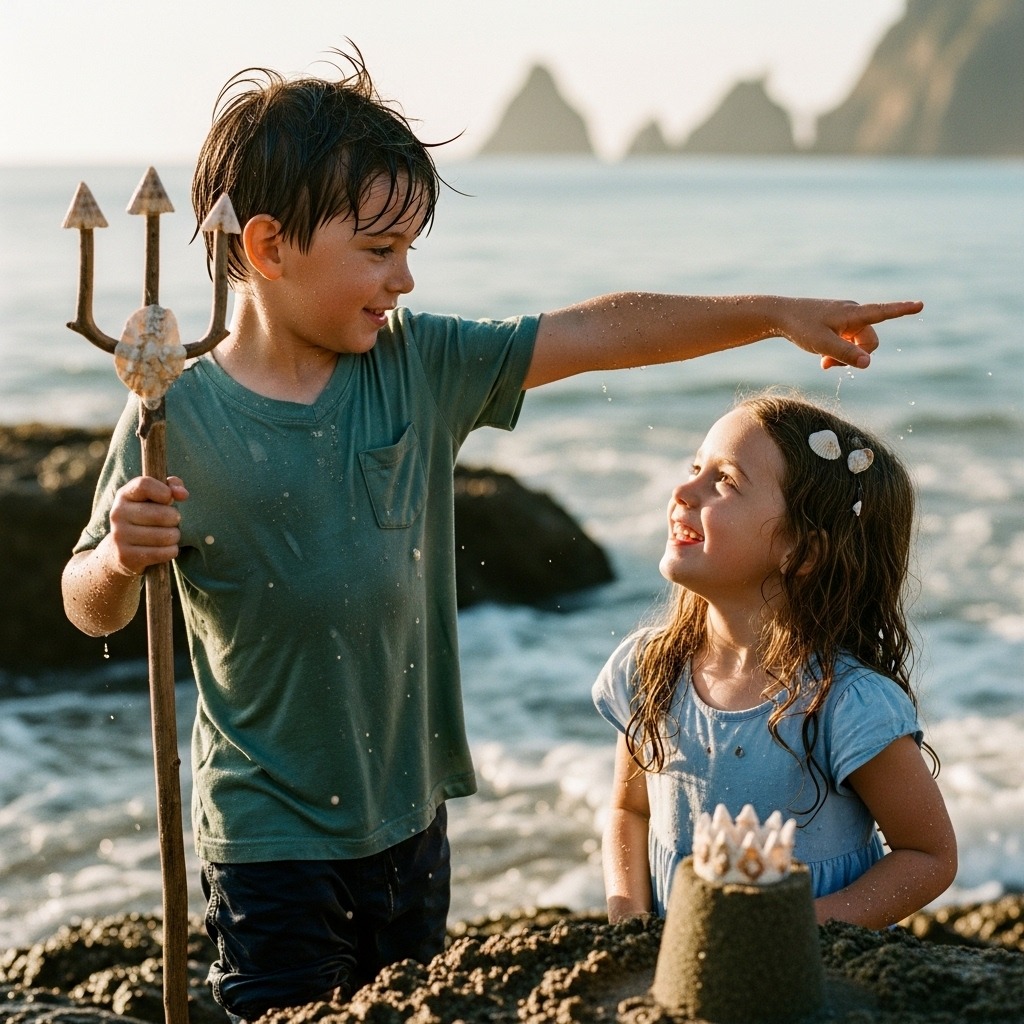
Triton’s abilities as a sea god
Triton possesses several remarkable abilities:
- Control over the sea: Triton can calm or agitate the waters at will, reflecting his father’s dominion over the ocean.
- Messaging: He acts as a messenger for Poseidon, delivering important announcements to gods and mortals alike.
- Conch shell: Triton wields a conch shell, which he blows to create powerful waves or summon marine creatures.
Myths featuring Triton
Triton appears in various myths, showcasing his importance in Greek mythology:
- The Argonauts: He aids Jason and the Argonauts during their quest, providing guidance through treacherous waters.
- The Iliad: Triton is mentioned in Homer’s epic, serving as a symbol of the sea’s might during the Trojan War.
- Nereids and Tritons: He is often depicted alongside Nereids, enhancing his role within the pantheon of sea deities.
Cultural representations of Triton
Triton’s legacy extends beyond ancient texts into modern culture:
- Art and literature: Artists have historically depicted Triton in sculptures and paintings, emphasizing his merman form and connection to Poseidon.
- Video games: In contemporary media, Triton appears in video games as a character representing the ocean’s power, often reflecting his mythological abilities.
- Mermaid folklore: Triton’s image has influenced modern interpretations of mermaids, intertwining his story with broader aquatic folklore.
Understanding Triton’s character provides insights into Poseidon’s offspring. His evolution from ancient myths to modern representations highlights the enduring impact of Greek mythology on contemporary culture.
2. Medusa: The Cursed Gorgon
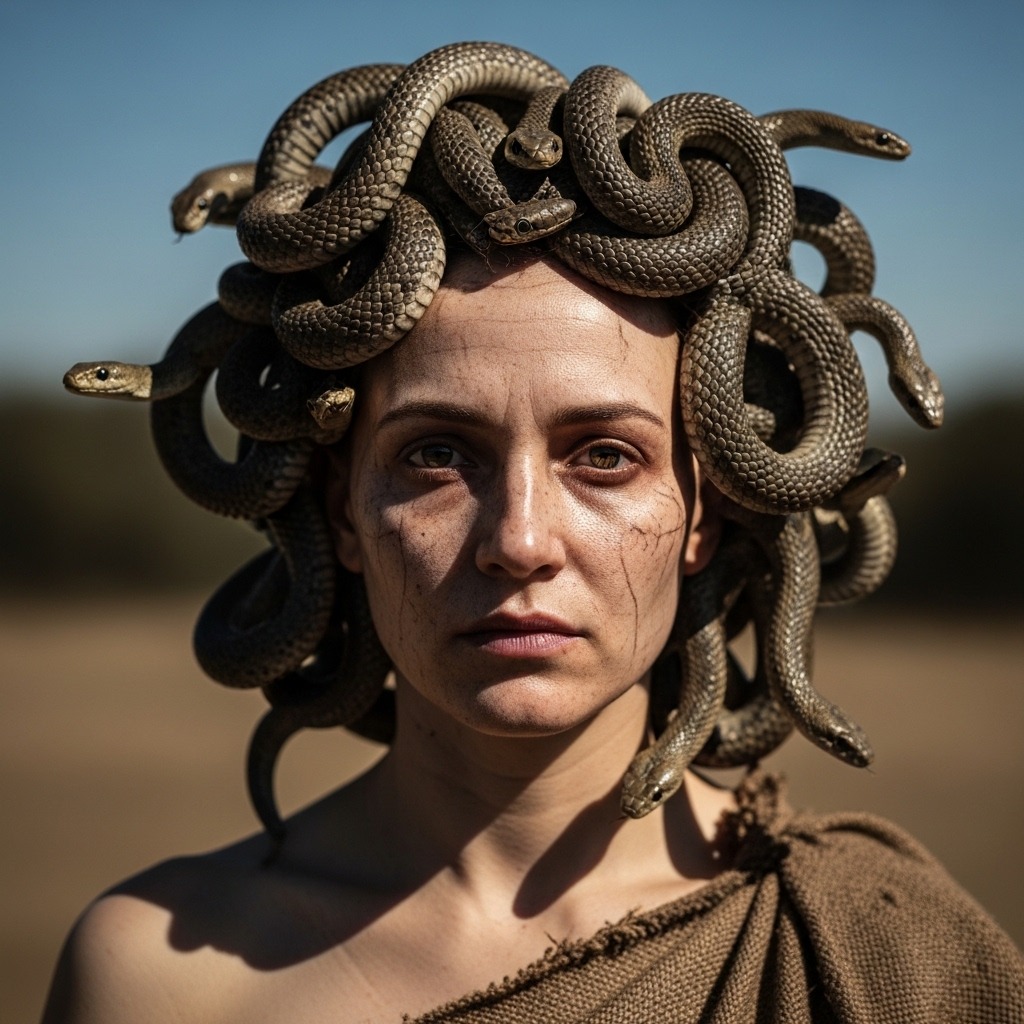
Medusa, born from Poseidon and the mortal woman Stheno, is one of the most complex figures in Greek mythology. Her transformation into a Gorgon serves as a pivotal moment that shapes not only her fate but also the destinies of her offspring.
Table of Contents
The myth of Medusa’s birth
Medusa’s lineage is significant, as she is often regarded as a daughter of Poseidon. Her beauty attracted the attention of the sea god, leading to their union. However, her life took a tragic turn when Poseidon’s encounter with Medusa in Athena’s temple enraged the goddess. As punishment, Athena transformed Medusa into a Gorgon, a creature with snakes for hair whose gaze could turn men to stone. This transformation illustrates the interplay between beauty, power, and vengeance in mythology, setting the stage for Medusa’s legacy.
Her children: Pegasus and Chrysaor
Medusa’s most notable offspring are Pegasus and Chrysaor. Both emerged from her body after Perseus beheaded her, a gruesome act that marked a turning point in mythological narratives.
- Pegasus: The winged horse, symbolizing inspiration and poetic art, became a companion to many heroes, most notably Bellerophon. His ability to soar through the skies reflects the duality of Medusa’s legacy: beauty and terror intertwined.
- Chrysaor: Often depicted as a giant wielding a golden sword, Chrysaor represents strength and valor. He is linked to the lineage of various heroes and mythical beings, showcasing the diverse legacy of Medusa’s bloodline.
The legacy of Medusa in culture
Medusa’s legacy extends beyond her immediate offspring. She embodies themes of transformation and the consequences of divine actions. Her story has inspired countless works of art, literature, and modern interpretations.
- Cultural Impact: Medusa’s image has evolved, from a monster to a feminist symbol of rage against male aggression. Artists and writers reimagine her as a figure of empowerment rather than mere victimhood.
- Mythological Significance: Medusa’s children, particularly Pegasus, have enriched Greek mythology, becoming icons in their own right. The connections between Medusa and her progeny further illustrate the intricate web of relationships among Poseidon’s offspring.
In exploring Medusa’s transformation and her children, we uncover the layers of significance in Poseidon’s genealogy. Each narrative intertwines with broader themes of power, tragedy, and legacy in Greek mythology, underscoring the far-reaching influence of Poseidon’s children.
3. Pegasus: The Winged Horse
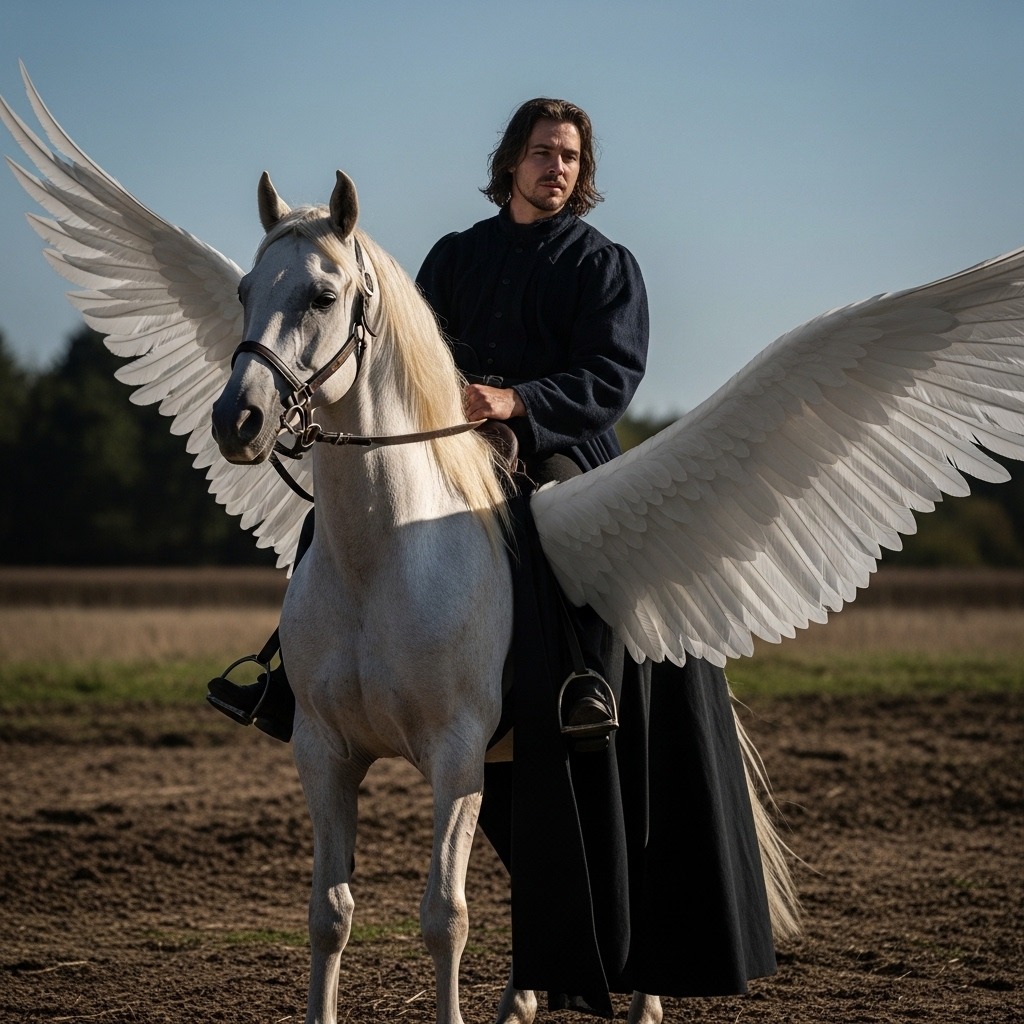
Pegasus, the iconic winged horse, symbolizes inspiration and the ethereal nature of creativity. Born from the severed neck of Medusa, his origin story intertwines tragedy with the birth of a legendary figure in Greek mythology.
Pegasus in the myth of Bellerophon
Pegasus’s most notable myth involves Bellerophon, a hero who tamed him. After being bridled, they embarked on daring adventures, including slaying the monstrous Chimera. Their alliance exemplifies the relationship between divine creatures and human heroes in myth, showcasing themes of bravery and the quest for glory.
- Taming of Pegasus: Bellerophon found Pegasus and bridled him with a golden rein, an act of divine favor.
- Chimera Encounter: Together, they confronted the Chimera, a fearsome fire-breathing creature.
- Consequences of Hubris: Bellerophon’s attempt to fly to Mount Olympus ultimately resulted in his downfall, as Zeus sent a gadfly to disrupt them, leading to Bellerophon’s crippling.
The symbolism of Pegasus in art
Throughout history, Pegasus has been depicted in various art forms, symbolizing inspiration, poetry, and the power of the arts. Artists have often portrayed him as a creature of beauty and strength.
- Inspiration for Artists: Pegasus embodies the muse, inspiring poets and painters alike.
- Cultural Representations: From ancient pottery to Renaissance paintings, Pegasus symbolizes transcendence and creativity.
- Modern Interpretations: In contemporary culture, Pegasus has appeared in literature, film, and even branding, representing freedom and aspiration.
Modern adaptations of Pegasus’ story
Pegasus continues to evolve in modern storytelling. His image and myth have inspired countless adaptations across various media.
- Literature: Modern novels often reimagine Pegasus as a character with unique abilities and complex narratives.
- Film and Television: He appears in films and series, often depicted as a companion to heroes on grand quests.
- Cultural Impact: Pegasus has become an emblem of creativity and inspiration, used in advertising and branding to evoke feelings of freedom and imagination.
Pegasus’s legacy endures, reflecting the timeless nature of myth and its ability to inspire new generations. As a direct descendant of Poseidon, he represents not only the splendor of the sea but also the heights of human aspiration.
4. Polyphemus: The Cyclops
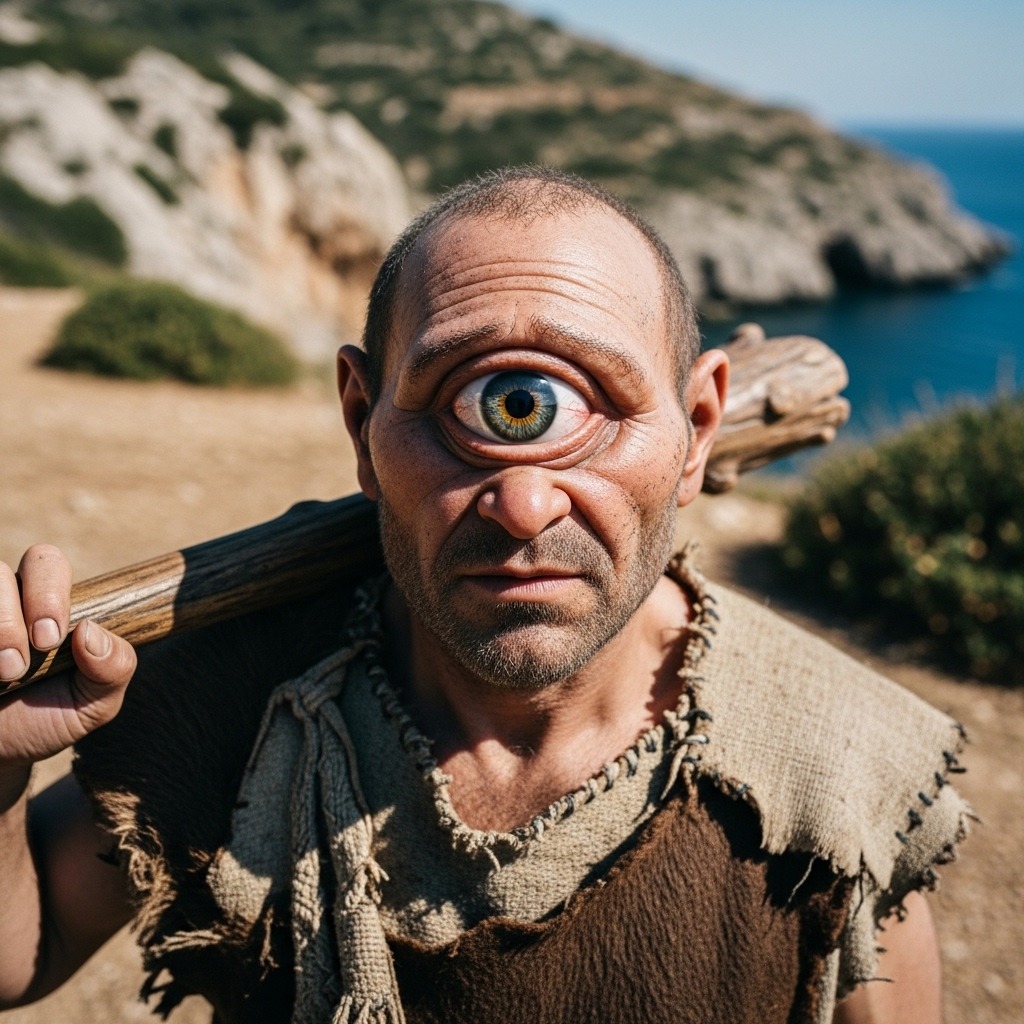
Polyphemus, the formidable Cyclops, plays a pivotal role in Greek mythology, particularly in the narrative of Odysseus. This one-eyed giant is a direct offspring of Poseidon, embodying both the wrath of the sea god and the tragic consequences of hubris.
Polyphemus’ Role in the ‘Odyssey’
In Homer’s ‘Odyssey’, Polyphemus is depicted as a savage and monstrous being. When Odysseus and his men arrive on his island, they seek shelter in his cave. The Cyclops captures them, consuming several crew members. Odysseus, known for his cunning, devises a plan to escape. He intoxicates Polyphemus with wine and blinds him with a sharpened stake while he sleeps. This act of cleverness allows Odysseus and the remaining men to flee, but not without consequences. Polyphemus calls upon his father, Poseidon, for vengeance, resulting in a decade-long struggle for Odysseus to return home [9].
Cultural Impact of Polyphemus’ Story
Polyphemus’ encounter with Odysseus has transcended ancient literature, influencing various cultural expressions. His story illustrates themes of intelligence versus brute strength, a common motif in Greek mythology. The Cyclops has been represented in art, literature, and even modern media, often symbolizing the dangers of isolation and the consequences of neglecting social norms. For instance, his tragic fate serves as a cautionary tale about the perils of pride and revenge.
Comparison of Polyphemus with Other Cyclopes
Polyphemus stands out among the Cyclopes for several reasons:
- Parentage: As a son of Poseidon, he embodies the duality of divine power and monstrous nature.
- Mythological Role: Other Cyclopes, like those forging Zeus’s lightning bolts, serve more as creators than antagonists.
- Character Arc: Polyphemus transitions from a brute to a tragic figure driven by vengeance, reflecting the complexity of mythological narratives.
This complexity enriches the understanding of Poseidon’s children, showcasing the multifaceted relationships and implications within Greek mythology.
5. Chrysaor: The Heroic Offspring
Chrysaor, a notable child of Poseidon, emerged from the neck of Medusa after her beheading by Perseus. He is often depicted as a golden giant wielding a golden sword, symbolizing both power and nobility.
The lineage and legacy of Chrysaor
- Parentage: Chrysaor is the son of Poseidon and Medusa. His birth narrative underscores the tragic fate of Medusa, who was transformed into a monster after being violated by Poseidon in Athena’s temple. This connection adds a layer of complexity to Chrysaor’s story.
- Sibling: His brother, Pegasus, the winged horse, also sprang from Medusa’s severed neck, illustrating the extraordinary nature of Poseidon’s progeny.
Myths involving Chrysaor’s bravery
Chrysaor is associated with several notable myths, particularly his connection to the monster Geryon.
- Heroic lineage: Geryon, a fearsome giant with three bodies, was Chrysaor’s son. In the myth of Heracles, Geryon is famously defeated by the hero, adding a heroic dimension to Chrysaor’s legacy.
- Golden sword: Chrysaor is often depicted with a golden sword, symbolizing valor and strength. This weapon signifies his potential as a warrior, despite his more ambiguous role in mythology.
Cultural references to Chrysaor
Chrysaor’s legacy extends beyond ancient texts, influencing various aspects of modern culture.
- Literature and art: Chrysaor appears in various artistic and literary references, often symbolizing bravery and nobility.
- Symbol of duality: His existence reflects the dual nature of Poseidon’s offspring—divine yet tragic, powerful yet burdened by their origins.
In summary, Chrysaor serves as a fascinating example of Poseidon’s children, embodying both heroic qualities and the darker themes of Greek mythology. His connections to Medusa and Geryon enrich the narrative of Poseidon’s lineage, making him a significant figure in the tapestry of ancient myths.
6. Theseus: The Hero of Athens
Theseus, often recognized as a son of Poseidon, embodies the heroic spirit of Athens through his remarkable adventures and significant cultural impact. His lineage and exploits highlight the divine connection that shaped Athenian identity.
The adventures of Theseus
Theseus undertook numerous quests that showcased his strength and cunning. His most famous adventure is the slaying of the Minotaur, a monstrous creature residing in the labyrinth of Crete. This act not only saved countless lives but also established him as a symbol of heroism in Athenian lore.
- Slaying the Minotaur: Armed with a ball of thread provided by Ariadne, Theseus navigated the labyrinth and defeated the beast, solidifying his legacy as a hero.
- Journey to Athens: On his way to Athens, he faced various challenges, including bandits and wild beasts, demonstrating his valor and resourcefulness.
- The Amazons: Theseus also engaged in battles against the Amazons, further cementing his reputation as a formidable warrior.
Theseus’ divine parentage
Theseus is often described as the son of both Poseidon and King Aegeus of Athens. This dual lineage not only enhances his status among mortals but also connects him to the divine realm.
- Parentage Details: His divine father, Poseidon, bestowed upon him extraordinary abilities, while Aegeus provided the mortal lineage crucial for his claim to the throne of Athens.
- Cultural Significance: The connection to Poseidon allowed Theseus to embody the strength and unpredictability of the sea, aligning him with Athenian values of courage and adventure.
The impact of Theseus’ story on Athens
The myth of Theseus significantly shaped Athenian identity and culture. His narratives resonate deeply within the fabric of Athenian society.
- Symbol of Unity: Theseus’ defeat of the Minotaur symbolizes the triumph over chaos, representing Athens’ rise to power and unity among the city-states.
- Cultural Festivals: The story of Theseus was celebrated through various festivals, reinforcing his importance in Athenian culture and religion.
- Foundational Myths: His adventures laid the groundwork for future generations, influencing countless works of art, literature, and philosophy in ancient Greece and beyond.
These elements collectively illustrate how Theseus, as a child of Poseidon, not only defined heroism but also served as a cornerstone of Athenian identity and mythology.
7. Benthesikyme: The Sea Queen
Benthesikyme, a daughter of Poseidon and Amphitrite, embodies the essence of waves and is intricately linked to Ethiopia. Her mythological narrative highlights her unique role in the pantheon of Poseidon’s children.
Benthesikyme’s Role in Mythology
Benthesikyme is often depicted as a sea nymph, representing the tumultuous nature of the ocean. She is primarily recognized for her connection to water and the waves, symbolizing both beauty and danger. In various myths, her character serves as a reminder of the sea’s duality—nurturing yet perilous.
Her Union with the King of Ethiopia
Benthesikyme is said to have married the king of Ethiopia, solidifying her importance in the mythological landscape. This union emphasizes her status not just as a sea figure but also as a queen who influences land and sea alike. Their offspring often include notable figures in mythology, showcasing her role in the broader genealogical tapestry of Greek myths.
Cultural Significance of Benthesikyme
Benthesikyme’s contributions extend beyond mere lineage. She represents the intersection of oceanic power and terrestrial authority. Her narrative illustrates the cultural belief in the divine connection between the sea and the lands it touches.
- Symbol of the Sea: Benthesikyme is synonymous with waves, embodying the ocean’s ever-changing nature.
- Ethiopian Connection: Her marriage to the Ethiopian king highlights the integration of geographical and cultural realms in Greek mythology.
- Mythical Offspring: The children of Benthesikyme often carry significant narratives, further enriching her legacy in mythology.
Benthesikyme’s story is not just about her lineage but about her influence on the myths of the sea and land, showcasing the intricate relationships among Poseidon’s children and their impact on cultural narratives.
8. Rhodos: The Goddess of Rhodes
Rhodos stands out as a significant child of Poseidon, often recognized as the goddess of the island of Rhodes. Her mythology is deeply intertwined with the identity of the island and its cultural heritage.
The mythological background of Rhodos
Rhodos is frequently depicted as a divine figure representing the island of Rhodes. She symbolizes the natural beauty and prosperity of the region, embodying the essence of its landscapes and maritime culture. Rhodos is described as a daughter of Poseidon and Amphitrite, the sea goddess, which emphasizes her connection to the ocean and its bounties [15].
Rhodos’ relationship with Helios
Rhodos married Helios, the sun god, further intertwining her legacy with the elements of nature. Their union produced several children, including the Heliadae, who were known for their wisdom and skills in navigation. This relationship not only highlights Rhodos’ divine status but also reflects the harmonious balance between land and sea in Greek mythology.
The influence of Rhodos in Greek culture
Rhodos holds a prominent place in Greek culture. The island of Rhodes, named after her, became a significant center for commerce and culture in ancient times. Monuments and temples dedicated to Rhodos were erected, celebrating her divine heritage and role in the prosperity of the island. Her legacy remains evident in modern times, where Rhodes is still recognized for its rich history and stunning beauty.
- Cultural Significance: Rhodos represents the integration of natural elements in Greek mythology, emphasizing the importance of divine relationships.
- Legacy: The island of Rhodes continues to flourish, echoing the attributes of its goddess, Rhodos.
In summary, Rhodos is not just a child of Poseidon; she is a vital link between the divine and the earthly, shaping the cultural identity of Rhodes through myth and history.
9. Proteus: The Shapeshifter
Proteus, a lesser-known but significant child of Poseidon, embodies the essence of adaptability and foresight in Greek mythology. Revered as an early sea god, he wields the extraordinary ability to change his form at will and foresee the future.
Proteus’ abilities and myths
- Shapeshifting: Proteus can transform into any creature, making him a master of disguise. This ability symbolizes the fluid nature of truth and identity in mythology. His shapeshifting is often portrayed as a challenge for those seeking knowledge or guidance.
- Prophecy: Beyond mere transformation, Proteus possesses the gift of foresight. He can predict events, but only if captured and compelled to speak. This duality of his character highlights the struggle between knowledge and the means to attain it.
Proteus in encounters with heroes
Proteus frequently interacts with various heroes in Greek mythology. His most notable encounter is with Menelaus during the Trojan War. Menelaus seeks Proteus to learn how to return home after the war. By capturing him and refusing to let him escape, Menelaus gains invaluable insights about navigating the challenges ahead.
Cultural references to Proteus
Proteus serves as a symbol of change and adaptability in literature and art. His character reflects the ancient Greeks’ understanding of the unpredictable nature of life and the sea. Modern references often portray him as a metaphor for transformation and the fluidity of identity. For instance:
- Literature: In contemporary works, Proteus often represents characters who undergo significant personal changes.
- Art: Many depictions emphasize his shapeshifting abilities, capturing the imagination of audiences across generations.
Proteus is not just a child of Poseidon; he is a complex figure representing the themes of adaptability and the search for truth amid chaos. His legacy continues to resonate in cultural narratives today.
10. Aethusa: The Pleiad Nymph
Aethusa is a lesser-known daughter of Poseidon, often linked to the Pleiades and associated with agriculture. Her story, while not as prominent as others, highlights the diverse lineage of Poseidon’s offspring.
The myths surrounding Aethusa
Aethusa is frequently recognized as one of the Pleiades, a group of nymphs associated with the stars. Her lineage emphasizes Poseidon’s connections with both the sea and celestial bodies. According to myth, she embodies aspects of nature, intertwining the aquatic with the agricultural.
Her connections with Apollo
Aethusa’s significance deepens through her connection with Apollo. She is said to be the mother of Eleuther and Linus, both demigods with strong ties to music and agriculture. This relationship illustrates the blending of divine powers, where Poseidon’s offspring contribute to the realms of both the sea and the land.
Cultural implications of Aethusa
The agricultural aspects of Aethusa’s story underscore her importance in myth. She symbolizes fertility and growth, representing the land’s bountiful yields. In ancient Greece, her association with agriculture likely influenced local farming practices and seasonal celebrations.
Key Facts about Aethusa
- Parentage: Daughter of Poseidon.
- Mythological Links: Connected with the Pleiades.
- Offspring: Mother of demigods Eleuther and Linus.
- Cultural Significance: Embodies fertility and agricultural prosperity.
Aethusa’s legacy may not dominate mythology, but it contributes to our understanding of Poseidon’s diverse progeny and their roles in both celestial and earthly domains.
11. Cymopoleia: The Storm Nymph
Cymopoleia, a fierce daughter of Poseidon, embodies the tumultuous nature of the sea. She personifies the violent storms that rage across the waters, reflecting the chaotic power of her father.
Cymopoleia’s powers and myths
Cymopoleia wields significant power over the stormy seas. Her abilities are often linked to the violent waves and currents that threaten sailors. She is a nymph with the strength to summon storms, making her both feared and revered.
- Parentage: Daughter of Poseidon and an unknown sea deity.
- Abilities: Control over violent sea storms, capable of generating massive waves.
- Mythological Role: Depicted as a force of nature, embodying the raw energy of the ocean.
Her significance in literature
Cymopoleia appears in various ancient texts, showcasing her integral role in the mythology surrounding Poseidon. She is frequently associated with other sea deities and mythical creatures, emphasizing the interconnectedness of Poseidon’s offspring.
- Literary References: Mentioned in works that explore the chaos of the sea and the perils of sailing.
- Symbolism: Represents the unpredictable nature of the ocean, embodying both beauty and danger.
Cultural references to Cymopoleia
Cymopoleia’s influence extends beyond ancient texts into modern interpretations of mythology. Artists and writers continue to draw inspiration from her stormy persona, reflecting the enduring legacy of Poseidon’s children.
- Modern Adaptations: Portrayed in literature and art as a symbol of maritime chaos.
- Cultural Impact: Highlights humanity’s long-standing fascination with the sea and its tempestuous nature.
Cymopoleia stands out as a vivid representation of Poseidon’s divine lineage. Her character encapsulates the wildness of the sea, showcasing the duality of beauty and destruction inherent in nature.
12. Telchines: The Sorcerers of the Sea
The Telchines are a unique and powerful aspect of Poseidon’s lineage. Known for their magical abilities and craftsmanship, these sea daemons embody the dual nature of creation and destruction.
The powers of the Telchines
The Telchines possessed remarkable skills in sorcery and metallurgy. They were adept at crafting powerful artifacts, including weapons and protective charms. Their magical prowess allowed them to control the weather, particularly storms at sea. This made them both revered and feared.
- Craftsmanship: The Telchines created significant items like the sickle used to castrate Uranus, showcasing their skills as master smiths [27].
- Sorcery: Their sorcery included the ability to manipulate marine creatures and conjure storms, making them formidable guardians of the ocean.
Their downfall and mythological legacy
Despite their talents, the Telchines faced a tragic fate. Zeus, alarmed by their misuse of magic and their growing power, banished them to Tartarus. Their story serves as a cautionary tale about the perils of unchecked ambition.
- Banished by Zeus: The Telchines’ downfall underscores the theme of divine retribution in mythology. Their ability to create turned into a curse when they employed their powers for destructive purposes [29].
- Legacy: The Telchines symbolize the complexity of Poseidon’s offspring. They illustrate how greatness can lead to ruin when not tempered by wisdom.
Cultural references to the Telchines
The legacy of the Telchines extends beyond ancient myths. They appear in various cultural references, illustrating their impact on art and literature.
- Inspiration for Artists: The duality of their nature has inspired countless interpretations in modern storytelling and visual arts.
- Symbol of Craft and Chaos: They represent the fine line between creation and destruction, a theme prevalent in narratives about the sea and its mysteries.
The Telchines, as sons of Poseidon, exemplify the multifaceted relationships and narratives within Greek mythology. Their story serves as a reminder of the intricate balance between power and responsibility.
13. Despoina: The Goddess of Arcadia
Despoina, a daughter of Poseidon and Demeter, embodies the enigmatic nature of mystery cults in Arcadia. Her significance extends beyond mere genealogy, intertwining with ancient religious practices that celebrated nature and the divine.
The myths surrounding Despoina
Despoina’s conception arose from a tumultuous encounter between Poseidon and Demeter. Seeking refuge from Poseidon’s advances, Demeter transformed into a mare. However, Poseidon, in stallion form, pursued her, resulting in Despoina’s birth. This myth highlights the complex dynamics between gods and their offspring in Greek mythology. Despoina is often depicted as a figure of power and mystery, embodying the duality of her divine heritage.
Her relationship with Demeter
Despoina is closely linked with her mother, Demeter, the goddess of agriculture. Their bond is reflected in the mystery cults that honored both deities. These cults emphasized fertility, the cycles of nature, and the afterlife. Despoina’s role in these rituals was pivotal, symbolizing the life-death-rebirth cycle that characterized ancient agricultural societies. The connection between mother and daughter reinforced the importance of fertility in both mythology and worship practices.
Cultural significance of Despoina
Despoina’s association with mystery religions adds depth to her character. She was venerated in Arcadia, where her worship involved secretive rites that promised initiates a deeper understanding of life and death. The cult of Despoina emphasized the sacredness of nature and the divine’s role in it. This aspect of her mythology parallels the worship of other significant figures, such as Persephone, but with a distinctly Arcadian flavor.
- Key Attributes of Despoina:
- Parentage: Daughter of Poseidon and Demeter.
- Symbolism: Represents fertility and the mysteries of nature.
- Cults: Central figure in Arcadian mystery religions, emphasizing life cycles.
Despoina’s legacy highlights how the offspring of Poseidon are not just figures of power but also integral to understanding ancient religious practices and cultural significance within Greek mythology.
14. Asopus: The River God
Asopus is a river god in Greek mythology, sometimes recognized as a son of Poseidon. He embodies the significance of natural waters, illustrating the essential connection between sea and fresh water in ancient Greek culture.
The Myths Surrounding Asopus
Asopus is often depicted as a powerful and flowing river. His lineage varies across myths, but his connection to Poseidon highlights the blending of freshwater and marine domains. In some narratives, he is the offspring of Poseidon and a nymph, emphasizing his divine heritage. Asopus is also known for his romantic pursuits, notably his love for the nymph Aegina, whom he sought to claim.
Asopus in Relation to Other River Gods
Asopus stands alongside other river gods, often compared to the likes of Achelous and Ph rivers. Each river god represents different aspects of water and life, but Asopus is unique as he illustrates the vital role of fresh water in sustenance and agriculture. This connection enhances the understanding of ancient Greek reverence for water as a life-giving force.
Cultural Implications of Asopus
Asopus symbolizes the importance of freshwater bodies in Greek culture. Rivers were not merely physical entities; they were seen as divine presences that nurtured the land and its people. The worship of Asopus reflected the community’s dependency on rivers for agriculture, trade, and daily life. His mythological presence underscores the ancient Greeks’ intricate relationship with their environment, emphasizing their respect for natural resources.
- Key Attributes of Asopus:
- Parentage: Occasionally recognized as a son of Poseidon.
- Symbolism: Represents vital natural waters and their significance to human life.
- Cults: Revered in local traditions, particularly in regions with significant waterways.
Asopus’s legacy is a reminder of the interconnection between various forms of water and the divine, reinforcing the idea that Poseidon’s children extend beyond the sea to influence all aspects of life.
15. Antaeus: The Giant of Libya
Antaeus, a formidable giant of Greek mythology, is recognized as a son of Poseidon and Gaia. His unique abilities and tragic fate make him a noteworthy figure among Poseidon’s children.
The myth of Antaeus and Heracles
Antaeus possessed immense strength. He drew power from the earth, thanks to his mother, Gaia. This connection made him nearly invincible as long as he remained grounded. In his encounters, he challenged travelers to wrestling matches, defeating them effortlessly. However, his downfall came at the hands of Heracles. Heracles realized that by lifting Antaeus off the ground, he could sever his connection to Gaia. This tactic rendered Antaeus vulnerable, leading to his defeat [4].
Cultural significance of Antaeus’ story
Antaeus embodies the theme of nature’s strength and the human struggle against it. His story illustrates the ancient Greeks’ reverence for the earth’s power. The myths surrounding him highlight the importance of connection to the land. Antaeus’ defeat also symbolizes the triumph of human ingenuity over brute strength. This narrative has resonated throughout history, influencing various art forms and literary works.
Antaeus in literature and art
Antaeus has been depicted in numerous artistic expressions. Renaissance artists often portrayed him in wrestling scenes with Heracles, emphasizing the dramatic struggle. His representation in literature serves as a cautionary tale about hubris and the consequences of underestimating one’s opponent. The enduring legacy of Antaeus reflects the complex relationships between gods and mortals, showcasing how Poseidon’s children continue to captivate audiences today.
- Key Attributes of Antaeus:
- Parentage: Son of Poseidon and Gaia.
- Strength: Draws power from the earth.
- Fate: Defeated by Heracles through clever strategy.
Antaeus’ life and legend serve as a critical link in the genealogy of Poseidon’s offspring, illustrating their profound impact on Greek mythology and culture.
16. Agamemnon: The King of Mycenae
Agamemnon, a pivotal figure in Greek mythology, holds connections to Poseidon that illuminate his complex lineage. As the leader of the Greek forces during the Trojan War, his story intertwines with divine favor and its consequences.
The Role of Agamemnon in the Trojan War
Agamemnon’s leadership was crucial in mobilizing the Greek armies against Troy. He commanded a coalition of powerful warriors, showcasing his strategic acumen and authority. His decisions, however, often stemmed from divine influences, particularly the wrath and favor of the gods.
Agamemnon’s Connections to Poseidon
While not a direct child of Poseidon, Agamemnon’s lineage reflects the complex interplay of divine relationships in Greek mythology. Some myths suggest that he may have received blessings from Poseidon, which would explain his formidable prowess in battle. This connection highlights the influence of Poseidon over key mortal figures.
- Parentage: Agamemnon is the son of Atreus, a descendant of the gods.
- Divine Favor: His success in the war can be partially attributed to divine support, possibly from Poseidon, who favored the Greeks in their conflict against Troy [36].
Cultural Representations of Agamemnon
Agamemnon’s legacy extends beyond the battlefield. He is often depicted in literature and art as a tragic hero, embodying the themes of hubris and divine retribution. His interactions with other gods, especially Poseidon, shape his narrative.
- Literary Depictions: In works like Homer’s “Iliad,” Agamemnon’s decisions reflect the struggle between human ambition and divine will.
- Moral Lessons: His story serves as a cautionary tale about the perils of pride and the consequences of angering the gods.
Understanding Agamemnon’s role and his connections to Poseidon provides deeper insights into the intricate web of Greek mythology and the impact of divine lineage on mortal destinies.
17. Aeolus: The Wind God
Aeolus, often identified as a son of Poseidon, plays a pivotal role in Greek mythology as the god of winds and storms. His character embodies the ancient Greeks’ understanding of nature’s unpredictable forces.
The myths surrounding Aeolus
In various myths, Aeolus is depicted as the keeper of the winds. He controls their release, manipulating them to assist or hinder sailors at sea. This power reflects humanity’s reliance on wind for navigation. For example, in Homer’s “Odyssey,” Aeolus gifts Odysseus a bag of winds to aid his journey home, demonstrating his influence over maritime fate.
Aeolus in relation to other gods
Aeolus’s parentage ties him directly to Poseidon, the god of the sea. This connection is significant; it emphasizes the intertwined nature of water and air in Greek mythology. While Poseidon governs the oceans, Aeolus commands the winds above them, showcasing a duality in nature’s elements. Additionally, Aeolus’s interactions with other deities often highlight his role in the pantheon. For instance, he occasionally collaborates with Zeus, especially when storms serve divine purposes.
Cultural significance of Aeolus
Aeolus’s character illustrates ancient Greek perceptions of nature and its unpredictability. He embodies the capricious nature of the winds—sometimes beneficial, sometimes destructive. This duality serves as a metaphor for the challenges sailors faced, emphasizing the importance of respect for nature’s power. His myths also reflect the ancient belief in divine influence over human endeavors, especially in navigation and exploration.
- Key Points about Aeolus:
- Role: God of winds and storms.
- Parentage: Often considered a son of Poseidon.
- Symbolism: Represents the unpredictability of nature.
- Cultural Impact: Highlights the Greeks’ reverence for the elements, particularly in maritime contexts.
Aeolus’s influence on navigation and weather myths underscores the critical relationship between humans and the forces of nature. His stories remind us of the blend of reverence and fear that ancient Greeks felt towards the elements that shaped their lives.
18. The Aloades: The Twin Giants
The Aloades, Otus and Ephialtes, are notable sons of Poseidon known for their immense size and ambition. Their story illustrates the dangers of hubris in Greek mythology, as they attempted to assault Olympus itself.
The Myth of the Aloades’ Ambition
Otus and Ephialtes were born from Poseidon and Iphimedeia, a mortal woman. These twin giants grew at an astonishing rate, reaching heights of over fifty feet by the age of nine. Their audacity knew no bounds; they sought to capture the gods and prove their superiority. This ambition culminated in their infamous plot to storm Olympus, aiming to overthrow the gods themselves. They believed their strength could rival that of even Zeus, the king of the gods.
Cultural Implications of Their Story
The tale of the Aloades serves as a powerful cautionary narrative. Their ambition represents the archetype of hubris—the excessive pride that leads to downfall. In their attempt to capture Ares, the god of war, and other deities, they not only exhibited arrogance but also a profound misunderstanding of the divine hierarchy. Their ultimate defeat highlights the notion that no mortal or demigod can outmatch the gods’ authority. This myth resonates with the Greek belief that humility before the divine is paramount.
Comparison with Other Giants in Greek Mythology
The Aloades stand out among other giants in Greek mythology, such as the Titans and the Gigantes. While the Titans, like Cronus, were powerful but eventually overthrown, the Aloades were characterized by their reckless ambition. Unlike the Gigantes, who fought the Olympians in the Gigantomachy, the Aloades sought to directly invade Olympus. Their narrative exemplifies a unique blend of ambition and folly, contrasting with the more traditional tales of giants who fought against the gods.
- Aloades’ Notable Traits:
- Sons of Poseidon and Iphimedeia.
- Known for their incredible size and strength.
- Symbolize hubris and ambition in Greek mythology.
The Aloades’ tale encapsulates the essence of Greek mythology, where the interplay between ambition and divine order often leads to tragic ends.
19. Busiris: The King of Egypt
Busiris, a notorious figure in Greek mythology, is often depicted as a king who sacrificed strangers to appease the gods. Some accounts claim he is a son of Poseidon, adding a complex layer to his character. His story serves as a cautionary tale about justice and divine retribution.
The myths surrounding Busiris
Busiris is primarily known for his brutal practice of sacrificing foreign visitors. His reign was marked by fear and treachery. According to mythology, he captured Heracles, intending to sacrifice him as well. However, Heracles escaped and ultimately killed Busiris, signaling a divine retribution for his heinous acts. This myth reinforces the notion that hubris against the gods leads to downfall.
Busiris’ significance in Greek literature
Busiris embodies themes of justice and the consequences of immoral actions. His character serves as a metaphor for tyranny and the inevitable retribution that follows. The myth of Busiris is a reminder of the moral order maintained by the gods. His lineage as a son of Poseidon adds a deeper significance, illustrating the complex relationship between divine lineage and moral conduct.
Cultural references to Busiris
Busiris has influenced various cultural narratives and artistic representations. His story appears in multiple texts, demonstrating his lasting impact on literature. For example, Pseudo-Hyginus mentions Busiris as a son of Poseidon who practiced human sacrifice, reinforcing his image as a villain in mythology [7]. His tale resonates through the ages, highlighting the timeless themes of justice and retribution.
- Key Points:
- Son of Poseidon in some accounts.
- Known for sacrificial practices.
- Represents themes of justice and divine retribution.
- His story warns against hubris and tyranny.
Busiris serves as a significant example of how the children of Poseidon can embody complex moral lessons within Greek mythology.
20. Lamia: The Child of the Night
Lamia, often viewed through the lens of tragedy and vengeance, is sometimes identified as a daughter of Poseidon. Her narrative intertwines themes of loss and transformation, making her a compelling figure in Greek mythology.
The tragic story of Lamia
Lamia’s tale is steeped in sorrow. Initially, she was a beautiful queen, beloved by Poseidon. However, her fate took a dark turn when Hera, jealous of their union, transformed her into a monstrous being. This transformation stripped Lamia of her beauty and humanity, compelling her to seek revenge. She became known for preying on children, reflecting her profound grief and rage.
- Parentage: Daughter of Poseidon.
- Transformation: Cursed by Hera, turning her into a monster.
- Symbolism: Represents loss, vengeance, and the pain of motherhood.
Lamia in cultural representations
Lamia’s story has transcended ancient texts, influencing various cultural depictions. She often appears as a demonic figure in literature and art, symbolizing the darker aspects of femininity and motherhood. Her image evokes fear and sympathy, embodying the duality of beauty and monstrosity.
- Literature: Featured in works from antiquity to modern interpretations.
- Art: Often depicted as a seductress or a fearsome creature.
- Modern References: Continues to inspire horror and fantasy genres.
Lamia’s role in Greek mythology
In the context of Greek mythology, Lamia serves as a cautionary figure. Her tragic transformation illustrates the consequences of divine jealousy and the fragility of human joy. Unlike many of Poseidon’s other children, Lamia’s story highlights the darker repercussions of divine interactions.
- Comparison with other offspring: While most of Poseidon’s children, like Triton and Pegasus, embody heroism and strength, Lamia’s narrative centers on tragedy and vengeance.
- Cultural impact: Her myth warns of the dangers of envy and the pain of lost love, resonating through generations.
Lamia’s character as a symbol of loss and vengeance enriches the tapestry of Poseidon’s offspring, reminding us that even divine lineage can lead to profound sorrow.
21. The Nymphs of the Sea: Poseidon’s Minor Offspring
Poseidon fathered numerous nymphs, each intricately tied to water and nature. These divine beings reflect the multifaceted relationship between the sea god and the natural world.
The Nature and Powers of the Sea Nymphs
Poseidon’s nymphs are not merely beautiful; they embody various powers and responsibilities. They are often depicted as guardians of the sea, rivers, and springs. Their abilities include:
- Healing: Many sea nymphs possess the ability to heal both mortals and other divine beings.
- Control over Water: They can manipulate water, creating storms or calming the seas.
- Guidance: Sea nymphs often assist sailors, providing safe passage through treacherous waters.
The Most Notable Sea Nymphs
Below is a list of notable nymphs who are among Poseidon’s offspring:
| Nymph | Description | Notable Myth |
|---|---|---|
| Amphitrite | Poseidon’s wife and queen of the sea. | The creation of the sea’s beauty. |
| Kymopoleia | A powerful sea goddess known for her strength. | Fought against the Giants. |
| Benthesikyme | A nymph linked to the depths of the ocean. | Associated with oceanic treasures. |
| Rhode | Founding goddess of the island of Rhodes. | Founded Rhodes after a contest. |
Cultural Significance of Nymphs in Ancient Greece
Nymphs held an esteemed place in ancient Greek culture. They represented the spirit of nature and were often worshipped in local cults. Their roles included:
- Protectors of Nature: They were seen as caretakers of rivers, springs, and forests.
- Inspiration for Art: Many artistic representations celebrated their beauty and grace.
- Symbol of Fertility: Nymphs were often associated with agricultural abundance and fertility.
Comparative Analysis with Nymphs of Other Gods
Unlike nymphs associated with other deities, Poseidon’s offspring often embody the duality of beauty and danger. For example:
- Nymphs of Zeus: Generally more focused on the heavens and divine order.
- Nymphs of Artemis: Primarily linked to forests and wildlife, emphasizing purity and hunting.
- Poseidon’s Nymphs: Encompass the tempestuous nature of the sea, representing both nurturing and destructive forces.
Poseidon’s children, especially the nymphs, are integral to Greek mythology. Their stories highlight the complex interplay between the divine and the natural world, showcasing their significant roles in both mythology and culture.
22. The Legacy of Poseidon’s Children in Modern Culture
Poseidon’s children continue to resonate in contemporary literature, art, and media. Their stories embody themes of power, duality, and the human experience, influencing various creative expressions.
Poseidon’s Children in Contemporary Literature
Poseidon’s offspring appear frequently in modern literary works. Characters like Percy Jackson, a demigod son of Poseidon, exemplify this trend. The “Percy Jackson & The Olympians” series reimagines the tales of these mythical beings, making them accessible to new generations. This series highlights the ongoing relevance of Greek mythology in youth literature.
Key Examples:
- Percy Jackson: A modern hero facing both divine challenges and human issues.
- Triton in Fantasy Novels: Often depicted as a guardian of the sea, reinforcing themes of exploration and adventure.
Cultural Adaptations in Films and TV
Poseidon and his children frequently appear in film and television adaptations. These portrayals shape public perception of Greek mythology, often emphasizing heroism and adventure.
Notable Adaptations:
- “Clash of the Titans”: Showcases Perseus, a son of Zeus, alongside Poseidon’s influence.
- “The Little Mermaid”: Triton’s character serves as an archetype of a protective father in a fantastical setting.
The Enduring Legacy of These Myths
The myths surrounding Poseidon’s children have significant cultural impacts. Their narratives explore universal themes such as identity, power struggles, and the relationship between humanity and nature.
Cultural Significance:
- Artistic Representations: Poseidon’s children inspire countless artworks, illustrating their dual nature as both protectors and destroyers.
- Symbolism in Modern Media: The sea often symbolizes the unknown and the subconscious in contemporary storytelling, reflecting ancient beliefs about Poseidon’s dominion.
Overview of Poseidon’s Children
| Name | Relationship to Poseidon | Notable Myths |
|---|---|---|
| Triton | Son | Messenger of the sea |
| Pegasus | Son (via Medusa) | Winged horse of heroes |
| Polyphemus | Son | The Cyclops encountered by Odysseus |
| Chrysaor | Son | Father of Geryon, known for his strength |
| Theseus | Often linked | Hero associated with various adventures |
| Amphitrite | Wife | Goddess of the sea, mother of Triton |
Poseidon’s legacy permeates modern culture, demonstrating the timeless nature of these ancient tales. The continued exploration of their characters enriches our understanding of mythology and its relevance today.
23. Conclusion: The Significance of Poseidon’s Children
Poseidon’s children are cornerstone figures in Greek mythology. They embody complex narratives and illustrate the god’s impact on human and divine realms alike. Understanding their significance reveals the intricate tapestry of relationships among mythological characters.
The roles of Poseidon’s children in myths
Poseidon’s offspring play pivotal roles across various myths. Each child contributes unique abilities and narratives that reflect the god’s diverse influence:
- Triton: As the messenger of the sea, Triton commands the waves and guides sailors. His role exemplifies Poseidon’s dominion over the ocean.
- Pegasus: Born from Medusa, this winged horse symbolizes inspiration and heroism. Pegasus’ adventures often intertwine with mortal heroes, illustrating the bridge between the divine and human.
- Polyphemus: This Cyclops embodies the monstrous side of Poseidon’s progeny. His encounter with Odysseus showcases themes of cunning versus brute strength.
- Chrysaor: Known for his formidable strength, Chrysaor represents the raw power associated with Poseidon’s lineage. His legacy continues in tales of heroism.
Cultural relevance of their stories
The stories of Poseidon’s children resonate beyond ancient texts. They reflect enduring themes in literature and popular culture:
- Heroism and Struggle: Characters like Bellerophon, who tames Pegasus, reflect the hero’s journey. Their narratives inspire modern storytelling, from literature to films.
- Moral Lessons: The encounters with Polyphemus teach lessons about intelligence overcoming force. Such moral complexities remain relevant in contemporary discourse.
- Symbolism in Art: Many of Poseidon’s children have inspired countless works of art, representing the eternal fascination with mythology. For instance, Pegasus is often depicted in various artistic forms, symbolizing freedom and creativity.
Final thoughts on Poseidon’s legacy
Poseidon’s children collectively shape the narrative of Greek mythology. Their varied abilities and stories contribute to a rich cultural legacy. This lineage not only highlights Poseidon’s power but also reflects the complexities of relationships among gods and mortals. Understanding these dynamics provides deeper insights into the moral and cultural fabric of ancient Greece. Their stories continue to influence modern narratives, showcasing the timelessness of mythological themes.
Frequently Asked Questions
These quick answers cover the most common questions about this topic, including key details, practical tips, and common concerns.
22 Children of Poseidon: Who Are They?
Poseidon fathered numerous children, including gods, monsters, and mortals. Some of the most notable are Triton, Pegasus, Polyphemus, and Theseus. Their stories span from heroic deeds to tragic transformations, reflecting Poseidon’s vast influence over the sea and land.
Who are Poseidon’s most famous children?
Poseidon’s most renowned offspring include Triton, the messenger of the sea; Pegasus, the winged horse; Polyphemus, the Cyclops encountered by Odysseus; and Theseus, the hero of Athens. These figures have played significant roles in Greek myths and culture.
How did Poseidon father his children?
Poseidon fathered his children through divine unions with various goddesses, nymphs, and mortal women. Some, like Triton and Pegasus, were born from his union with Amphitrite or Medusa, while others, like Theseus, are considered semi-divine heroes linked to divine parentage.
Why are Poseidon’s children important in Greek mythology?
They embody key themes such as heroism, chaos, and divine power. Many, like Pegasus and Theseus, symbolize human aspiration and bravery. Others, like Polyphemus, illustrate the dangers of hubris and divine wrath.
When did Poseidon interact with other gods regarding his children?
Poseidon often interacted with gods like Zeus and Athena during mythological events. For example, he was involved in the contest for Athens’ patronage and in the Gigantomachy, showcasing his influence over divine and mortal affairs.
Are there common misconceptions about Poseidon’s children?
Yes. Some mistakenly identify certain mythological figures as children of Poseidon when they are not. For example, the Minotaur is a creature born from Pasiphae and a bull, not Poseidon. Clarifying parentage is key to understanding their stories.
How do Poseidon’s children compare to Zeus’s children?
Zeus’s offspring are often associated with the sky, wisdom, and kingship, like Athena and Apollo. Poseidon’s children tend to be linked with the sea, earth, and monsters, such as Triton and Geryon. Both lineages produce gods and heroes but represent different aspects of divine influence.
What powers do Poseidon’s children possess?
They often inherit powers related to the sea, strength, or divine abilities. Triton controls the ocean, Pegasus can fly and inspire, and Polyphemus has immense physical strength. These powers reflect their divine parentage and mythological roles.
References
1. Triton (Mythology) | Mermaid Wiki
4. Double Trouble: Medusa and Embodied Paradoxes
7. Major Aspects of Pegasus in Greek Mythology
9. Odyssey
10. Metamorphoses (Kline) 4, the Ovid …
11. Chrysaor
12. The Cattle
13. Theseus – God of War Wiki – Fandom
14. Theseus Combating the Minotaur (Thésée combattant le …
15. POSEIDON FAMILY – Greek Mythology
16. Benthesikyme
17. BENTHESICYME (Benthesikyme) – Ethiopian Sea Nymph …
18. https://www.rhodes.edu/user
19. Proteus: Mythology to modern times
20. Proteus: Mythology to modern times – PMC – NIH
21. A theoretical review of the Proteus effect – PMC
23. Aethusa: a Pleiades name resource
24. Department of Agriculture – Organizations – Dataset – Catalog
25. Cymopoleia | Storm-Born Goddess of the Roaring Waves
26. Kymopoleia – Riordan Wiki – Fandom
27. TELCHINES (Telkhines) – Sea Daemons & Magicians of …
28. The Knowledge System of the Traditional Chinese Craftsman
29. Poseidon: Myths and Facts about the Greek God of the Sea
32. Greek Mythology: Literature Curriculum, Levels CD [ …
33. Asopus | Myths of the World Wiki – Fandom
34. Quantitative Assessment of Water Quality in Upper Esopus …
35. About Poseidon
36. The Trojan War – Classical Studies
37. The Aeolus Mission Concept, an Innovative …
38. Gods of Commencement | Emory | Michael C. Carlos Museum
39. Aloadae
41. 11. Busiris
42. Lamia (daughter of Poseidon)
43. The Children of Kronos: Poseidon (page 62 lower, with art)
44. Water Nymph (Najas) | U.S. Fish & Wildlife Service
45. Poseidon | Poseidon | University of Washington
46. Poseidon