
Uranus, the primordial Greek god personifying the sky, is known for his complex relationships and significant role in mythology. This article presents 18 intriguing facts about Uranus that reveal his importance in Greek mythology and the consequences of his actions.
1. Uranus is the Primordial God of the Sky
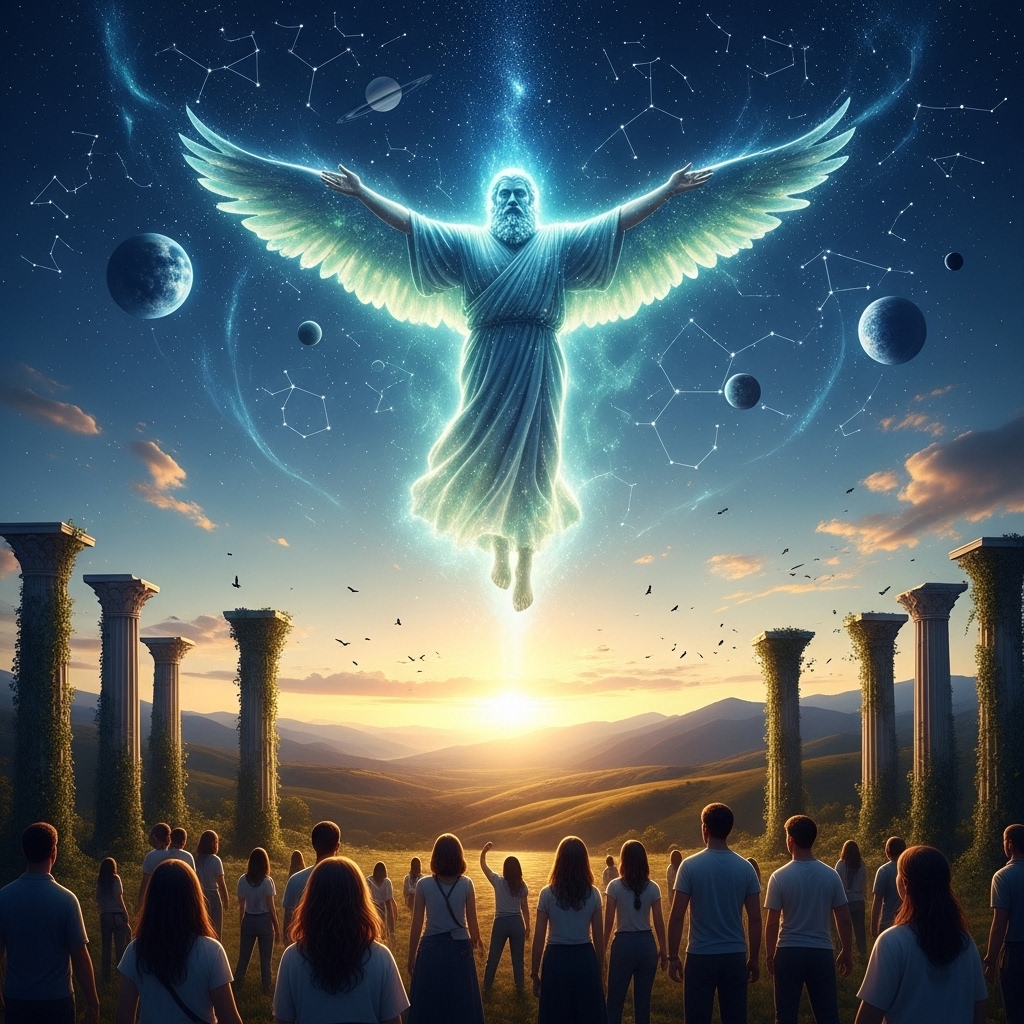
Uranus represents the sky and the cosmic order in Greek mythology. His essence embodies the vastness of the heavens, forming a fundamental part of ancient Greek cosmology.
Uranus’s Role as a Primordial Deity
Uranus is among the first gods in Greek mythology, born from chaos. He is often referred to as “Father Sky,” and his union with Gaia, the Earth, symbolizes the interconnectedness of sky and land. This relationship gives rise to significant offspring, including the Titans, Cyclopes, and Hecatoncheires.
- Primordial Origins: Uranus emerged at the beginning of creation, alongside Gaia. This emergence establishes him as a foundational figure in the mythological narrative.
- Parentage: Unlike many gods, Uranus is said to have no father. His creation from chaos highlights the ancient belief in self-originating entities.
The Meaning of His Name in Ancient Greek
The name “Uranus” comes from the Ancient Greek word “ouranos,” which translates to “heavens.” This etymology reflects his role as the embodiment of the sky, emphasizing his connection to both the physical and divine realms.
- Symbolism: The concept of the “heavens” in ancient Greek thought encompasses not only the physical sky but also the ethereal, representing a higher cosmic order.
- Cultural Impact: The representation of Uranus as the sky god influences later myths and artistic depictions, reinforcing the significance of celestial themes in Greek culture.
Uranus’s oppressive rule over his children leads to pivotal events that shape future generations. His downfall at the hands of his son Cronus illustrates the cycle of power and generational conflict central to Greek mythology. Understanding Uranus’s origins and his relationships provides insight into the broader narrative of Greek mythos and its enduring impact.
2. Uranus’s Unique Relationship with Gaia
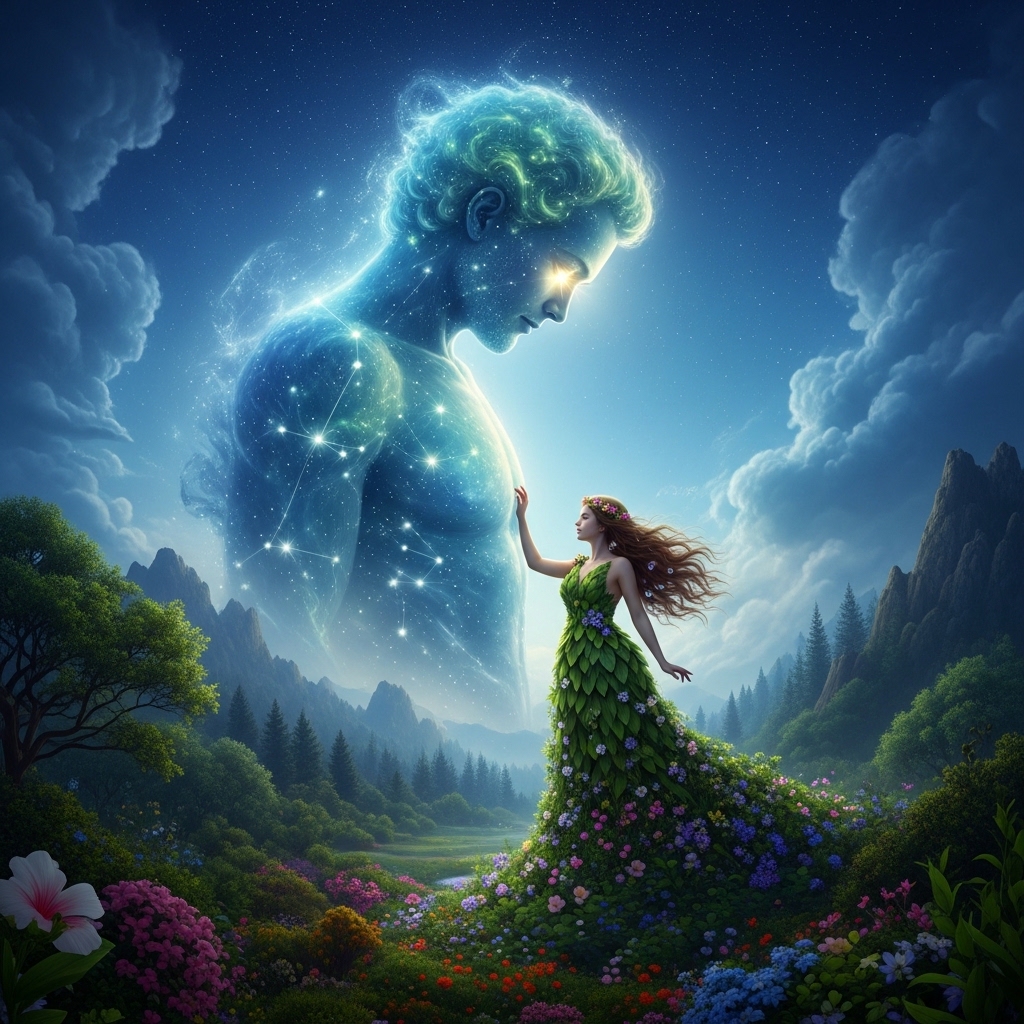
Uranus’s relationship with Gaia is fundamental in Greek mythology. As both husband and son, their intertwined identities reveal much about the origins of the cosmos.
The significance of their union
Uranus and Gaia represent the primal forces of the universe. Their union symbolizes the connection between the sky and the earth. Together, they birthed several significant entities, including:
- The Titans: Twelve powerful deities, such as Cronus and Oceanus, who played key roles in Greek mythology.
- The Cyclopes: One-eyed giants who were skilled craftsmen.
- The Hecatoncheires: Monsters with a hundred hands and fifty heads, representing overwhelming strength.
This union illustrates the duality of creation. The harmony between Uranus and Gaia demonstrates how the cosmos was formed through their shared existence.
Implications of Uranus’s dual role
Uranus’s role as both son and husband introduces complexity to his character. As the son of Gaia, he embodies the sky’s authority. Yet, as her husband, he also represents the potential for creation and destruction. This duality leads to:
- Power Struggles: Uranus feared his offspring, viewing them as threats. He imprisoned his children, provoking Gaia’s wrath and leading to his eventual downfall.
- Symbolic Representation: Uranus’s actions reflect the chaotic order of the universe. His relationship with Gaia sets the stage for conflicts among their children, particularly Cronus.
Understanding this relationship sheds light on the dynamics within Greek mythology. Uranus’s oppressive reign and the consequences of his actions illustrate themes of power, fear, and rebellion that resonate throughout mythological narratives.
3. The Twelve Titans: Uranus’s Progeny
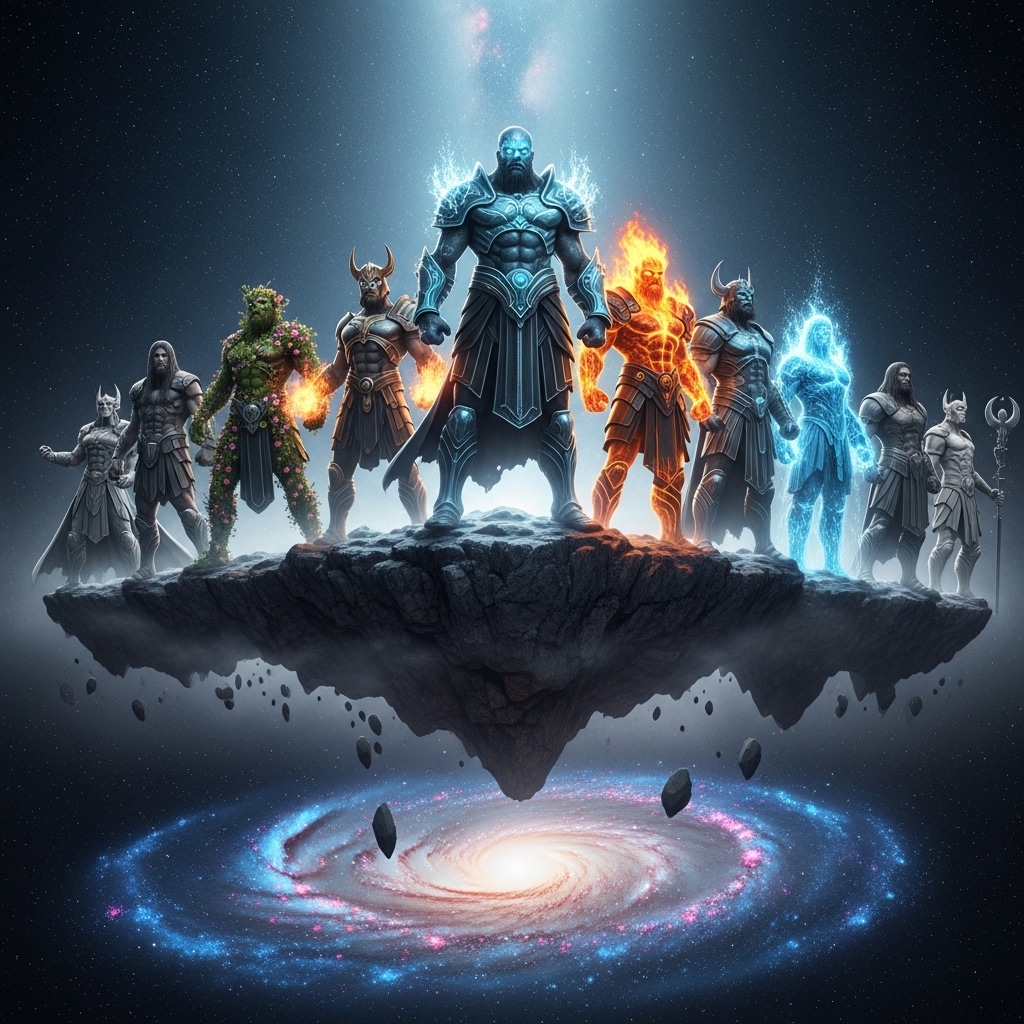
Uranus fathered twelve Titans with Gaia, each of whom played a crucial role in Greek mythology. These deities represent various aspects of the cosmos and nature, shaping the world and influencing future generations of gods.
Overview of the Twelve Titans
The Titans are:
- Cronus: Leader of the Titans. He overthrew Uranus and later became the father of the Olympian gods.
- Rhea: Sister and wife of Cronus. She is the mother of Zeus, Hestia, Hera, Demeter, Poseidon, and Hades.
- Hyperion: Titan of light. He represents the sun and is often associated with wisdom.
- Theia: Sister of Hyperion and goddess of sight. She is the mother of the sun, moon, and dawn.
- Oceanus: Titan of the ocean. He embodies the vast waters that surround the earth.
- Tethys: Sister and wife of Oceanus. She represents the nourishing flow of fresh water.
- Coeus: Titan of intellect. He symbolizes the axis of heaven and is associated with intelligence.
- Phoebe: Sister of Coeus, goddess of prophecy. She represents the shining light of the moon.
- Iapetus: Titan associated with mortality. He is often linked to the concept of human limits.
- Crius: The least mentioned Titan. He symbolizes the constellations and is associated with the heavenly bodies.
- Mnemosyne: Goddess of memory. She is the mother of the Muses, inspiring arts and sciences.
- Themis: Goddess of divine law and order. She symbolizes justice and fairness.
The Roles of Prominent Titans
Each Titan contributed uniquely to Greek mythology:
- Cronus: His act of castration against Uranus symbolizes the end of the old order. This critical event paved the way for the rise of the Olympian gods.
- Rhea: As the mother of the Olympians, her role highlights the importance of nurturing and protection in the face of tyranny.
- Hyperion and Theia: Together, they embody celestial phenomena, influencing the ancient Greeks’ understanding of light and time.
- Oceanus and Tethys: They represent the life-giving and destructive aspects of water, crucial elements in ancient Greek thought.
The Titans are not merely offspring of Uranus; they are foundational figures in the mythology that shaped ancient Greek culture. Their stories reflect the complexities of power, family dynamics, and the natural world, illustrating how Uranus’s progeny influenced the trajectory of divine history.
4. The Cyclopes and Hecatoncheires: More Offspring
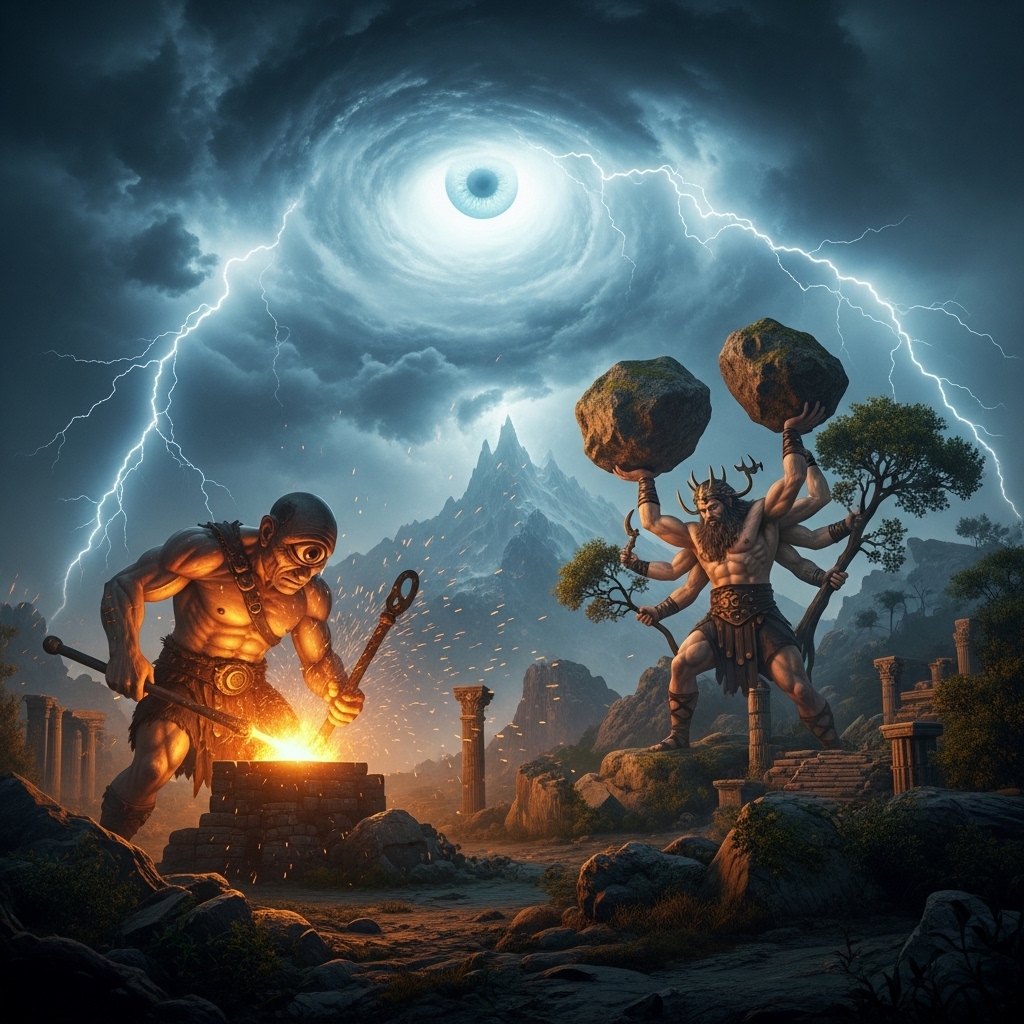
Uranus’s lineage extends beyond the Titans to include the Cyclopes and the Hecatoncheires. These beings significantly contribute to the complexity of his mythological narrative.
Characteristics of the Cyclopes
The Cyclopes are known for their distinctive physical traits and formidable abilities. They are giant beings with a single eye in the center of their foreheads. Their names—Brontes, Steropes, and Arges—reflect their elemental powers associated with thunder, lightning, and brightness.
- Strength and Craftsmanship: The Cyclopes are celebrated for their exceptional strength and skill in metallurgy. They crafted Zeus’s thunderbolts, which became pivotal in the battles among the gods.
- Role in Mythology: In addition to their work for Zeus, the Cyclopes participated in various myths, showcasing their importance as divine artisans and warriors.
The significance of the Hecatoncheires
The Hecatoncheires, also known as the “Hundred-Handed Ones,” possess remarkable physical characteristics. Each of the three Hecatoncheires—Cottus, Briareos, and Gyges—has fifty heads and one hundred arms.
- Powerful Allies: The Hecatoncheires were later released from Tartarus by Zeus during the Titanomachy. Their immense strength and multiple limbs made them formidable allies in the battle against the Titans.
- Symbol of Chaos and Order: In mythology, the Hecatoncheires embody the chaotic forces of nature and the struggle for order. Their presence signifies the balance between creation and destruction, a recurring theme in Greek mythology.
Contribution to Uranus’s Legacy
The offspring of Uranus, particularly the Cyclopes and the Hecatoncheires, illustrate the duality of creation and chaos in the cosmos. Uranus’s unwillingness to accept his children reflects a deeper narrative about power and fear.
- Symbolism of Rebellion: The liberation of the Cyclopes and Hecatoncheires symbolizes a rebellion against tyranny. Their eventual roles in mythology underscore the shift in power dynamics that emerged after Uranus’s downfall.
- Cultural Impact: These beings have influenced not only Greek mythology but also later cultural references in literature and art, highlighting their lasting legacy.
Through their unique attributes and roles, the Cyclopes and Hecatoncheires enrich the mythos surrounding Uranus, showcasing the complex interplay of family, power, and creation in Greek mythology.
5. The Tyranny of Uranus: His Cruel Rule
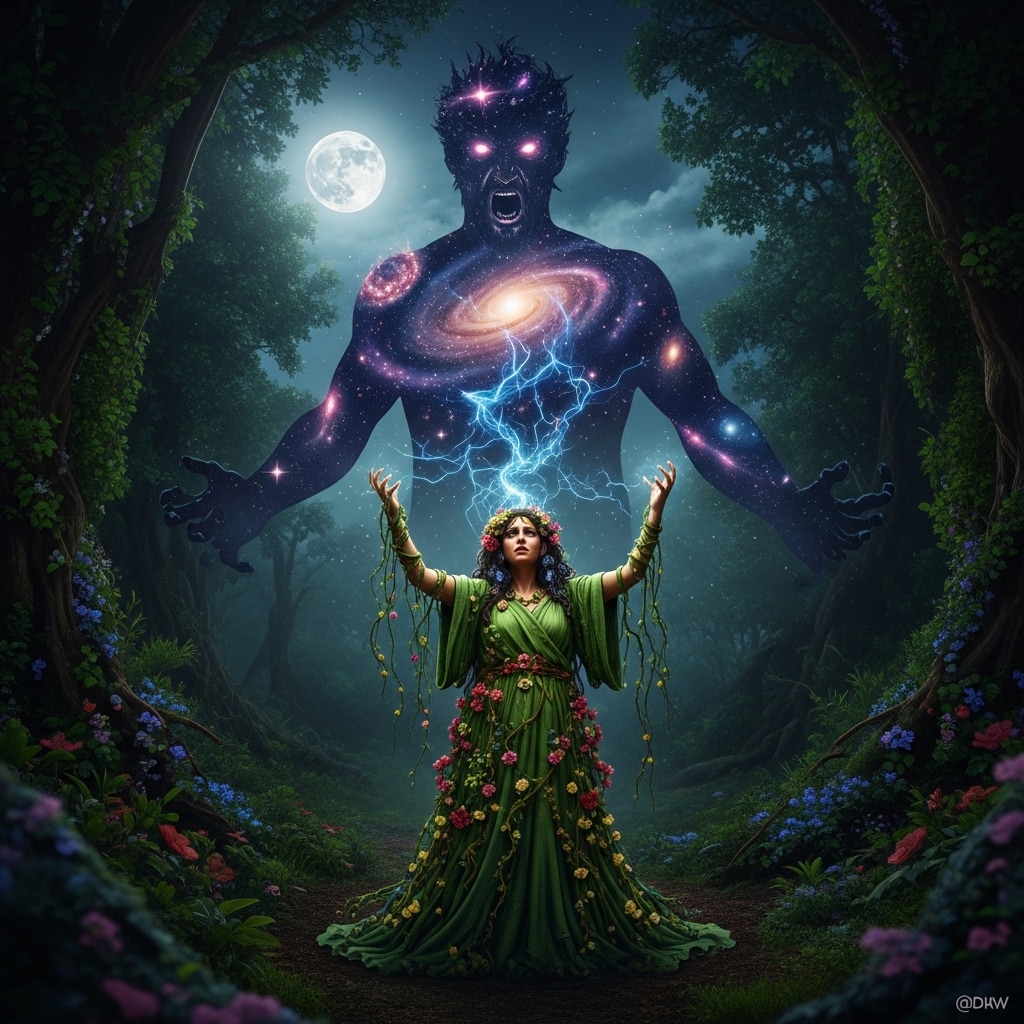
Uranus’s reign was defined by oppression and fear. His actions toward his children reveal a complex narrative about power and familial relationships in Greek mythology.
The Nature of Uranus’s Tyranny
Uranus, the primordial god of the sky, exhibited a tyrannical nature. He feared his offspring, viewing them as potential threats. His fear manifested in cruel actions, including:
- Imprisonment of Offspring: Uranus confined many of his children within the depths of the Earth. This included the Cyclopes and the Hecatoncheires, who were hidden away in Tartarus, a dark abyss beneath the earth.
- Rejection of Creation: He rejected his children upon birth, causing immense suffering to Gaia, their mother. This rejection signifies a fundamental conflict between creation and destruction.
The psychological implications of Uranus’s actions highlight a deep-rooted fear of losing control. His refusal to accept his children reveals a profound insecurity, leading to an oppressive regime that stifled potential and growth.
Impact on Gaia and Their Offspring
The consequences of Uranus’s tyranny were dire for both Gaia and their offspring. His actions resulted in significant strife:
- Gaia’s Pain: Gaea, burdened by the imprisonment of her children, experienced immense grief. Her suffering motivated her to seek change, culminating in a rebellion against Uranus.
- Rise of Cronus: The youngest Titan, Cronus, emerged as a symbol of hope. He took action against his father, ultimately leading to Uranus’s downfall. This act of rebellion marked a critical turning point in mythological history.
Uranus’s tyrannical rule not only impacted his immediate family but also set the stage for future conflicts among the gods. The legacy of his oppression continued to resonate in the narratives of his children, who would later shape the cosmos in their image.
Summary of Uranus’s Rule
| Aspect | Description |
|---|---|
| Tyranny | Oppressive rule characterized by fear and rejection of children. |
| Imprisonment | Many offspring were confined, including the Cyclopes and Hecatoncheires. |
| Impact on Gaia | Gaea suffered greatly, leading to her eventual rebellion against Uranus. |
| Cronus’s Rebellion | Cronus’s actions against Uranus symbolized the struggle for power and change in the cosmos. |
Uranus’s oppressive regime serves as a cautionary tale about the consequences of unchecked power and the importance of nurturing creation rather than stifling it.
6. Gaia’s Rebellion Against Uranus

Driven by pain and resentment, Gaia plotted to overthrow Uranus, leading to a pivotal mythological event. This rebellion marked the transition of power from primordial beings to the Titans and ultimately to the Olympian gods.
The Planning of the Rebellion
Gaia’s suffering under Uranus’s oppressive rule fueled her desire for revenge. She felt deep anguish as Uranus imprisoned their children, the Cyclopes and the Hecatoncheires, deep within Tartarus. This act of tyranny ignited a fierce determination in Gaia. She sought to reclaim her power and free her offspring.
- Gathering Allies: Gaia enlisted her Titan children to join her cause. Among them, only the youngest, Cronus, agreed to participate in the rebellion.
- Creating the Weapon: Gaia crafted a sickle of flint, a symbol of ancient power, to facilitate the overthrow. This sickle would become a crucial tool in executing her plan.
Role of Cronus in the Plot
Cronus, motivated by his desire for power, played a central role in Gaia’s rebellion against Uranus. His ambition to replace his father spurred him to act decisively.
- The Ambush: On the fateful night of the attack, Cronus and his brothers ambushed Uranus. They restrained him while Cronus wielded the sickle, executing the act of castration.
- Significance of the Act: This brutal act not only symbolized the end of Uranus’s reign but also initiated a series of events that would shape the future of the gods. The blood that spilled from Uranus birthed new beings, including the Giants and the Erinyes, thus expanding the mythological narrative.
Gaia’s rebellion against Uranus illustrates a critical moment in Greek mythology. It showcases the themes of power struggles and the consequences of tyranny. The act of Cronus overthrowing Uranus also serves as a prophetic warning, as Uranus foretold that Cronus too would face betrayal from his own offspring. This cycle of conflict and succession underscores the tumultuous nature of divine relationships in Greek mythology.
7. Cronus’s Castration of Uranus
Cronus’s violent act of castration marked the end of Uranus’s reign and reshaped the Greek pantheon. This pivotal moment symbolizes a profound shift in divine power dynamics.
The act of castration
The castration of Uranus by his son Cronus is a defining event in Greek mythology. Driven by resentment, Cronus used a sickle to remove his father’s genitals, a brutal act that ended Uranus’s dominion over the cosmos. This act was not merely an act of rebellion; it represented the culmination of a long-standing conflict between generations of deities.
- Symbolism: The castration signifies the severing of ties between the primordial deities and the emerging Olympians. It illustrates the theme of parental tyranny and the cyclical nature of power struggles.
- Impact on Offspring: The blood shed from Uranus gave rise to new beings, such as the Giants and the Erinyes, emphasizing the consequences of Cronus’s actions.
Consequences for the cosmos
The aftermath of Uranus’s overthrow had far-reaching implications for the Greek pantheon. With Uranus defeated, Cronus ascended to power, becoming the leader of the Titans. This transition marked a new era in mythology.
- Cycle of Betrayal: Uranus had foretold that Cronus would also face betrayal from his children, which foreshadowed the ongoing cycle of conflict within the divine hierarchy.
- Shifts in Power: The act of castration not only ended Uranus’s reign but also initiated a new order among the gods, leading to the eventual rise of Zeus and the Olympians.
This myth highlights the interconnectedness of power, conflict, and legacy in Greek mythology, showcasing how the actions of one generation reverberate through subsequent ones.
8. The Birth of New Entities from Uranus’s Blood
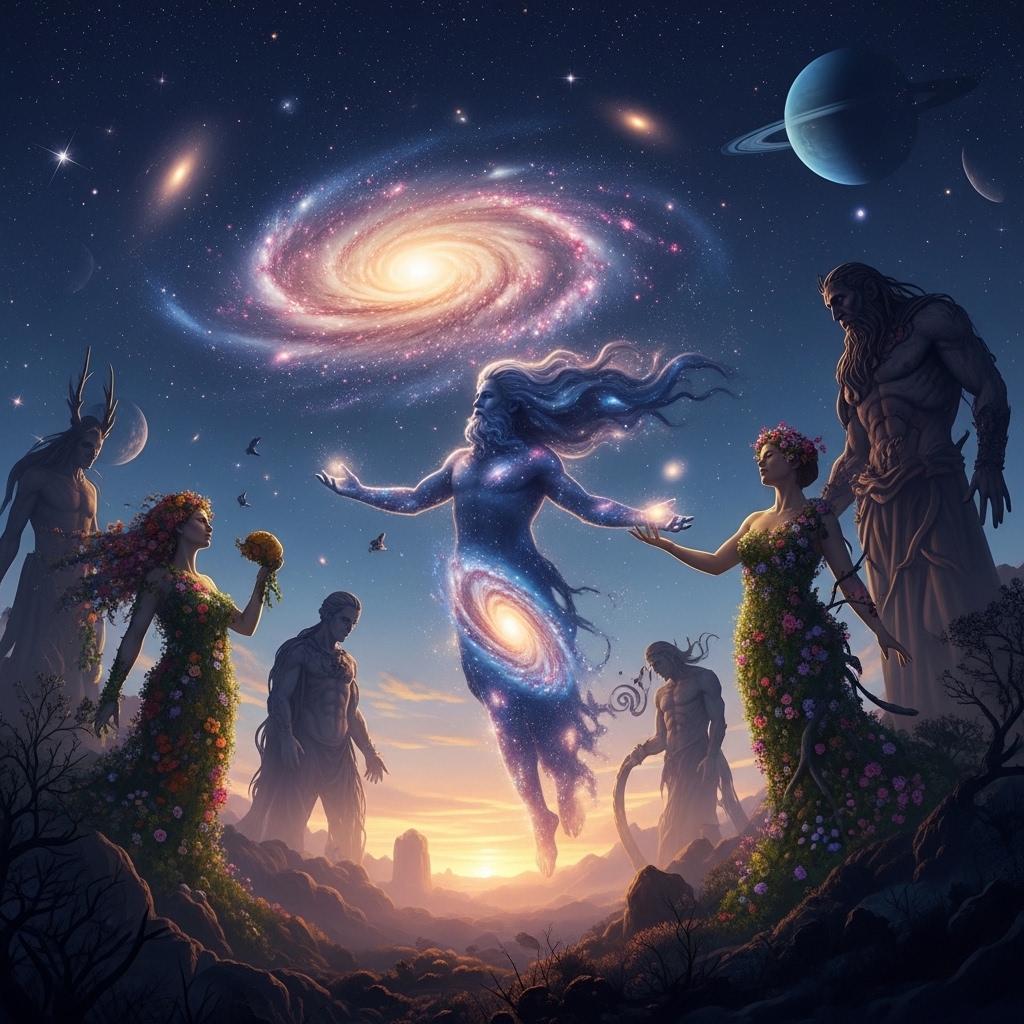
Uranus’s blood, shed during his violent castration, led to the creation of significant mythological beings. This act not only marked his downfall but also birthed powerful entities that influenced subsequent myths.
Overview of the Furies
The Furies, known as the Erinyes, emerged from the blood of Uranus. They are often depicted as vengeful spirits, punishing those who commit familial crimes, particularly against parents.
- Role in Mythology: The Furies symbolize retribution and justice. They serve as a reminder of the consequences of betrayal and wrongdoing.
- Cultural Impact: Their presence in various myths highlights themes of vengeance, morality, and the importance of familial duty. They appear in works such as Aeschylus’s “Oresteia,” emphasizing their pivotal role in ancient Greek storytelling.
The Significance of the Giants
The Giants also originated from Uranus’s blood, representing chaos and the primal forces of nature. Their creation signifies the tumultuous relationship between the primordial deities and the emerging Olympian gods.
- Mythological Role: The Giants challenged the Olympians in a series of battles known as the Gigantomachy. This conflict underscored the struggle for cosmic order.
- Symbolism: The Giants embody the raw, untamed aspects of nature. They remind mortals of the delicate balance between civilization and chaos.
Influence on Later Myths
Both the Furies and the Giants played crucial roles in shaping the narratives of Greek mythology. Their stories serve as cautionary tales that reflect the values and beliefs of ancient Greek society.
- Legacy of the Furies: Their influence extends beyond mythology into literature and art, symbolizing the inescapable nature of guilt and punishment.
- Giants in Culture: The Giants’ conflicts represent the struggle against chaos, a theme that resonates in various cultures. Their narratives often reflect humanity’s fears and the need for order.
These entities, born from Uranus’s blood, illustrate the profound consequences of his actions. They serve as testaments to the intricate tapestry of relationships and conflicts within Greek mythology.
9. The Emergence of Aphrodite from the Sea
Aphrodite’s birth from the severed genitals of Uranus highlights the intricate and often violent aspects of creation in Greek mythology. Her emergence is not only significant for its dramatic origins but also for the roles she plays in subsequent myths.
Mythological Interpretations of Her Birth
Aphrodite’s origin story illustrates deep themes of creation and destruction. Born from Uranus’s severed genitals, her arrival signifies the chaos that can accompany new beginnings. This act of violence, performed by her son Cronus, embodies the cyclical nature of power and the consequences of familial conflict.
- Symbolism of Birth: Aphrodite’s emergence from the sea represents the transformation of violence into beauty. Her birth reflects the idea that creation often arises from chaos.
- Cultural Relevance: This narrative resonates with various interpretations of femininity and the duality of beauty and peril in ancient cultures.
Aphrodite’s Role in Subsequent Myths
Following her birth, Aphrodite becomes a central figure in numerous myths, influencing both gods and mortals alike. Her presence underscores themes of love, desire, and conflict.
- Influence on Relationships: Aphrodite’s romantic entanglements, including her relationships with Ares and Hephaestus, illustrate the complexities of love and betrayal.
- Symbol of Desire: As the goddess of love, she embodies the power of attraction and the often tumultuous nature of desire, affecting the fates of heroes and gods.
Her story serves as a reminder of the intricate relationships within mythology, where even the most beautiful entities emerge from the darkest actions. Aphrodite’s dual nature as born from violence yet representing love showcases the complexity of Greek mythological narratives.
10. Uranus’s Role in the Greek Creation Myth

Uranus plays a pivotal role in the Greek creation myth, embodying the conflict between generations. His relationships and actions set the stage for the subsequent evolution of the divine hierarchy.
Concepts of Creation in Greek Mythology
- Primordial Deity: Uranus is one of the first beings in Greek mythology, representing the sky. His existence illustrates the Greek belief in the interconnectedness of natural elements.
- Father of the Titans: With Gaia, the Earth, Uranus fathered twelve Titans, including Cronus, Hyperion, and Oceanus. These deities symbolize various aspects of nature and power.
- Conflict and Control: Uranus’s fear of his offspring led him to imprison the Hecatoncheires and Cyclopes in Tartarus. This act of oppression illustrates the theme of generational conflict, where the old order resists change.
Uranus’s Legacy in the Broader Mythos
- The Overthrow by Cronus: Uranus’s reign ended when Cronus, resentful of his father’s tyranny, conspired with Gaia to overthrow him. This pivotal event highlights the transition from primordial chaos to a more organized pantheon of gods.
- Symbol of Change: The castration of Uranus by Cronus not only signifies the end of his rule but also represents the cycle of generations in mythology. This act symbolizes the necessity of change for progress.
- Impact on Future Generations: The overthrow of Uranus allowed the Titans to rise, leading to the eventual emergence of the Olympian gods. This cycle demonstrates how the actions of one generation can profoundly influence the next.
Uranus’s presence in Greek mythology emphasizes the complex relationships and conflicts that define the cosmic order. His story serves as a foundational narrative, shaping the myths that follow and reflecting the ancient Greeks’ understanding of creation and power dynamics.
11. Cultural Representations of Uranus in Art
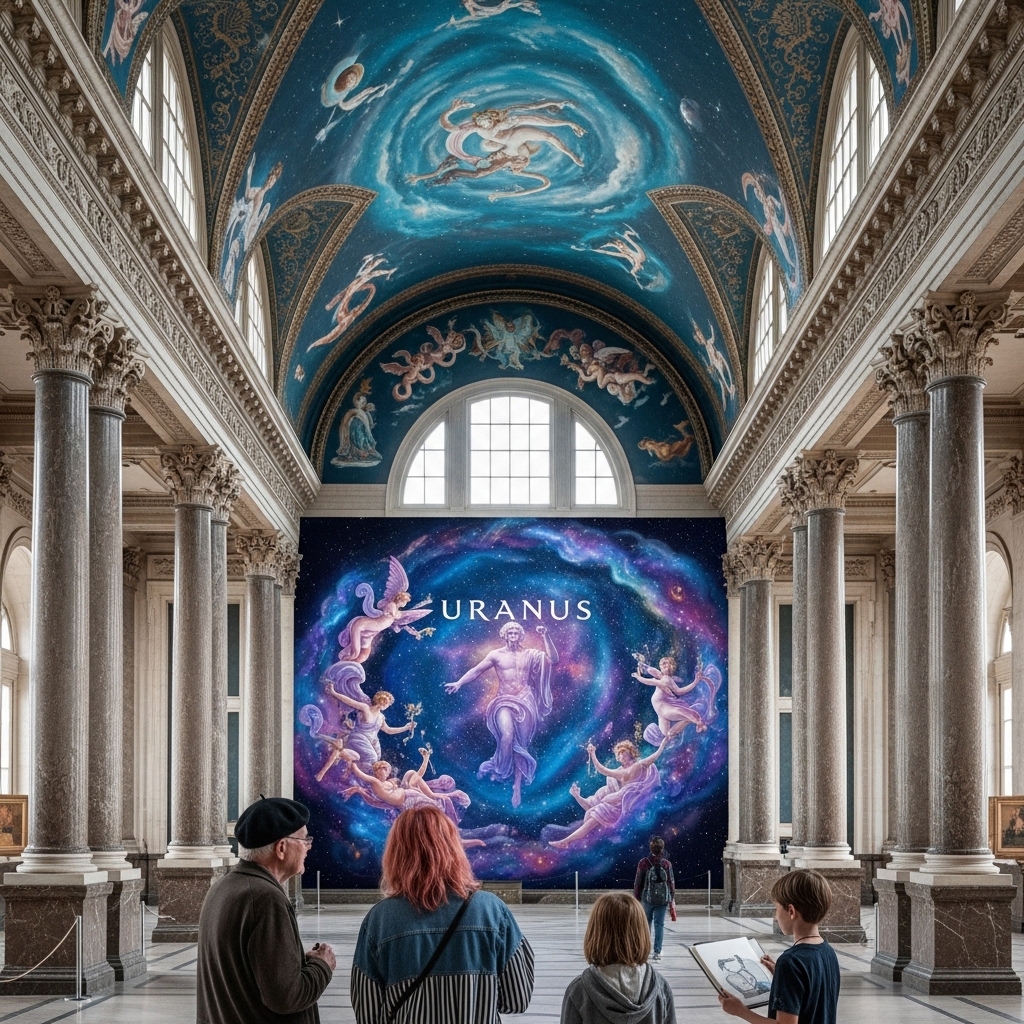
Uranus, as a primordial deity, has been depicted in various artistic forms throughout history. These representations reflect his significance in Greek culture and mythology, emphasizing his role as the personification of the sky.
Artistic interpretations through the ages
- Classical Sculpture: In ancient Greek sculpture, Uranus is often portrayed as a majestic figure adorned with stars. His flowing robes symbolize the vastness of the heavens, capturing his ethereal nature.
- Renaissance Paintings: During the Renaissance, artists depicted Uranus in celestial scenes, often emphasizing his connection with the cosmos. These artworks highlight the harmony between the sky and earth, mirroring ancient beliefs.
- Modern Interpretations: Contemporary artists reinterpret Uranus through abstract forms and vibrant colors. These modern representations explore his mythological aspects, encouraging viewers to reflect on cosmic themes.
Symbolism in artistic representations
The artistic representations of Uranus convey deeper meanings related to his character and mythology.
- Dominion Over the Sky: Uranus symbolizes the infinite expanse above, embodying concepts of authority and cosmic balance. His depiction often includes celestial elements, reinforcing his dominion over the sky.
- Interconnectedness with Gaia: Artistic portrayals frequently illustrate the relationship between Uranus and Gaia, the Earth. This connection emphasizes the ancient Greeks’ understanding of the harmony between the heavens and the earth.
- Representation of Chaos and Order: Uranus embodies the primordial chaos that precedes creation. His depictions often reflect the tension between chaos and order, which is a recurring theme in Greek mythology.
Through these artistic interpretations, we gain insight into the cultural significance of Uranus and how ancient societies perceived cosmic relationships. This exploration of artistic representations not only showcases Uranus’s role in mythology but also illustrates how art can reflect societal views and beliefs about the divine.
12. Uranus Compared to Other Primordial Gods
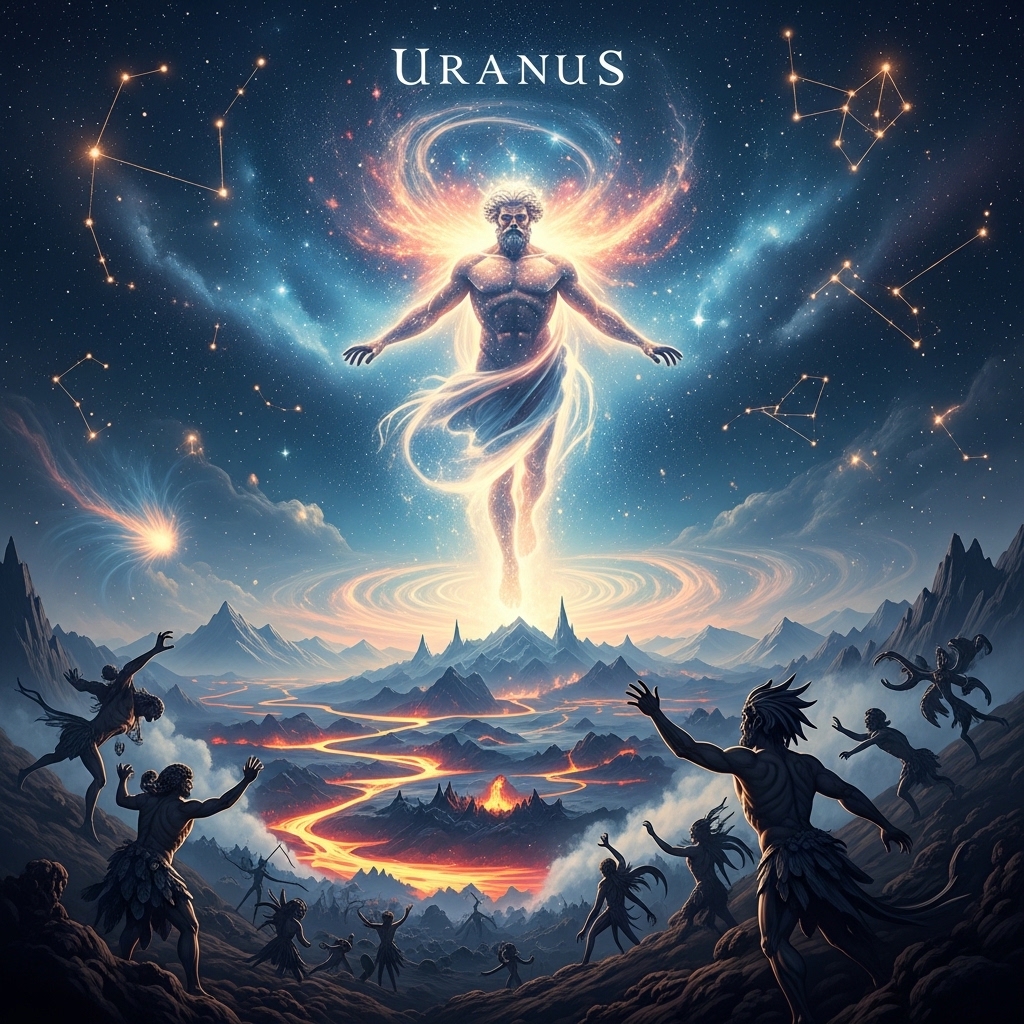
Comparing Uranus to other primordial deities reveals unique attributes and roles in Greek mythology. While several primordial gods share themes of creation and chaos, Uranus stands out in his relationships and the consequences of his actions.
Similarities with Other Gods
- Embodiment of Cosmic Elements: Like Chaos and Gaia, Uranus represents fundamental aspects of the universe. Chaos symbolizes the void, while Gaia embodies the Earth. Together, they form the foundation of Greek cosmology.
- Role in Creation Myths: All primordial deities, including Uranus, play pivotal roles in the formation of the cosmos. Uranus, as the sky, pairs with Gaia to produce the Titans, Cyclopes, and Hecatoncheires, which are central to creation narratives.
- Symbol of Power and Authority: Similar to other primordial gods, Uranus wields immense power. His very existence represents the sky’s authority over the Earth, establishing an essential hierarchy in the mythological framework.
Differences that Set Uranus Apart
- Unique Relationships: Uranus’s relationship with Gaia is complex and fraught with conflict. Unlike other primordial gods, whose interactions are often less contentious, Uranus’s disdain for his offspring leads to his downfall.
- Downfall and Its Consequences: Uranus’s overthrow by Cronus is a defining moment that contrasts with the fates of other primordial deities. His castration symbolizes a generational shift, marking the transition from primordial to Olympian gods.
- Symbol of Oppression: Uranus is often viewed as a tyrant. His fear of his children led him to imprison them, an act that demonstrates a unique characteristic of oppression not commonly attributed to other primordial figures.
Comparative Summary
| Aspect | Uranus | Other Primordial Gods |
|---|---|---|
| Cosmic Role | Embodiment of the sky | Various elemental aspects |
| Relationships | Conflict with Gaia | Generally less contentious |
| Downfall | Overthrown by Cronus | Varies widely in myth |
| Symbolism | Tyranny and oppression | Generally represent chaos or order |
Uranus’s narrative serves as a cautionary tale about the consequences of power and fear. His relationships and eventual overthrow illustrate significant themes in Greek mythology, reinforcing the notion of generational conflict and the evolution of divine authority.
13. The Symbolism of Uranus in Different Cultures
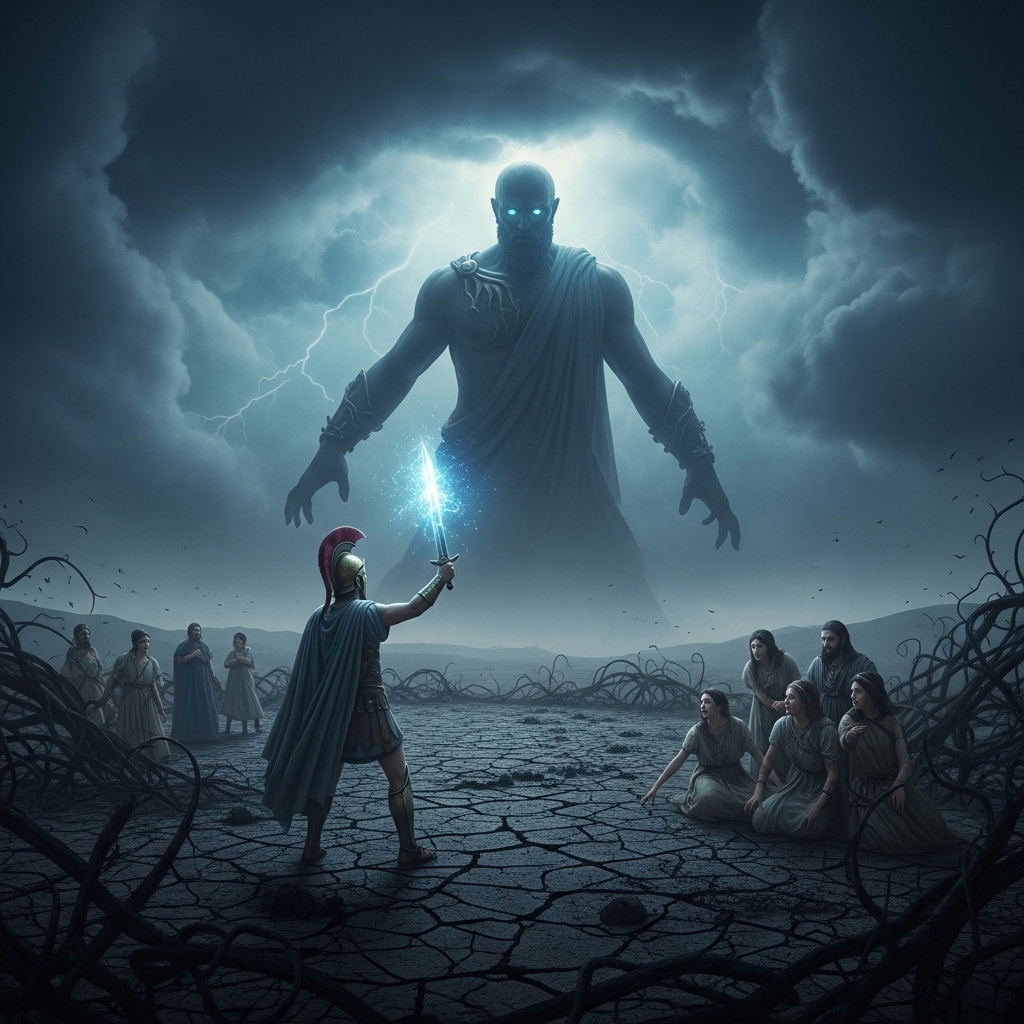
Uranus’s symbolism extends beyond Greek mythology, influencing various cultures and beliefs. His representation as the sky embodies both literal and metaphorical meanings, impacting artistic expressions and cultural narratives worldwide.
Comparative Mythology Perspectives
Uranus shares similarities with other primordial deities across different cultures. For instance:
| Culture | Deity | Symbolism | Relationships |
|---|---|---|---|
| Greek | Uranus | Personification of the sky | Husband of Gaia; father of the Titans |
| Roman | Caelus | God of the heavens | Similar to Uranus, but reflects Roman values |
| Egyptian | Nut | Goddess of the sky | Represents the vault of stars, contrasting with Uranus’s oppressive nature |
| Mesopotamian | Anu | Sky god | Father of the gods, indicative of authority |
These parallels highlight how different cultures interpret the sky’s role in creation and governance.
Uranus’s Impact on Modern Interpretations
Uranus continues to influence modern art and literature. His character often symbolizes the duality of creation and destruction. Contemporary works may reference Uranus to illustrate themes of power dynamics and familial conflict. For example, in graphic novels and films, he appears as a figure of authority whose downfall serves as a lesson on tyranny.
- Artistic Representations: Various artists depict Uranus as a vast, celestial being, emphasizing his connection to the cosmos.
- Cultural References: Uranus’s story has inspired characters in literature that explore generational conflicts, echoing the themes of his myth.
Understanding Uranus’s symbolism across cultures enriches our comprehension of cosmic structures and the complexities of divine relationships. His narrative serves as a reminder of the consequences of power, making him a timeless figure in mythology and beyond.
14. Common Misconceptions About Uranus
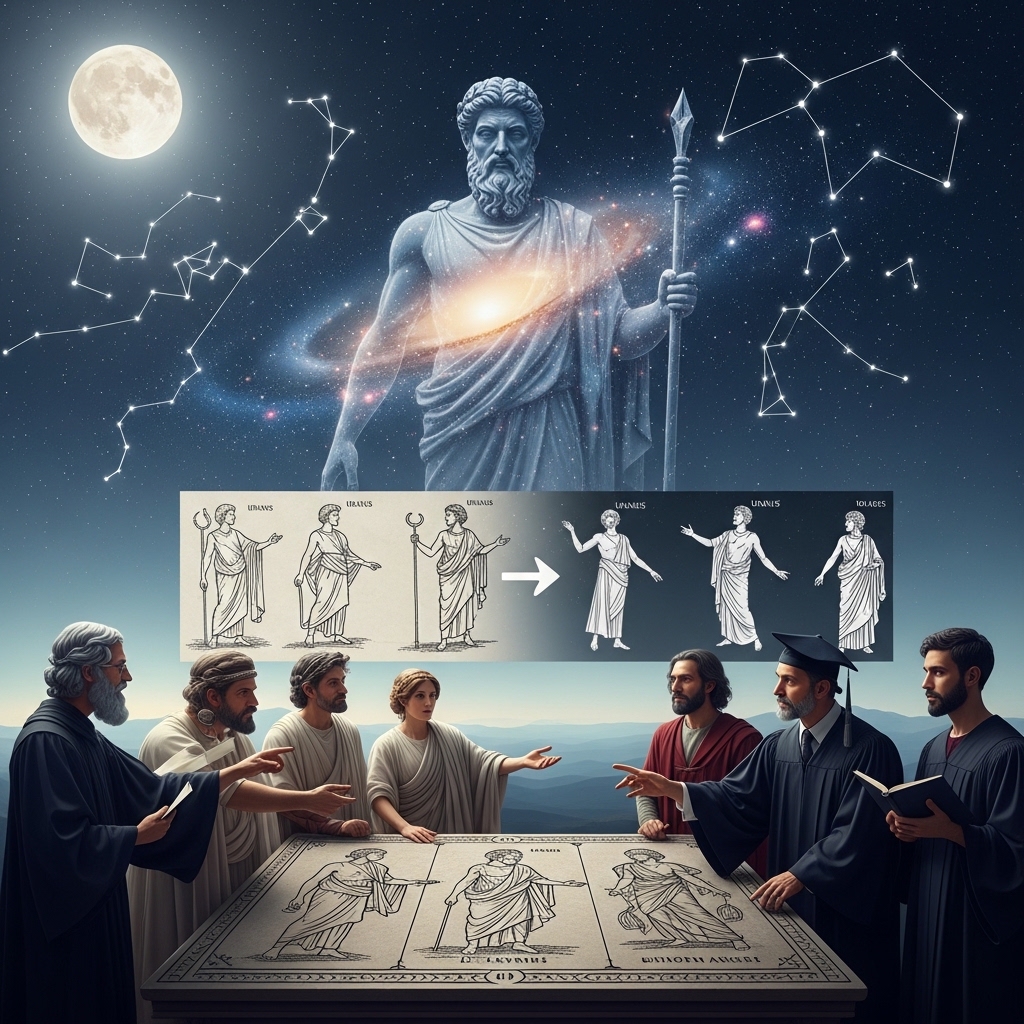
Addressing misconceptions surrounding Uranus’s character and narrative helps clarify his role in mythology. Many people confuse his actions and attributes, which can distort the understanding of his significance.
Misunderstandings about his tyranny
Uranus is often portrayed as a tyrant, primarily due to his oppressive actions towards his offspring. However, this characterization overlooks the complexities of his role. While he did imprison his children, including the Cyclopes and the Hecatoncheires, he acted out of fear. He perceived them as threats to his power. This fear led to drastic measures, but it also reflects a deeper narrative about authority and generational conflict in mythology.
- Fear-driven actions: Uranus’s tyranny stemmed from his fear of losing control.
- Symbolism of oppression: His actions represent the struggle between old and new powers.
- Contrast with Cronus: While Uranus feared his children, Cronus later mirrored this fear by consuming his offspring.
Clarifications on familial relationships
Uranus’s family dynamics are intricate and often misunderstood. He is the husband of Gaia and the father of the Titans. This relationship is central to many myths. Notably, his union with Gaia produced significant figures in Greek mythology, including Cronus.
- Parent-child dynamics: Uranus’s disdain for his children led to their eventual rebellion.
- Gaia’s role: Gaia conspired with Cronus to overthrow Uranus, highlighting the complexities of their relationship.
- Progeny: Uranus fathered twelve Titans, each embodying different aspects of nature and humanity.
Understanding these relationships enriches the interpretation of Uranus’s character. He is not merely a tyrant; he embodies the struggles of authority, fear, and the inevitable changes that come with generational shifts. This complexity is crucial for comprehending his role in the mythological narrative and the broader themes of Greek mythology.
15. The Impact of Uranus’s Actions on Future Generations
Uranus’s decisions and actions profoundly shaped the trajectory of his descendants and the Greek pantheon. His tyranny and the resulting rebellion set the stage for future conflicts among the gods.
How his tyranny influenced the Titans
Uranus’s oppressive rule directly affected his offspring, the Titans. His disdain for them led to significant consequences:
- Imprisonment of siblings: Uranus imprisoned some of his children, including the Cyclopes and Hecatoncheires, within Gaia. This act of oppression bred resentment among his progeny.
- Catalyst for rebellion: The brutality of Uranus’s reign prompted Cronus, his son, to conspire with Gaia. This rebellion exemplified the struggle against tyrannical authority and marked a pivotal shift in power dynamics within Greek mythology.
The legacy of rebellion against authority
The overthrow of Uranus by Cronus symbolizes a broader theme of generational conflict. This theme resonates throughout Greek mythology:
- Cycle of power: After dethroning Uranus, Cronus himself faced rebellion from his children, particularly Zeus. This cyclical nature of power struggles emphasizes the inevitability of change and the consequences of tyranny.
- Symbol of authority: Uranus represents not just oppression but also the necessary challenges that authority faces. His legacy serves as a cautionary tale about the dangers of unchecked power.
The stories surrounding Uranus offer insights into the complexities of familial relationships and authority. His actions created a ripple effect, influencing subsequent generations and shaping the very fabric of Greek mythological narratives.
16. The Evolution of Uranus’s Myth Over Time
The narrative surrounding Uranus has evolved, reflecting changes in societal values and beliefs. This evolution illustrates how myths adapt to cultural shifts and reinterpretations.
Shifts in interpretation across eras
- Primordial Symbolism: In early myths, Uranus embodies the sky and the cosmic order. His relationship with Gaia represents the fundamental union of earth and sky, a theme central to ancient Greek cosmology.
- Authority and Tyranny: As stories progressed, Uranus transformed into a symbol of oppressive authority. His mistreatment of his offspring, including the Cyclopes and Hecatoncheires, highlights the consequences of tyranny. This aspect resonated with societies that experienced their own power struggles.
- Mythological Rebellion: The rebellion led by Cronus against Uranus marks a critical shift. This act signifies the transition from primordial deities to the Olympian gods, reflecting changing cultural narratives about power and responsibility.
- Cultural Reinterpretation: In later interpretations, Uranus’s downfall serves as a cautionary tale. Myths emphasize the cyclical nature of power, illustrating that no ruler is invulnerable. This theme encourages reflection on contemporary authority and governance.
Influence of historical context on the myth
- Political Context: The myths of Uranus evolved alongside significant political changes in Greek city-states. As democracy emerged, stories of rebellion against tyrants became more prominent, aligning with societal values.
- Artistic Representations: Artistic depictions of Uranus have varied over time. Early representations often focused on his vastness as the sky, while later works emphasize his vulnerability during his overthrow. This shift highlights the changing perceptions of power and divinity.
- Literary Adaptations: Writers like Hesiod shaped the narrative of Uranus. His works presented Uranus’s castration as a pivotal moment, symbolizing the end of an era. These adaptations reflect the dynamic nature of myth in response to evolving cultural values.
- Comparative Myths: Similar themes appear in the mythology of other cultures. For instance, the overthrow of a primordial deity often signifies the rise of a new order. This comparative analysis enriches our understanding of Uranus’s role within the broader context of mythological evolution.
The ongoing reinterpretation of Uranus’s myth underscores the fluidity of cultural narratives. Each era imparts its values, shaping the legacy of this significant figure in Greek mythology.
17. Modern References to Uranus in Popular Culture

Uranus’s legacy persists in contemporary culture, manifesting in literature, films, and art. His character influences various narratives, showcasing the enduring relevance of ancient mythology.
Examples in Contemporary Media
Uranus appears in diverse forms across modern media. These references often reinterpret his attributes and relationships, reflecting current societal values. Here are notable examples:
- Literature: In Neil Gaiman’s “American Gods,” Uranus is referenced as part of a broader exploration of mythological figures, illustrating the clash between ancient deities and modern beliefs.
- Film: The animated series “Hercules” features Uranus in a comedic light, emphasizing his role as a primordial figure while adapting his story for a younger audience.
- Art: Contemporary artists, such as Kehinde Wiley, incorporate mythological themes into their work, often drawing on figures like Uranus to convey messages about power and identity.
How Uranus’s Character is Portrayed
The portrayal of Uranus in modern interpretations often reflects shifts in cultural perspectives. Key aspects include:
- Symbolism of Power: Uranus embodies the struggle for dominance, as seen in narratives where his overthrow signifies the rise of new ideologies.
- Complex Relationships: His interactions with Gaia and the Titans highlight themes of familial conflict and rebellion, resonating with modern audiences facing similar dynamics.
- Visual Representation: Artists depict Uranus with celestial elements, reinforcing his connection to the cosmos. This portrayal emphasizes his role as a foundational figure in mythology while appealing to contemporary aesthetics.
Uranus continues to inspire creators, bridging ancient narratives with modern themes. His myth serves as a rich source for exploring the complexities of power, identity, and transformation across cultures.
18. Uranus’s Influence on Astrology and Astronomy

The name Uranus connects mythology with science, illustrating how ancient narratives influence modern understanding. This section explores the astrological significance of Uranus and its scientific discovery.
Astrological significance of Uranus
In astrology, Uranus symbolizes innovation, change, and rebellion. It governs unexpected events and breakthroughs. Key aspects of its astrological influence include:
- Originality: Uranus encourages creativity and unique perspectives.
- Independence: It fosters a desire for freedom and non-conformity.
- Sudden Change: Uranus often heralds unexpected shifts in life.
Astrologers associate Uranus with the awakening of new ideas, prompting individuals to challenge norms and embrace transformation. This influence can lead to significant life changes, often appearing at critical junctures.
Scientific discovery of the planet
The planet Uranus, named after the Greek god, was discovered in 1781 by William Herschel. This marked a pivotal moment in astronomy. Key points of its scientific significance include:
- First planet discovered with a telescope: This discovery expanded the known boundaries of our solar system.
- Naming controversy: Initially named “Georgium Sidus,” it was renamed Uranus to align with mythological convention, ensuring consistency with the naming of other planets.
- Exploration insights: Subsequent missions, such as Voyager 2, provided valuable data about its atmosphere and moons.
The naming of Uranus reflects the importance of mythology in scientific nomenclature. By bridging these domains, we gain deeper cultural insights into the celestial bodies that influence our lives.
19. Final Thoughts on the Legacy of Uranus
Reflecting on Uranus’s complex legacy helps us understand the foundational myths of Greek culture. His story illustrates the intricate relationships among the primordial deities and their roles in shaping the cosmos.
The relevance of Uranus in modern discussions
Uranus represents more than just a mythological figure; he embodies themes of power, creation, and generational conflict. His legacy influences various aspects of modern culture, including literature, art, and even psychological interpretations of familial dynamics.
- Symbol of Creation: Uranus’s role as the progenitor of the Titans showcases the theme of creation and chaos. His union with Gaia, the Earth, symbolizes the balance of opposing forces.
- Cultural References: The name Uranus appears in contemporary discussions about mythology, often serving as a metaphor for overreaching authority or the heavens above.
- Generational Conflict: The overthrow of Uranus by Cronus reflects enduring narratives of parent-child relationships. This theme resonates across cultures, illustrating the universal struggle for power and autonomy.
Lessons learned from his story
The narrative of Uranus teaches valuable lessons about authority and the consequences of oppression. His downfall highlights the cyclical nature of power in mythology.
- The Importance of Balance: Uranus’s oppressive reign leads to rebellion. This emphasizes the need for balance in any governing structure, whether divine or mortal.
- Legacy of Creation: Despite his downfall, Uranus’s offspring, the Titans, continue to influence mythology. They embody various natural elements, teaching us about the interconnectedness of nature and divinity.
- Mythological Impact: Uranus’s story serves as a precursor to the Olympian gods. Understanding his role helps contextualize the subsequent rise of figures like Zeus and the dynamics of their reigns.
In summary, Uranus stands as a pivotal figure in Greek mythology, representing the complexities of creation, power, and familial relationships. His legacy continues to inspire discussions and interpretations in modern culture, revealing the profound impact of ancient myths on our understanding of existence.
Frequently Asked Questions
These quick answers cover the most common questions about this topic, including key details, practical tips, and common concerns.
What are some facts about Uranus the Greek god?
Uranus is a primordial Greek deity representing the sky. He is considered one of the first gods, born from chaos, and is often called “Father Sky.” Uranus is known for his complex relationships with Gaia, the Earth, with whom he fathered the Titans, Cyclopes, and Hecatoncheires. His rule was marked by tyranny, leading to his overthrow by his son Cronus.
Who are the 12 children of Uranus?
Uranus’s children with Gaia are the Titans, including Cronus, Rhea, Hyperion, Theia, Oceanus, Tethys, Coeus, Phoebe, Iapetus, Crius, Mnemosyne, and Themis. These gods represent various natural and cosmic forces, shaping the mythological universe and influencing later gods and myths.
Why did Gaia rebel against Uranus?
Gaia rebelled because Uranus imprisoned her children, the Cyclopes and Hecatoncheires, in Tartarus. She was distressed by his tyranny and sought to free her offspring. Her alliance with Cronus led to Uranus’s overthrow, ending his oppressive reign and initiating a new divine order.
How was Uranus overthrown?
Cronus, with Gaia’s help, ambushed Uranus at night. Using a sickle of flint, Cronus castrated his father, which ended Uranus’s rule. This act released the imprisoned beings and marked the rise of the Titans. Uranus’s overthrow symbolizes the cycle of generational change in Greek mythology.
What are some common misconceptions about Uranus’s character?
Many see Uranus solely as a tyrant, but his actions were driven by fear of his offspring. He imprisoned his children out of insecurity, not just cruelty. His role reflects themes of power, control, and the natural chaos of creation, rather than pure malice.
How does Uranus compare to other primordial gods?
Uranus embodies the sky and cosmic order, similar to gods like Chaos and Gaia. Unlike some primordial deities, Uranus’s story involves conflict and overthrow, making him unique. His oppressive rule contrasts with gods like Chaos, who represent primal chaos without personal agency.
Why is Uranus significant in Greek mythology?
Uranus is crucial because he represents the sky’s primordial force and the origin of many divine beings. His myth explains the transition from chaos to order and the cycle of power among gods. His story sets the stage for the rise of the Olympian gods and themes of rebellion.
When was Uranus worshipped or referenced historically?
Uranus was mainly a mythological figure with no widespread ancient worship. He appears in Greek myths and genealogies, particularly in Hesiod’s “Theogony.” His stories influenced later cultural and artistic representations but lacked dedicated cult practices.