
The universe has an uncanny ability to expose what is fake, revealing truths that often contradict our perceptions or beliefs. Through natural laws and scientific discoveries, we learn that reality is more than just a construct of our minds. Read Interesting article: Unlock the Secrets of the Mysterious Blue Snake Dream!
Table of Contents
Understanding the Concept of Reality and Illusion
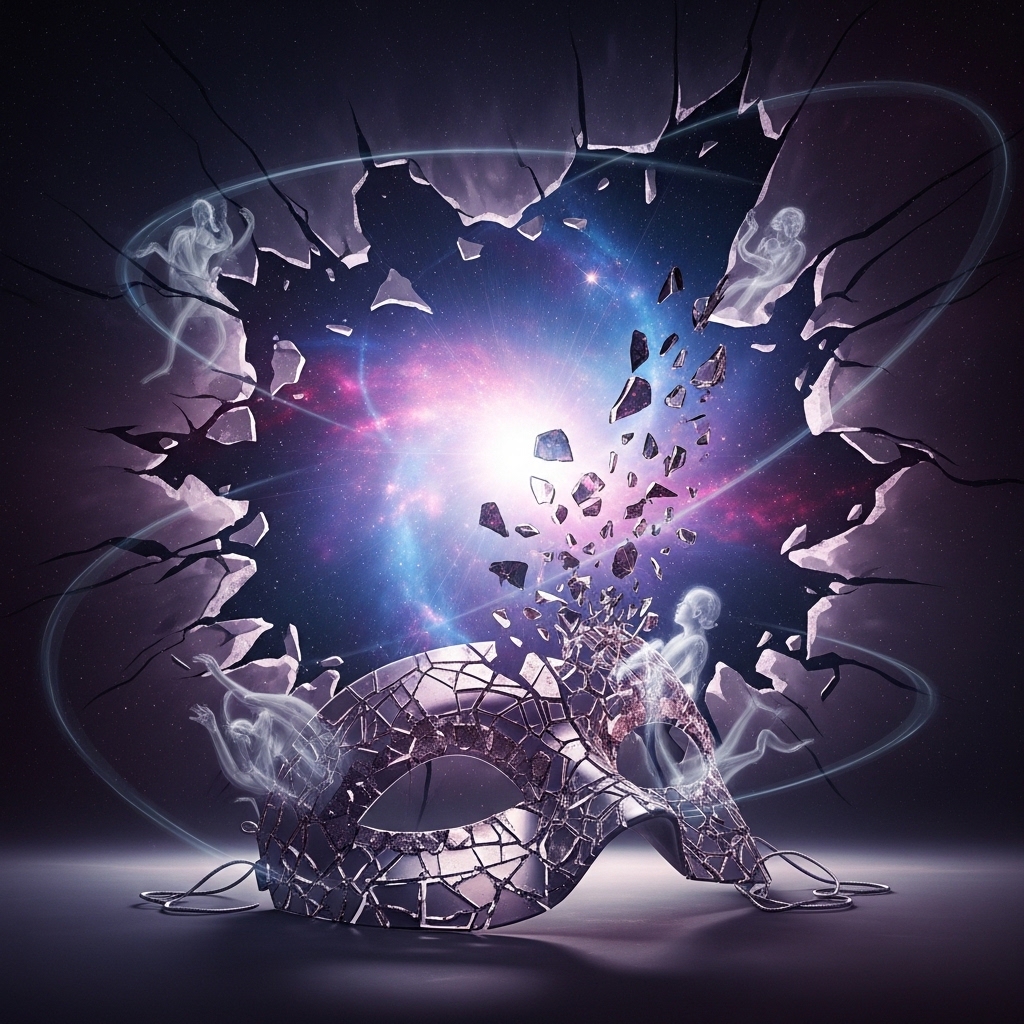
When I first started diving into the concept of reality versus illusion, I was struck by how complex and layered it all is. It’s not just about what we see; it’s about how we interpret those experiences. Reality is often influenced by our perceptions, emotions, and the information we consume. I began to realize that grasping reality requires a deeper understanding of both philosophical and scientific perspectives.
Philosophical Perspectives on Reality
Philosophers have debated the nature of reality for centuries. From Plato’s Allegory of the Cave to Descartes’ skepticism about the physical world, these discussions often center around the idea that what we perceive may not be the truth. I remember reading about how Plato suggested that the shadows on the cave wall were mere illusions, and it made me reflect on how many of our beliefs are shaped by societal norms rather than personal experience. This perspective taught me to question my surroundings and recognize that our understanding of reality can be limited by our experiences and beliefs.
Another interesting viewpoint comes from Immanuel Kant, who posited that our perceptions are shaped by our senses and the mental frameworks we use to interpret them. This struck a chord with me, as I realized that two people might perceive the same event entirely differently based on their backgrounds and biases. In my own life, I’ve seen friends interpret a social situation in starkly different ways, leading to conflicts that stemmed from misinterpretation rather than hard reality.
Scientific Theories: Quantum Mechanics and Reality
As I delved into the scientific realm, I discovered quantum mechanics, which challenges our traditional notions of reality. The double-slit experiment, for example, reveals that particles can behave like both waves and particles, depending on whether they are being observed. I remember the first time I encountered this concept; it felt like a mind-bending paradox that suggested reality is not as concrete as I once believed. I began to appreciate how the act of observation itself can influence outcomes, much like how our perceptions shape our understanding of the world.
In quantum theory, the idea that particles exist in a state of probability until they are measured suggests that reality is not fixed. This resonates with me because it mirrors how life often feels—uncertain and fluid. I found myself pondering how often we cling to our beliefs as if they were absolute truths, only to discover later that they were merely probabilities waiting to be revealed. The more I explored, the more I realized that understanding the universe often requires us to embrace the unknown.
The Role of Perception in Defining Reality
Perception plays a crucial role in shaping our understanding of reality. I’ve noticed that our individual experiences, emotions, and cognitive biases can distort our perception of the truth. For instance, in moments of stress or anxiety, I find that I might misinterpret others’ intentions, leading to misunderstandings. This personal experience has taught me that being aware of my feelings and biases is essential for gaining a clearer perspective on reality.
Moreover, cultural influences also shape how we perceive reality. Growing up, I was surrounded by certain beliefs and values that colored my view of the world. When I traveled to different countries, I was often amazed at how people’s realities could differ based on their upbringing and societal norms. This awareness helped me develop empathy for others and reinforced the idea that reality is often a shared experience shaped by various factors.
I also discovered that our brain’s processing of information can be influenced by external factors. For instance, the way news is presented can sway public perception dramatically. I’ve witnessed how sensational headlines can distort reality, leading to widespread misconceptions. This realization sparked my interest in understanding how to critically evaluate information, ensuring that I could discern truth from illusion.
In essence, the journey to understanding reality is ongoing and multifaceted. It’s about questioning our assumptions, embracing uncertainty, and recognizing that our perceptions are just one lens through which to view the world. This quest has made me more open-minded and curious, always eager to learn more about the intricate dance between reality and illusion.
Identifying What’s Fake in Our Universe
SBAG_IMG_69821131686c3
Common Misconceptions About Reality
As I navigated through the depths of reality versus illusion, I stumbled upon a plethora of misconceptions that often cloud our judgment. For instance, many people believe that seeing is believing. I used to think this way, but I’ve learned that our eyes can be deceiving. Sometimes, what we perceive as truth is simply a trick of the light or a result of our own biases. I remember a time when I was convinced that a friend was upset with me based on her body language. However, after a heartfelt conversation, I discovered she was just preoccupied with personal issues unrelated to me. This experience underscored how easily we can misinterpret situations and jump to conclusions without knowing the full story.
Another common misconception is the idea that scientific facts are immutable. While science provides us with a reliable framework to understand the world, I’ve come to realize that scientific knowledge is always evolving. What was considered fact a decade ago may now be outdated. I think about how, during my school years, we were taught that Pluto was a planet. I remember the shock when it was reclassified as a dwarf planet. This taught me that reality is not set in stone; it can shift as our understanding deepens and expands.
Fake News and Misinformation in the Digital Age
Living in the digital age, I’ve seen how fake news and misinformation can spread like wildfire. It’s alarming to think that a single tweet or post can ripple through social media, shaping perceptions and opinions, often without a shred of truth behind them. I personally grappled with this when I encountered a viral story about a celebrity that turned out to be completely fabricated. It made me reflect on how easy it is to be misled by sensational headlines that lack factual basis.
The impact of misinformation is profound. I’ve witnessed friends sharing articles without verifying the sources, leading to the spread of false narratives. This experience pushed me to become more vigilant about fact-checking and encouraged me to research before sharing information. I believe it’s crucial for all of us to cultivate a habit of critical thinking, especially given the overwhelming amount of information we’re bombarded with every day. Read Interesting article: Dream Of Nun: 70 Meanings, Symbolism & Explanations
Illusions in Nature: Optical and Psychological
Nature itself is filled with fascinating illusions that challenge our understanding of reality. I remember standing on a beach at sunset and marveling at how the sun appeared to melt into the horizon. It felt surreal, yet I knew it was an optical illusion created by the Earth’s curvature. This experience reminded me that nature often plays tricks on our perceptions, revealing how our senses can be easily fooled.
Psychological illusions are just as captivating. When I learned about the famous Müller-Lyer illusion, where two lines of the same length appear different due to the arrow-like ends, I was amazed at how our brains can interpret visual information in such a misleading way. These illusions serve as a reminder that our perception of reality can be influenced by various factors, including context and expectation. I found it fascinating to think about how our minds create a version of reality that may not truly reflect what’s in front of us.
In my experience, understanding these illusions has deepened my appreciation for both the natural world and the workings of the human mind. It encourages me to remain curious and aware that there’s often more than meets the eye. I believe that recognizing these illusions not only enhances our understanding of reality but also cultivates a sense of humility in acknowledging the limits of our perception.
The Universe’s Mechanisms for Revealing Truth
Natural Laws and Their Role in Uncovering Reality
As I continued my exploration of reality and illusion, I became fascinated by the natural laws that govern our universe. These laws, like gravity and thermodynamics, are fundamental truths that help us understand the world around us. I remember sitting in a physics class, learning about how gravity pulls everything towards the center of the Earth. It struck me how this unchanging force behaves consistently, regardless of our perceptions. The idea that there are these underlying principles operating independently of our understanding is both humbling and awe-inspiring.
One of the most profound realizations for me was how these natural laws can reveal hidden truths. For instance, the law of conservation of energy states that energy cannot be created or destroyed, only transformed. This concept reminds me of how we experience change in our lives—while things may shift or evolve, the core essence remains. I’ve learned to appreciate that by understanding these laws, we can gain clarity about our existence and the universe’s workings. It reinforces the notion that reality isn’t just a collection of our subjective experiences; there’s a solid foundation that can guide our understanding.
Scientific Discovery: How We Uncover Hidden Truths
The thrill of scientific discovery is something I’ve always found captivating. Every time a new finding challenges our previous understanding, I feel like I’m witnessing a small revolution in thought. I think back to moments like when the structure of DNA was unraveled. It was a groundbreaking discovery that not only put a spotlight on genetics but also revealed the intricate blueprint of life itself. I remember being amazed at how such a small structure could hold the key to so many mysteries about living organisms.
In my experience, every scientific breakthrough is a reminder that our understanding of reality is a work in progress. For example, when the theory of relativity emerged, it shattered the conventional ideas of space and time. I found myself pondering how often we cling to outdated beliefs because they feel comfortable. This realization encouraged me to embrace change and be open to new insights that challenge my perceptions. The journey of discovery is not just about finding facts; it’s about evolving our understanding of the universe and ourselves.
The Impact of Technology on Understanding Reality
Technology has drastically changed how we perceive and understand reality. I’ve witnessed firsthand how advancements in technology can uncover truths that were once hidden. Take, for example, the Hubble Space Telescope. When it was launched, it opened a window into deep space, revealing galaxies and cosmic phenomena that were previously beyond our reach. I remember gazing at images from the telescope and feeling a sense of wonder at the vastness of the universe. It made me realize that our reality is far more expansive than we often think.
Moreover, the internet has transformed our access to information. While it can sometimes perpetuate misinformation, it also allows for the rapid dissemination of knowledge. I’ve found myself diving into online courses, documentaries, and articles that broaden my understanding of complex topics. However, this flood of information also brings challenges. I’ve had to learn to navigate through the noise, discerning credible sources from those that spread false narratives. This process has reinforced the importance of being diligent and questioning what I read. Read Interesting article: Dream Of Alligator: Know Actual Biblical & Spiritual Meaning of It
As technology continues to evolve, I believe it will play an even larger role in shaping our understanding of reality. Virtual reality (VR) and augmented reality (AR) are prime examples of how our perceptions can be manipulated, teaching us that our experiences can be more malleable than we realize. These tools offer new ways to immerse ourselves in different environments, but they also challenge us to question what is real and what is constructed. I think about how these technologies can enhance our experiences while simultaneously pushing us to consider the boundaries of our perception.
Frequently Asked Questions
What is the main theme of the article?
The main theme of the article is the exploration of reality versus illusion, emphasizing how our perceptions, emotions, and societal influences shape our understanding of the universe.
How do philosophical perspectives contribute to our understanding of reality?
Philosophical perspectives, such as those from Plato and Immanuel Kant, suggest that our perceptions may not reflect the truth, prompting us to question our experiences and recognize that understanding reality can be limited by personal biases and societal norms.
What is the significance of quantum mechanics in the discussion of reality?
Quantum mechanics challenges traditional notions of reality, as exemplified by the double-slit experiment, which shows that the act of observation can influence outcomes, suggesting that reality is not fixed but rather a state of probability.
How does perception influence our understanding of reality?
Perception plays a crucial role in shaping our understanding of reality, as individual experiences, emotions, and cognitive biases can distort the truth, leading to misunderstandings and misinterpretations.
What are some common misconceptions about reality mentioned in the article?
Common misconceptions include the belief that seeing is believing and the idea that scientific facts are immutable, highlighting how our perceptions and understanding can be misleading or outdated.
How does misinformation impact our perception of reality in the digital age?
Misinformation spreads rapidly through social media and can shape public perceptions and opinions, often without a factual basis, prompting the need for critical thinking and fact-checking before sharing information.
What role do natural laws play in uncovering truths about reality?
Natural laws, such as gravity and thermodynamics, provide fundamental truths that help us understand the universe, revealing hidden realities that operate independently of our subjective experiences.
Can you give an example of a scientific discovery that changed our understanding of reality?
The unraveling of the structure of DNA is an example of a scientific discovery that revolutionized our understanding of genetics and the blueprint of life, demonstrating how our comprehension of reality evolves with new findings.
How has technology influenced our understanding of reality?
Technology, such as the Hubble Space Telescope and the internet, has transformed our access to information and uncovered truths about the universe, while also presenting challenges in discerning credible sources from misinformation.
What is the impact of virtual and augmented reality on our perception?
Virtual and augmented reality technologies manipulate our perceptions and challenge us to consider the boundaries between what is real and what is constructed, offering new immersive experiences while prompting critical reflection on reality.