
Creating a functional workspace within your living room is essential in today’s world, where remote work and home living often overlap. The challenge lies in designing a space that maintains productivity while also blending seamlessly with your home aesthetics. Here are some practical tips to help you create a multi-functional living room office and workspace that enhances your productivity without sacrificing style. Read Interesting article: 12 Stylish Home Office Ideas for Productivity
1. Choose the Right Furniture
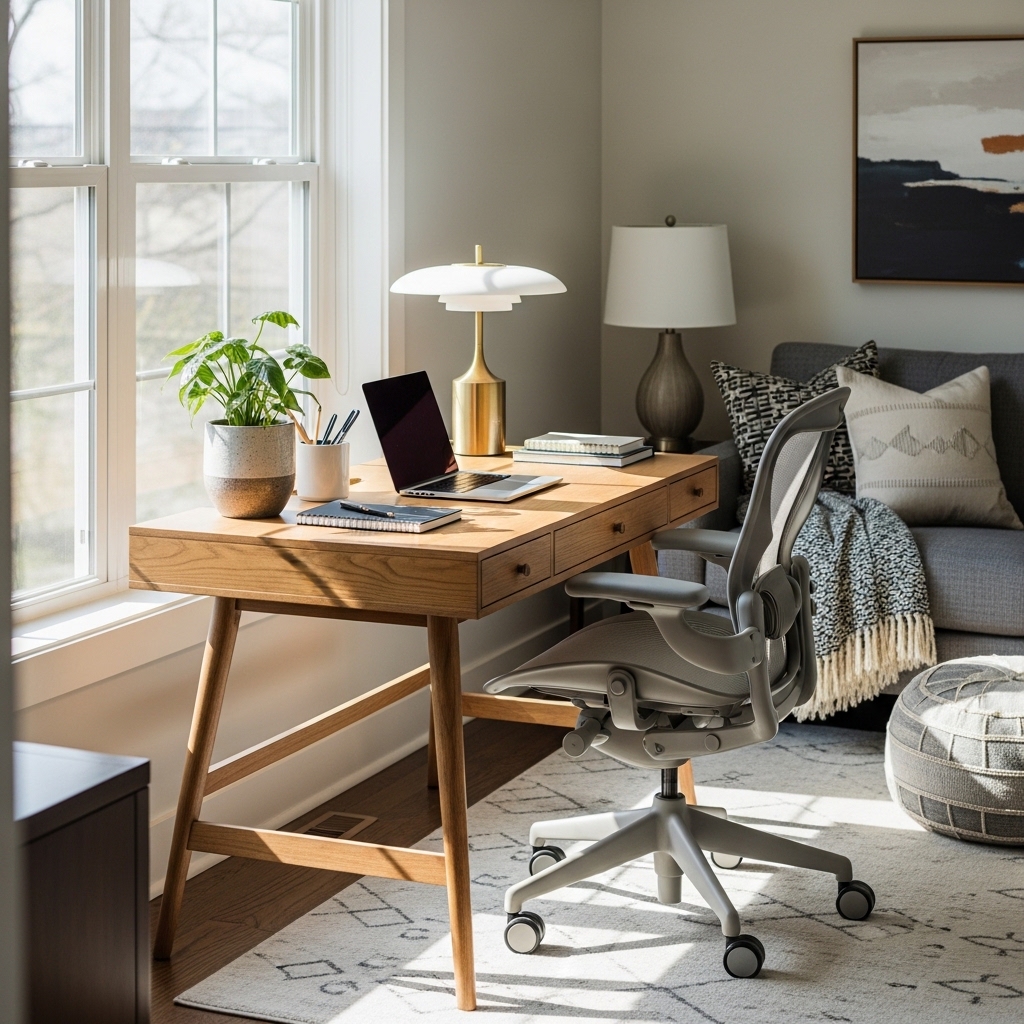
Selecting the right furniture is crucial for a successful multi-functional space. Opt for a compact desk that fits your room’s dimensions while providing ample surface area for your work. An ergonomic chair is equally important for comfort during long hours. Consider pieces that can serve dual purposes, such as a desk with built-in storage or a stylish bookshelf that can double as a workspace. Additionally, you might explore 10 Space-Saving Ideas for a Small Home Office to maximize your area.
2. Define Your Zones
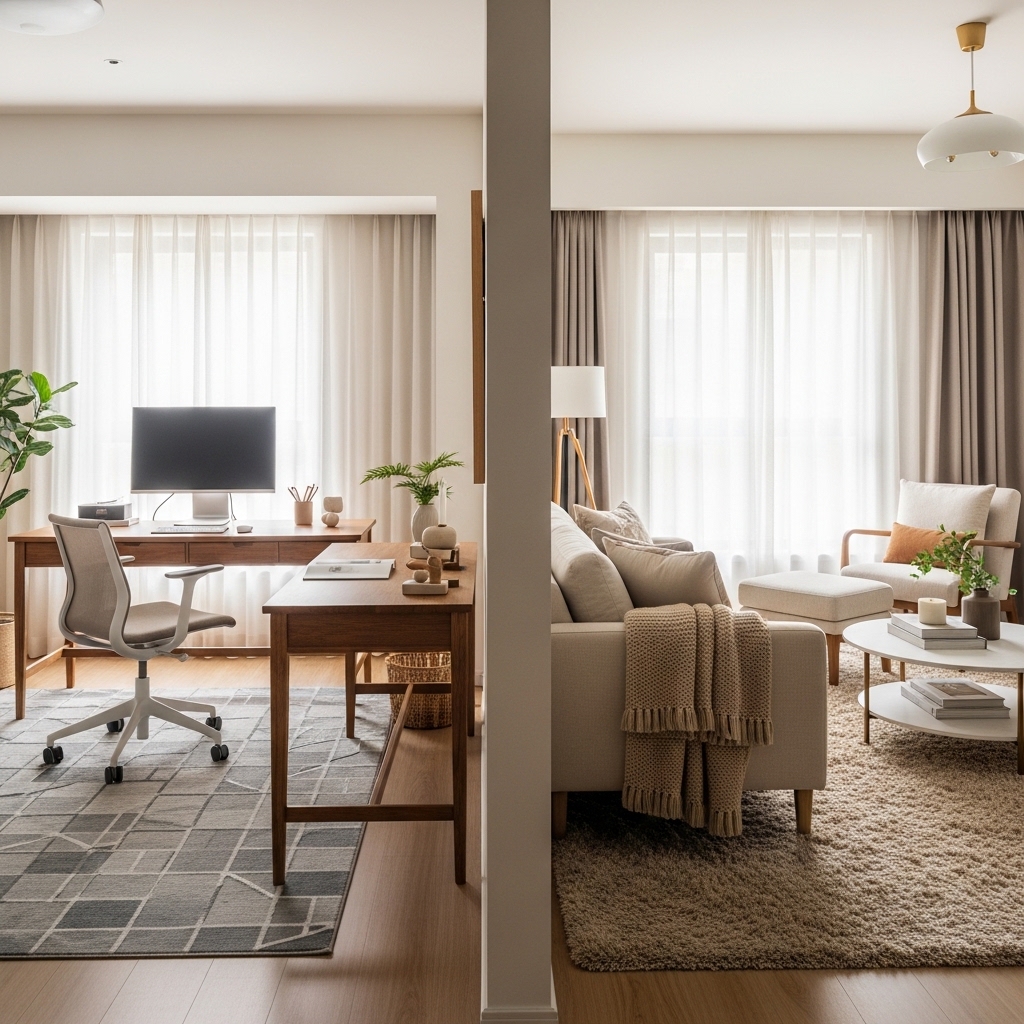
Creating defined zones within your living room helps to separate your work area from your relaxation space. Use rugs or furniture placement to visually distinguish between the two. This not only enhances focus during work hours but also aids in unwinding after the workday. A clear boundary helps your mind switch between the professional and personal modes effectively.
3. Utilize Vertical Space
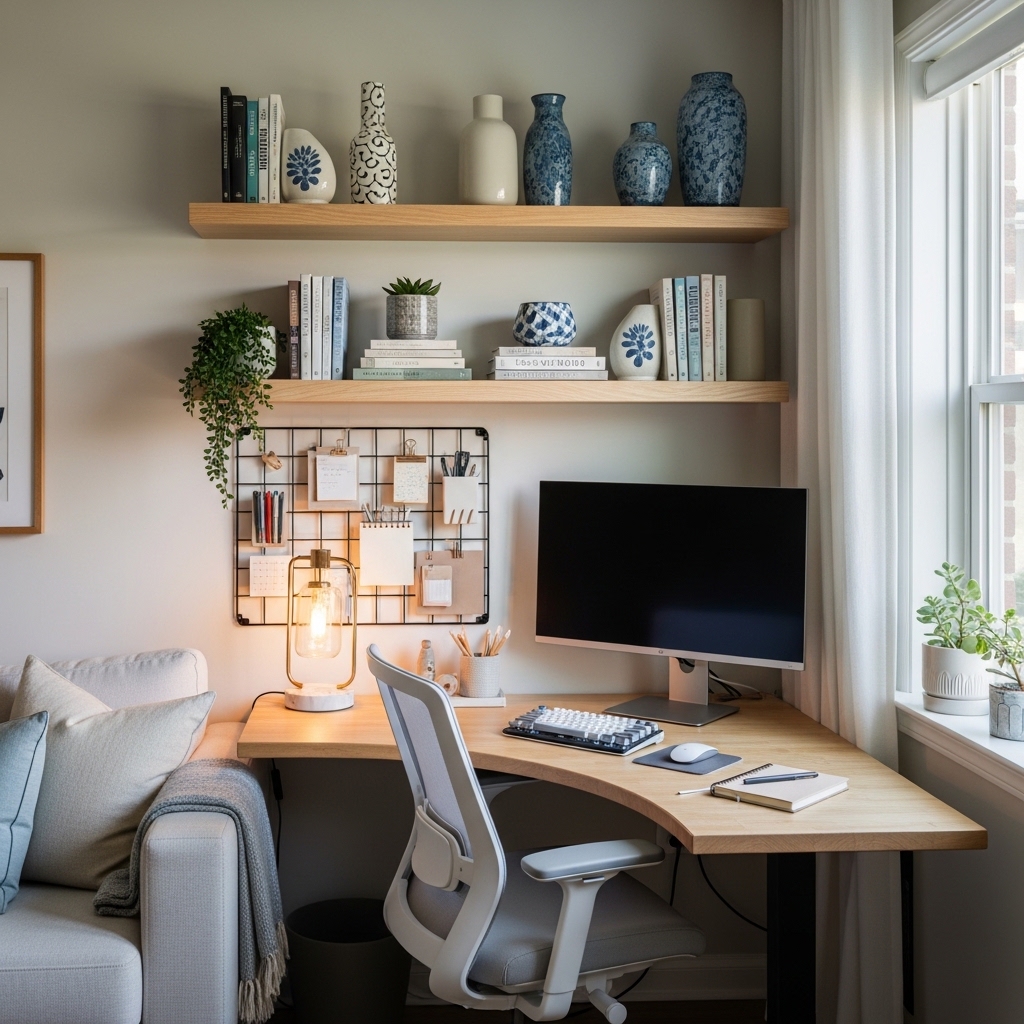
Maximize your living room’s vertical space by incorporating wall-mounted shelves and storage units. This keeps the floor area clear and reduces clutter, making your workspace feel more open. Use shelves to display books, plants, or decorative items that inspire creativity while keeping essential work materials within reach. A clean and organized environment fosters productivity.
4. Incorporate Natural Light
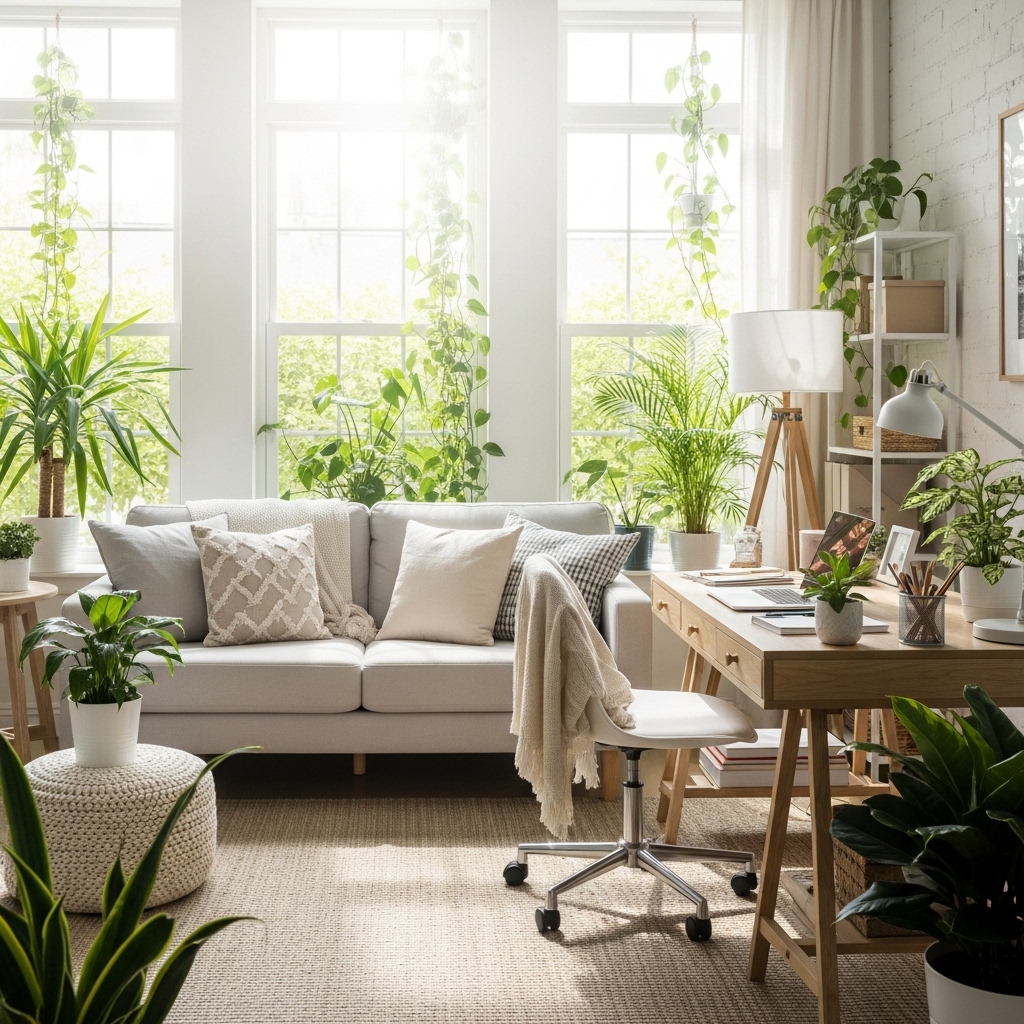
Natural light is a significant factor in creating an inviting workspace. Position your desk near windows to take advantage of sunlight, which can boost mood and productivity. If natural light is limited, consider adding mirrors to reflect light and make the space appear larger. Plants can also enhance the atmosphere, bringing a touch of nature into your office.
5. Personalize Your Space
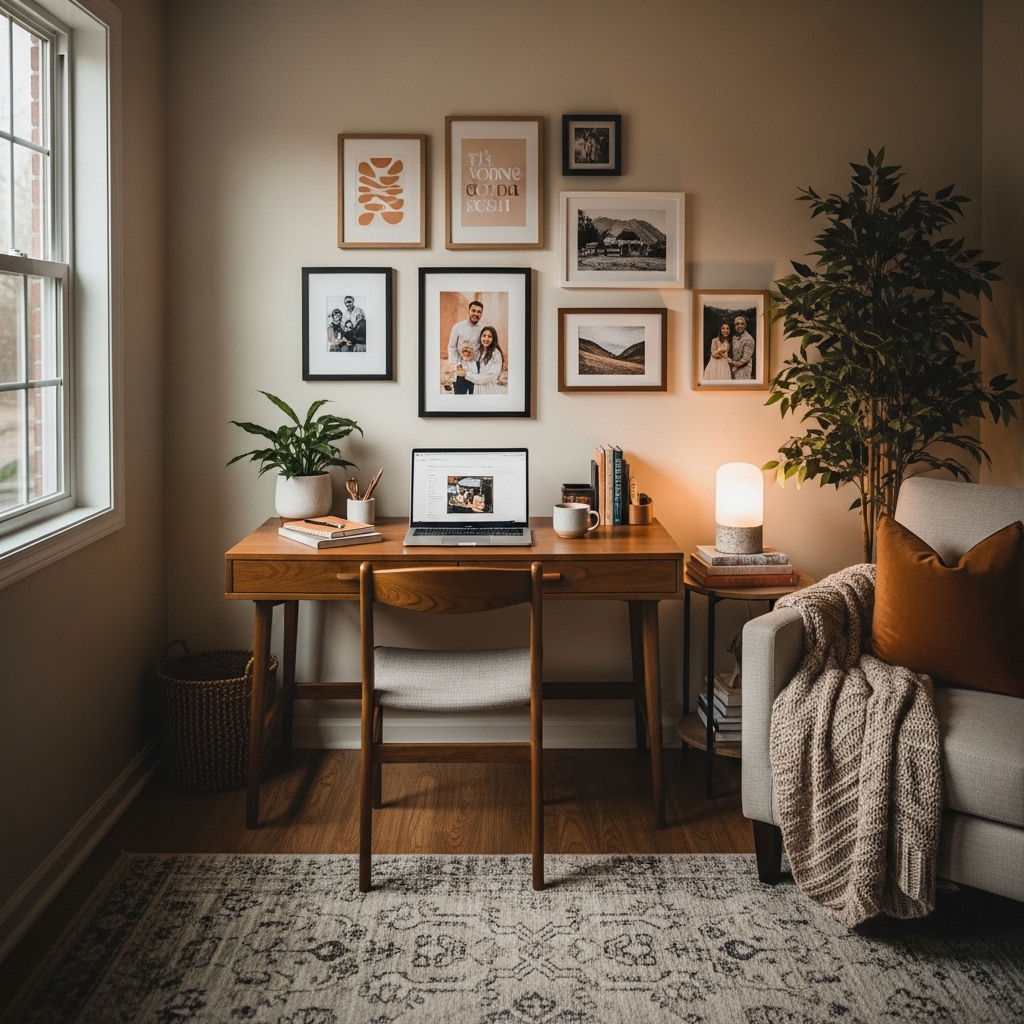
Personalizing your workspace can make it feel more comfortable and inspiring. Hang artwork, add family photos, or display items that reflect your personality and interests. This not only makes your office more inviting but can also serve as motivation during work hours. Ensure that these personal touches do not create visual clutter, maintaining a balanced and harmonious environment. For some creative ideas, check out 6 Ways to Decorate with String Lights in Your Bedroom.
6. Use Multi-Functional Accessories
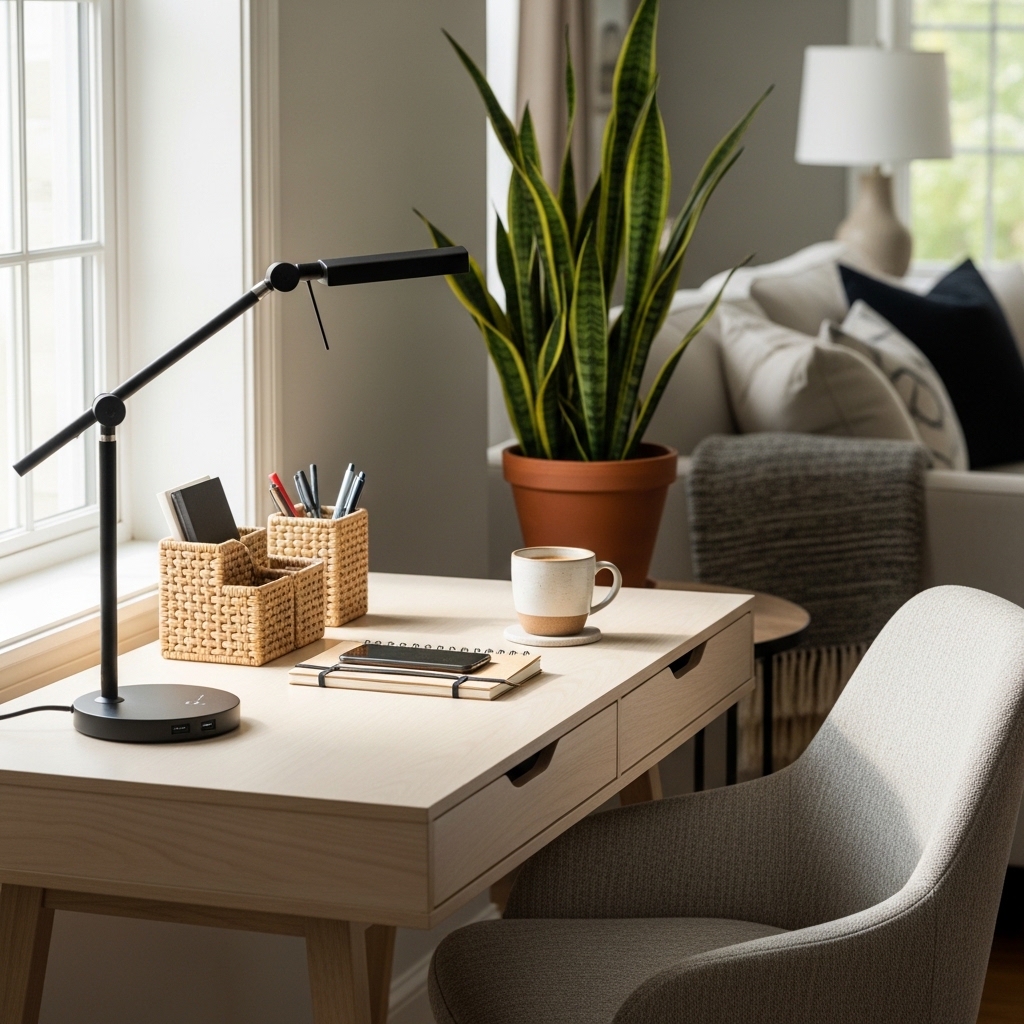
Incorporate multi-functional accessories that enhance productivity without taking up extra space. For example, a desk lamp with built-in USB ports can be both practical and stylish. Look for organizers that can keep your workspace tidy while also serving as decorative elements. These small additions can significantly improve efficiency and aesthetics in your living room office.
7. Keep Technology Tidy
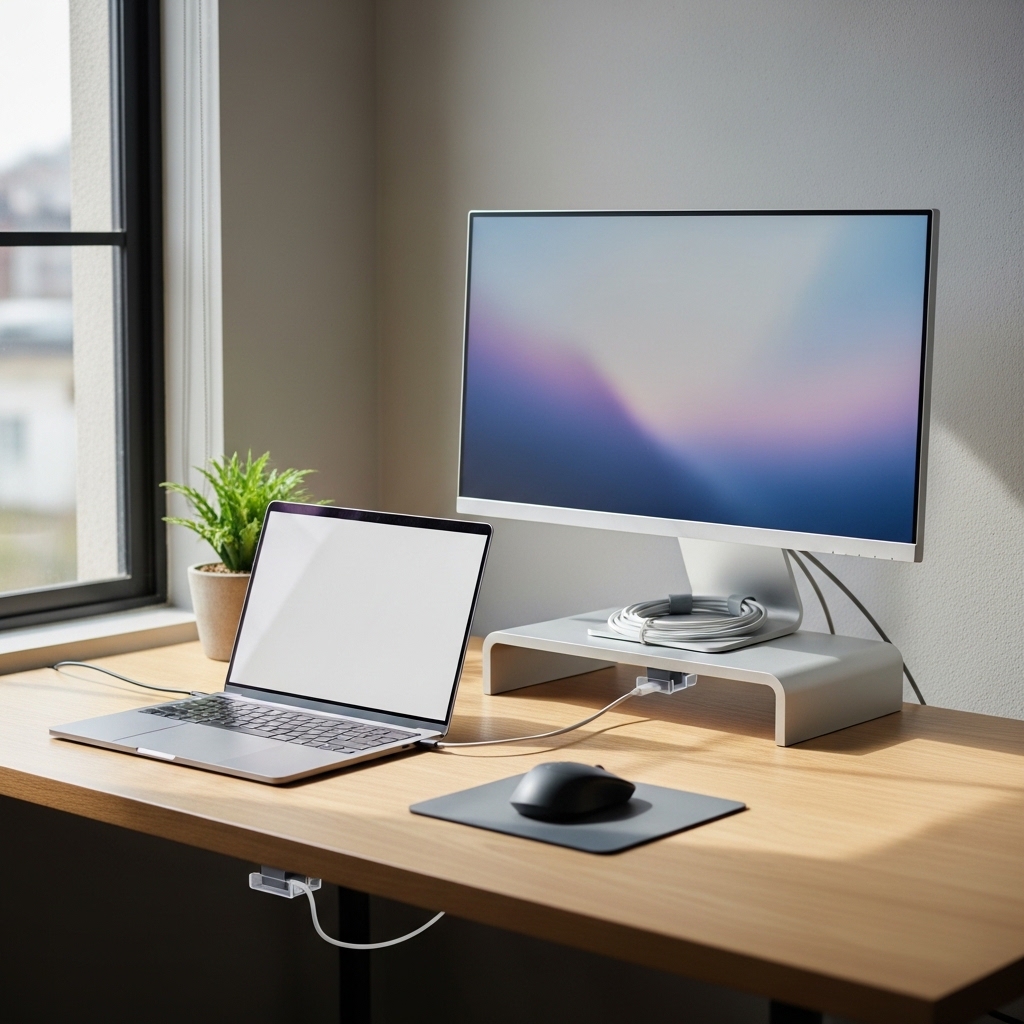
Managing technology effectively is vital in a multi-functional living room. Use cable management solutions to keep cords organized and out of sight. A clean and orderly workspace minimizes distractions and enhances focus. Consider investing in a charging station that can house all your devices, keeping surfaces clear and tidy.
8. Create a Comfortable Atmosphere
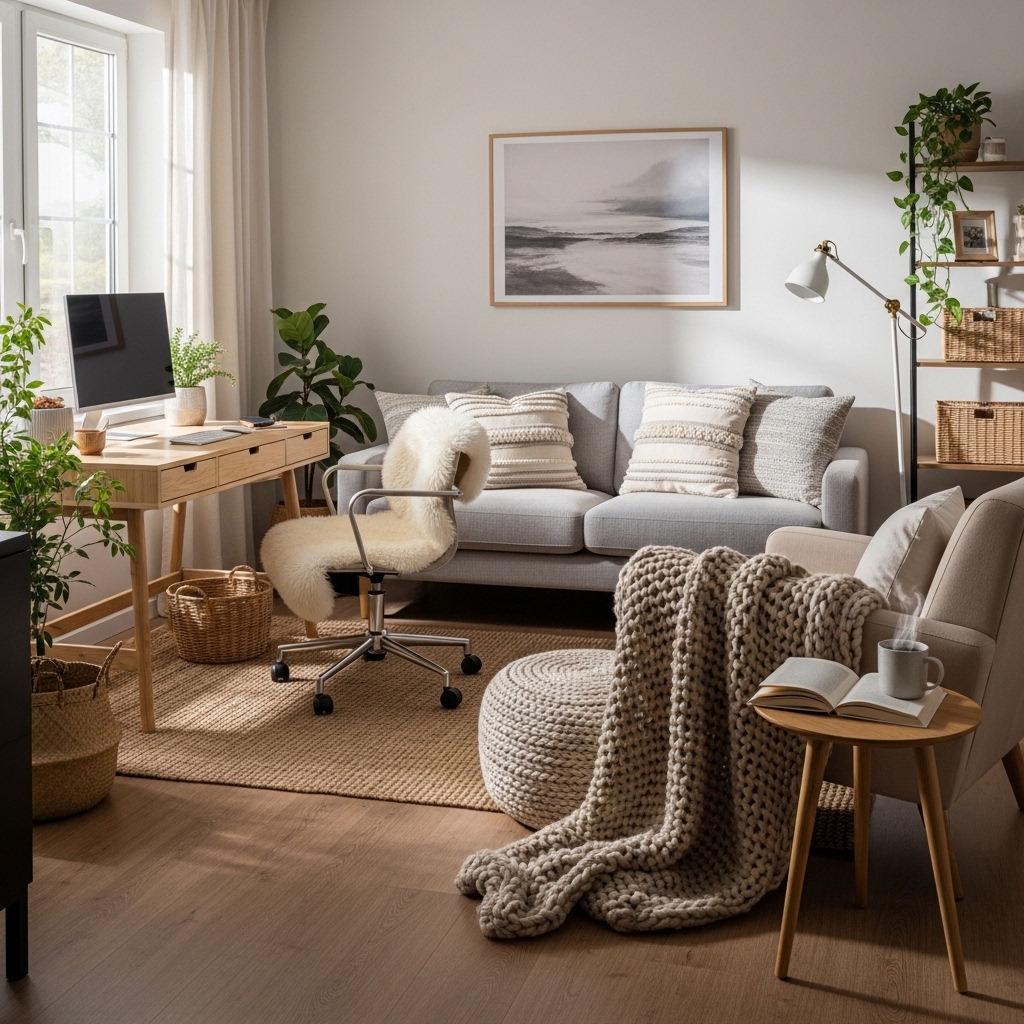
Comfort is key when designing a workspace in your living room. Ensure that your seating is not only ergonomic but also inviting. Use soft lighting, such as floor lamps or table lamps, to create a warm ambiance. Adding cozy textiles, like throw pillows and blankets, can make the area more inviting for both work and relaxation.
9. Consider Sound Management
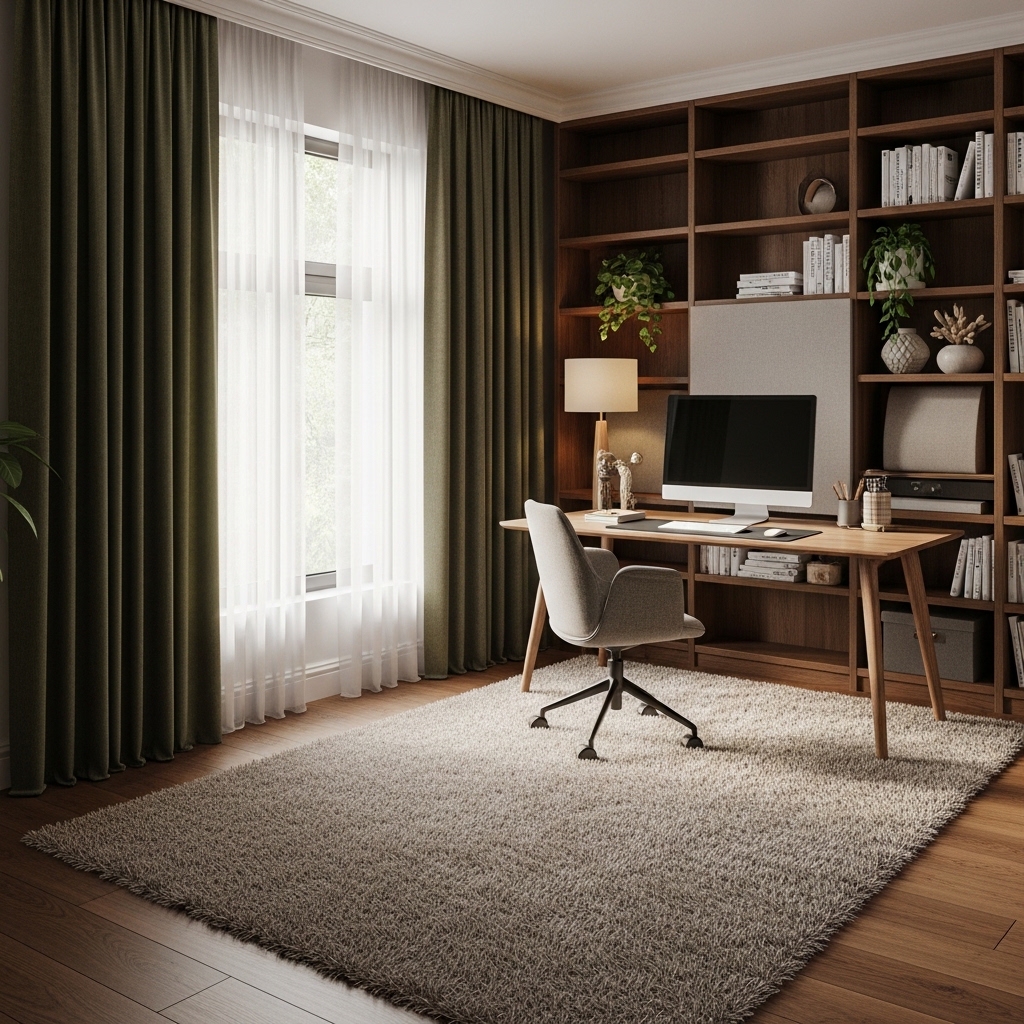
Sound management is often overlooked but is crucial for maintaining focus. Soft furnishings like rugs, curtains, and upholstered furniture can absorb sound, reducing distractions. If noise is an issue, consider using white noise machines or soundproofing panels to create a more conducive working environment.
10. Plan for Flexibility
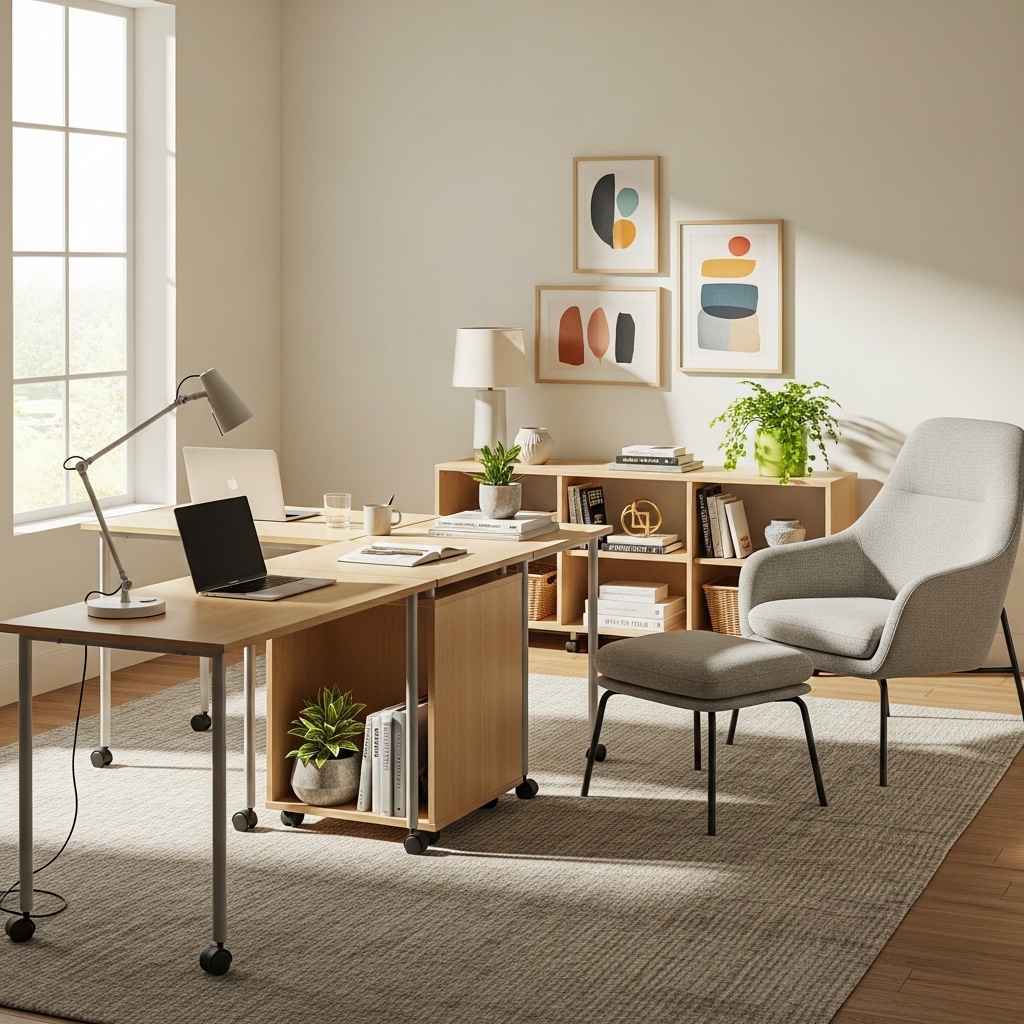
Design your living room office with flexibility in mind. Choose furniture that can be easily moved or adjusted to accommodate different tasks or preferences. For instance, a foldable desk or stackable chairs can allow for quick transitions between work and leisure. This adaptability is essential for maintaining productivity and comfort as your needs change over time.