
The myth of Daedalus and Icarus narrates the tragic tale of a father-son duo, emphasizing themes of ambition, hubris, and the perils of disobedience as Icarus, ignoring his father’s warnings, flies too close to the sun and falls to his
The myth of Daedalus and Icarus is a timeless cautionary tale from Greek mythology that explores themes of ambition, hubris, and the consequences of ignoring wise counsel. This explainer delves into the story, its characters, and its deeper meanings.

The Story of Daedalus and Icarus: An Overview
The myth of Daedalus and Icarus encapsulates a poignant narrative of creativity, ambition, and the dire consequences of defiance. This tale unfolds through key events that highlight the ingenuity of Daedalus and the tragic downfall of Icarus.
Daedalus’s Invention of the Wings
Daedalus, a master craftsman and inventor, faced imprisonment by King Minos of Crete. To escape, he devised a remarkable solution: wings made from feathers and wax.
- Materials Used: Daedalus used bird feathers, thread, and beeswax.
- Warning to Icarus: He cautioned his son not to fly too close to the sun or too low over the sea.
The wings represented not only a tool for freedom but also the embodiment of human ingenuity. Daedalus’s creation highlighted the delicate balance between ambition and caution.
The Flight and Its Consequences
Once airborne, Icarus experienced the exhilarating freedom that flight offered. However, intoxicated by the thrill, he ignored his father’s warnings.
- Disobedience: Icarus flew higher, approaching the sun.
- Result: The sun’s heat melted the wax in his wings, leading to their disintegration.
Icarus plummeted into the sea, a tragic embodiment of hubris. His fate serves as a cautionary reminder of the repercussions that often accompany reckless ambition.
Table of Contents
The Aftermath of Icarus’s Fall
In the wake of Icarus’s tragic death, Daedalus was devastated. He mourned the loss of his son and the consequences of his own creations.
- Naming of Icaria: Daedalus named the island where Icarus fell “Icaria” in his memory.
- Reflection on Art: Heartbroken, Daedalus cursed his craft, recognizing the double-edged nature of his genius.
This aftermath underscores the complex relationship between creator and creation. It also emphasizes the themes of ambition, freedom, and the limitations inherent in human endeavors. The myth invites reflection on how ambition can lead to both great achievements and profound losses.
Analyzing the Characters: Daedalus, Icarus, and King Minos
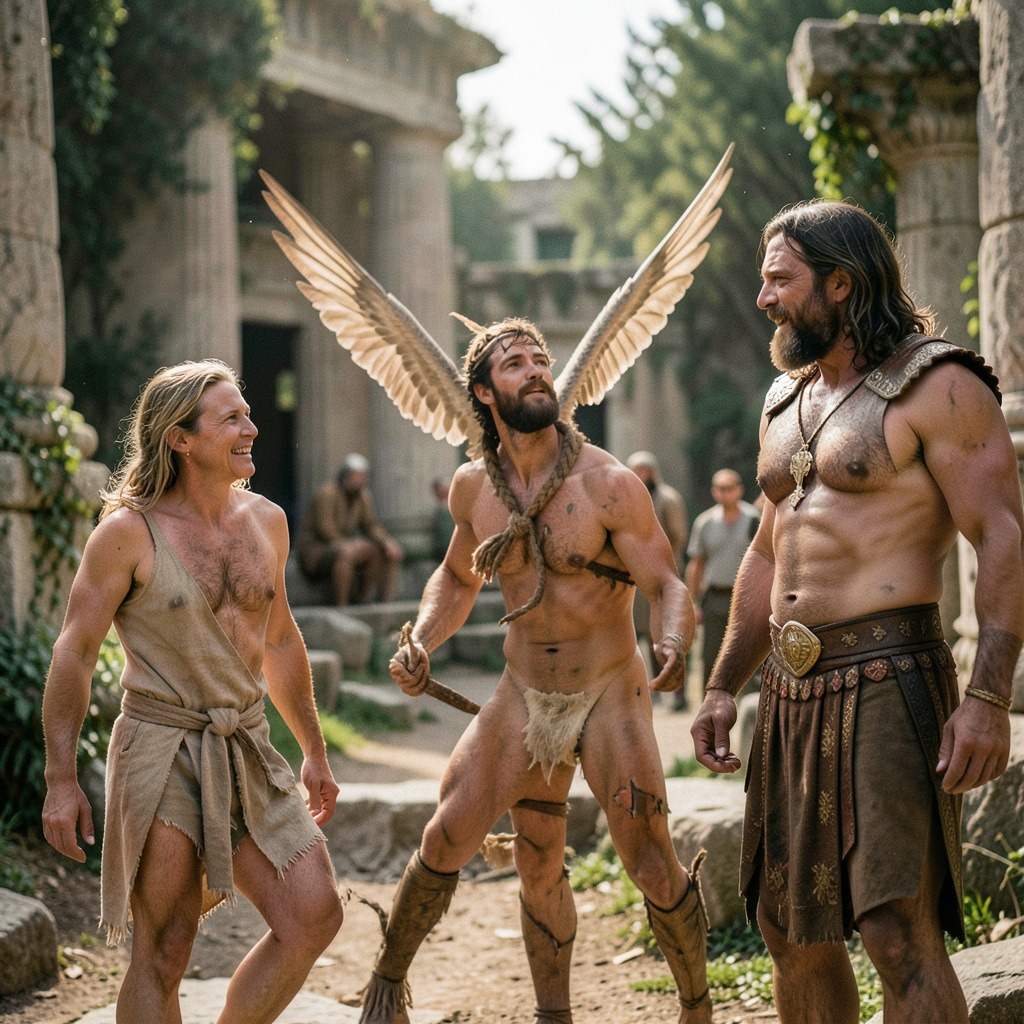
The characters of Daedalus, Icarus, and King Minos are pivotal to the myth, each embodying distinct traits and motivations that drive the narrative. Their relationships illuminate themes of ambition, hubris, and the consequences of desire.
The Wisdom of Daedalus: Craftsman and Father
Daedalus stands as a symbol of ingenuity and creativity. Renowned as a master craftsman, he constructed the Labyrinth to contain the Minotaur, showcasing his exceptional skill. However, his intelligence is coupled with a tragic flaw: his ambition. This ambition leads him to craft wings for himself and Icarus, which ultimately results in his son’s demise.
- Motivation: Daedalus seeks freedom from confinement. His invention of the wings reflects both his desire to escape and his paternal instinct to save Icarus.
- Character Traits: He is resourceful, inventive, and ultimately remorseful. After Icarus’s fall, he grapples with guilt, cursing his art as a double-edged sword.
- Relationship with Icarus: Daedalus’s warnings to Icarus highlight his protective nature. He embodies the wisdom of experience, contrasting sharply with Icarus’s youthful impetuosity.
Icarus: The Tragic Hero of Ambition
Icarus epitomizes the consequences of unchecked ambition. His desire to fly higher than his father symbolizes youthful defiance and a quest for personal freedom.
- Motivation: Icarus yearns for liberation and the thrill of flight. This desire leads him to ignore his father’s warnings.
- Character Traits: He is impulsive, adventurous, and ultimately tragic. His downfall serves as a cautionary tale about the dangers of hubris.
- Fate: Icarus’s tragic end—plunging into the sea after flying too close to the Sun—illustrates the theme of consequences stemming from disobedience.
King Minos: The Imprisoner and Antagonist
King Minos plays a crucial role as both the antagonist and a figure representing authority. His actions set the stage for the events that unfold, driving Daedalus and Icarus to seek escape.
- Motivation: Minos seeks to maintain control over Daedalus and the secrets of the Labyrinth. His paranoia leads to the imprisonment of Daedalus and Icarus.
- Character Traits: He is authoritative, vindictive, and manipulative. His desire for power results in the tragic chain of events that ensnare Daedalus and Icarus.
- Relationship with Daedalus: Minos’s imprisonment of Daedalus highlights the conflict between creator and ruler. Minos’s fear of losing control propels the narrative forward, showcasing the clash between ambition and authority.
Comparative Insights
The interplay between these characters emphasizes the myth’s themes:
- Ambition vs. Authority: Daedalus’s ambition contrasts with Minos’s control, illustrating the struggle for freedom.
- Father-Son Dynamics: The relationship between Daedalus and Icarus encapsulates the tension between guidance and rebellion. Icarus’s tragic fate serves as a reminder of the perils of ignoring wisdom.
This character analysis reveals how Daedalus, Icarus, and King Minos contribute to the myth’s enduring lessons about ambition, hubris, and the consequences of one’s actions.
Thematic Exploration: Hubris, Ambition, and the Consequences of Disobedience

The myth of Daedalus and Icarus embodies timeless themes of hubris, ambition, and the consequences of disobedience. This narrative serves as a cautionary tale, highlighting the dangers of overreaching one’s abilities and the significance of heeding wise counsel.
Understanding Hubris in the Context of the Myth
Hubris, or excessive pride, is a central theme in the story of Icarus. Icarus’s desire to fly higher than his father Daedalus’s warnings dictate exemplifies this concept. His overconfidence leads him to disregard crucial advice, ultimately resulting in his demise.
- Definition of Hubris: An excessive belief in one’s abilities, often leading to downfall.
- Example from the Myth: Icarus’s reckless flight toward the sun, despite Daedalus’s warning not to fly too high or too low.
- Consequences: Icarus’s fall symbolizes the tragic results of ignoring boundaries set by experience and wisdom.
Ambition vs. Limitations: A Cautionary Tale
The myth starkly contrasts ambition with human limitations. Daedalus, a master craftsman, embodies creativity and innovation. However, even he cannot escape the consequences of his son’s choices. Icarus’s ambition drives him to soar, yet it also blinds him to the reality of his limitations.
- Ambition: The desire to achieve greatness or success.
- Limitations: The inherent boundaries of human capability.
- Key Takeaway: This myth illustrates that unchecked ambition can lead to catastrophic outcomes.
Lessons Learned from Icarus’s Fall
Icarus’s fate is a powerful reminder of the importance of heeding wise counsel. His tragic end underscores several key lessons:
- Respect for Limits: Acknowledge personal and situational boundaries.
- Heeding Advice: Value the wisdom of experienced figures, such as parents or mentors.
- Consequences of Disobedience: Recognize that ignoring guidance can have dire consequences.
Modern Example: In contemporary contexts, figures who exhibit hubris—such as entrepreneurs who ignore market warnings—often face significant setbacks. The Icarus myth resonates in these scenarios, reinforcing the necessity of balancing ambition with caution.
By examining these themes, we gain insight into the enduring significance of the Daedalus and Icarus myth and its relevance across cultures and eras.
The Labyrinth: Symbolism and Significance

The Labyrinth serves as a critical symbol in the myth of Daedalus and Icarus, embodying themes of entrapment, escape, and the consequences of ambition. This intricate maze not only represents physical confinement but also reflects the psychological struggles faced by its inhabitants.
The Labyrinth as a Prison
The Labyrinth was designed by Daedalus to contain the Minotaur, a monstrous creature that symbolizes chaos and the darker aspects of human nature. Its complex structure ensures that anyone who enters cannot easily find their way out. This entrapment mirrors the fate of Daedalus and Icarus, who, after helping Theseus escape, find themselves imprisoned by King Minos. The Labyrinth thus becomes a metaphor for the consequences of one’s actions and the inescapable nature of fate.
- Entrapment: The Labyrinth confines its inhabitants, illustrating the danger of ambition unchecked by wisdom.
- Control: King Minos uses the Labyrinth to assert his power over Daedalus and Icarus, reflecting authoritarian governance and the suppression of knowledge.
- Isolation: Both Daedalus and Icarus experience emotional isolation within the Labyrinth, heightening the tragedy of their plight.
Escape: The Intersection of Freedom and Fear
The act of escaping the Labyrinth signifies the struggle between the desire for freedom and the fear of the unknown. Daedalus crafts wings to aid their escape, symbolizing human ingenuity and the drive to overcome limitations. However, this escape is fraught with danger, as Icarus’s tragic fall illustrates.
- Symbol of Freedom: The wings represent the aspiration to transcend boundaries, both physical and metaphorical.
- Fear of Consequences: Icarus’s flight too close to the sun serves as a stark reminder of the risks associated with overreaching ambition.
- Paradox of Choice: The decision to escape the Labyrinth reflects the complexity of choices: freedom may come at a significant cost.
Comparative Analysis with Other Myths
The concept of a labyrinth appears in various myths across cultures, often representing the trials faced by heroes. For instance, in the Mesopotamian myth of Gilgamesh, the protagonist encounters a series of challenges that test his resolve and ambition. Similarly, in these narratives, the labyrinth serves as a metaphor for life’s complexities and the consequences of choices made.
- Shared Themes: Both the Labyrinth in the Daedalus and Icarus myth and other cultural labyrinths emphasize the themes of ambition, consequence, and the quest for understanding.
- Lessons Learned: In each story, characters confront their limitations, highlighting the universal struggle between aspiration and the realities of existence.
The Labyrinth’s significance is multifaceted, serving as both a literal and metaphorical prison. It challenges characters to navigate their ambitions while confronting the inescapable consequences of their choices.
Comparative Analysis: Icarus and Other Myths of Flight
The tale of Icarus offers profound lessons on ambition and the consequences of hubris. Comparing it with other myths of flight, such as that of Phaethon, reveals shared themes and variations in cultural values surrounding aspiration and downfall.
The Myth of Phaethon: Similarities and Differences
Phaethon, son of Helios, sought to prove his divine lineage by driving his father’s sun chariot. Like Icarus, Phaethon exhibited overreaching ambition and a disregard for caution.
- Ambition and Hubris: Both characters embody excessive ambition. Icarus desires the freedom of flight, while Phaethon craves the power of the sun.
- Parental Warnings Ignored: Daedalus warns Icarus against flying too high, just as Helios cautions Phaethon about the dangers of controlling the chariot.
- Consequences of Disobedience: Icarus falls into the sea, while Phaethon loses control and scorches the Earth, leading to his demise.
Other Notable Myths of Flight in Different Cultures
Flight myths appear across cultures, often symbolizing the struggle between human ambition and natural limits.
- Icarus (Greek): Represents the peril of ignoring wise counsel and the tragic consequences of over-ambition.
- Māui (Polynesian): Māui, a demigod, attempts to slow the sun to benefit humanity. His success and subsequent challenges reflect a balance between ambition and responsibility.
- The Legend of the Flying Dutchman (European): This ghost ship legend illustrates ambition’s consequences in a maritime context, where sailors are punished for their hubris at sea.
Comparative Insights
- Cultural Values: Myths like Icarus and Phaethon highlight a cultural caution against hubris, suggesting that ambition must be tempered with wisdom.
- Universal Themes: Across these narratives, themes of aspiration, the tension between freedom and limitation, and the repercussions of defiance emerge consistently.
Understanding these myths deepens our appreciation for the cultural narratives that shape our views on ambition and consequence.
Modern Interpretations and Cultural Impact of the Icarus Myth
The myth of Daedalus and Icarus has significantly influenced literature, art, and popular culture. Its themes of ambition, hubris, and the consequences of disobedience resonate across generations.
Icarus in Literature and Art
Icarus’s tragic flight has inspired countless artists and writers. His story conveys powerful messages about the dangers of overreaching ambition. Here are some notable interpretations:
- Pieter Bruegel the Elder: His painting “Landscape with the Fall of Icarus” depicts Icarus’s fall as an almost unnoticed event against the backdrop of daily life. This suggests that human ambition can often go unrecognized amidst the mundanity of existence.
- W. H. Auden and William Carlos Williams: Both poets explore Icarus’s story to reflect on the indifference of society to individual tragedy. Their works emphasize how personal ambition can lead to catastrophic consequences.
- Leonard Cohen: In his song “The Traitor,” Cohen conflates the figures of Daedalus and Icarus, framing the fall as a Christlike act of sacrifice, thus adding layers of complexity to the myth.
These examples highlight how the myth’s core themes remain relevant in examining human behavior and societal norms.
The Icarus Motif in Contemporary Culture
The Icarus motif is prevalent in modern narratives, reflecting contemporary issues such as the pitfalls of ambition and societal expectations. Here are key areas of influence:
- Film and Television: Modern adaptations often reinterpret Icarus’s flight as a metaphor for personal struggles against societal limitations. This portrayal resonates with audiences navigating their ambitions in an increasingly competitive world.
- Psychology: The “Icarus complex” emerges in discussions about mental health, particularly regarding ambition and risk-taking behaviors. This concept reflects a fascination with extremes, paralleling the myth’s cautionary tale.
- Social Commentary: Literature and art often use Icarus’s story to critique contemporary figures who embody reckless ambition. For instance, characters in novels might mirror Icarus’s fate, serving as warnings about the consequences of unchecked aspirations.
The ongoing relevance of the Icarus myth in contemporary culture underscores its profound impact on our understanding of ambition, freedom, and the human condition.
Frequently Asked Questions
These quick answers cover the most common questions about this topic, including key details, practical tips, and common concerns.
What is the moral lesson of Daedalus and Icarus?
The moral lesson of the Daedalus and Icarus myth revolves around the dangers of hubris and the importance of heeding wise counsel. Icarus’s downfall illustrates that excessive ambition and pride can lead to disastrous consequences. It serves as a reminder to respect limitations and to listen to experienced voices, particularly those of parents or mentors.
Is the story of Icarus in the Bible?
No, the story of Icarus is not found in the Bible. It originates from Greek mythology, specifically attributed to the works of ancient poets like Ovid. The tale focuses on themes of ambition and the tragic consequences of disobedience rather than religious teachings.
Who was Icarus in love with?
The myth of Icarus does not explicitly mention any romantic interests or love interests for him. The focus of the story is primarily on his relationship with his father, Daedalus, and the consequences of his ambition. Icarus’s character is more about youthful defiance and the desire for freedom than romantic pursuits.
What happened to Daedalus after Icarus died?
After Icarus’s tragic fall, Daedalus mourned deeply for his son. He named the island where Icarus fell “Icaria” in his memory. Daedalus continued to live in Crete, grappling with guilt and regret over the consequences of his inventions, recognizing the double-edged nature of his creativity.
How did Daedalus create the wings for their escape?
Daedalus crafted the wings using feathers, thread, and beeswax. He ingeniously combined these materials to create functional wings that allowed him and Icarus to escape from King Minos’s imprisonment. He warned Icarus to fly neither too high, where the sun could melt the wax, nor too low, where the sea could dampen the wings.
What are the consequences of hubris as seen in the myth?
In the myth, hubris leads to Icarus’s tragic fall. His overconfidence causes him to disregard his father’s warnings, resulting in his demise. This serves as a cautionary tale about the dangers of excessive pride and ambition, illustrating that ignoring wise counsel can have severe repercussions.
How does the Icarus myth compare to other Greek myths?
The Icarus myth shares similarities with other Greek myths, particularly those involving themes of ambition and the consequences of defiance. For example, Phaethon, who drives his father’s sun chariot, also suffers from hubris and faces dire consequences. Both stories highlight the balance between ambition and the need for caution.
How has the story of Daedalus and Icarus been interpreted in art?
The story of Daedalus and Icarus has inspired numerous artistic interpretations. One notable example is Pieter Bruegel the Elder’s painting “Landscape with the Fall of Icarus,” which depicts Icarus’s fall as an unnoticed event amidst everyday life. This interpretation emphasizes the indifference of society to individual tragedy and the broader themes of ambition and consequence.